Institute of Complex Systems and Mathematical Biology, King's College, University of Aberdeen, Aberdeen, UK.
J Theor Biol. 2012 Jan 7;292(100):39-43. doi: 10.1016/j.jtbi.2011.08.024. Epub 2011 Sep 19.
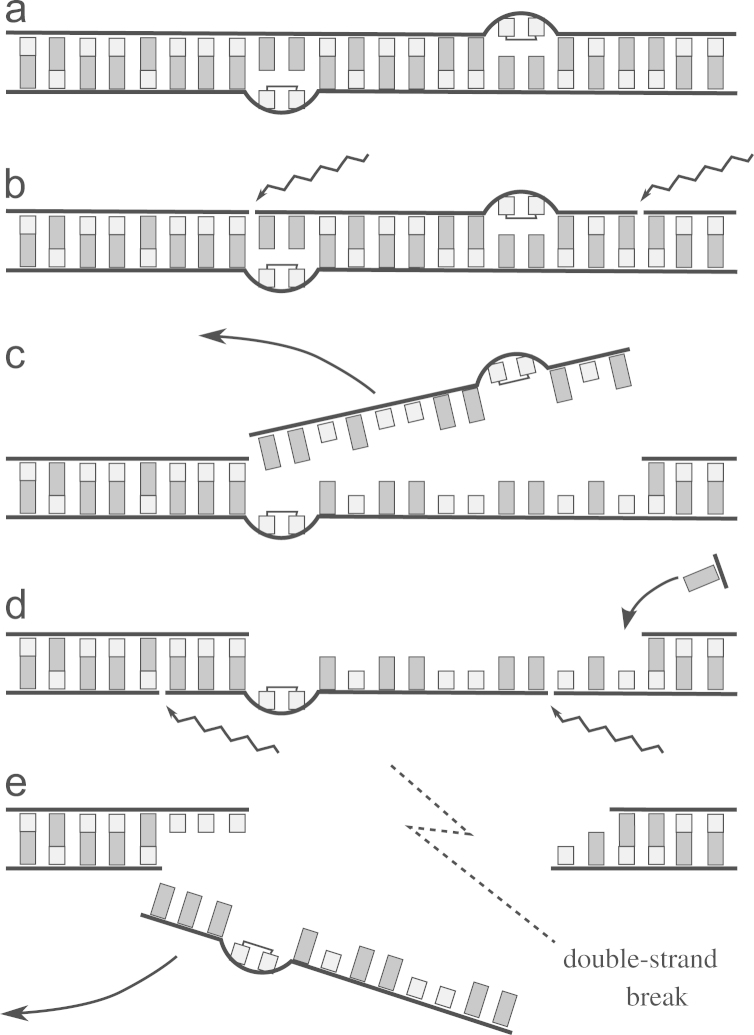
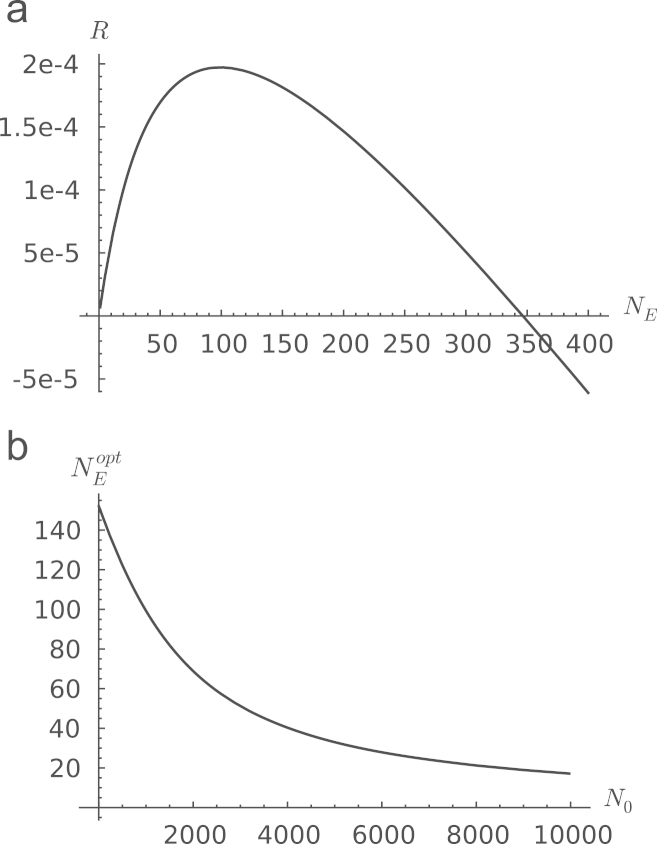
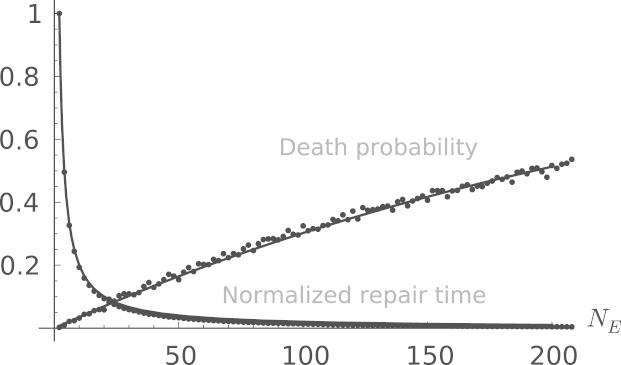
DNA within cells is subject to damage from various sources. Organisms have evolved a number of mechanisms to repair DNA damage. The activity of repair enzymes carries its own risk, however, because the repair of two nearby lesions may lead to the breakup of DNA and result in cell death. We propose a mathematical theory of the damage and repair process in the important scenario where lesions are caused in bursts. We use this model to show that there is an optimum level of repair enzymes within cells which optimises the cell's response to damage. This optimal level is explained as the best trade-off between fast repair and a low probability of causing double-stranded breaks. We derive our results analytically and test them using stochastic simulations, and compare our predictions with current biological knowledge.
细胞内的 DNA 会受到各种来源的损伤。生物已经进化出许多机制来修复 DNA 损伤。然而,修复酶的活性也有其自身的风险,因为修复两个相邻的损伤可能导致 DNA 断裂,并导致细胞死亡。我们提出了一种在重要的爆发性损伤情况下的损伤和修复过程的数学理论。我们使用这个模型表明,细胞内存在最佳的修复酶水平,使细胞对损伤的反应达到最佳。这种最佳水平可以解释为快速修复和低双链断裂概率之间的最佳权衡。我们通过分析推导了我们的结果,并使用随机模拟进行了测试,还将我们的预测与当前的生物学知识进行了比较。