• 文献检索
  • 文档翻译
  • 深度研究
  • 学术资讯
  • Suppr Zotero 插件Zotero 插件
  • 邀请有礼
  • 套餐&价格
  • 历史记录
应用&插件
Suppr Zotero 插件Zotero 插件浏览器插件Mac 客户端Windows 客户端微信小程序
定价
高级版会员购买积分包购买API积分包
服务
文献检索文档翻译深度研究API 文档MCP 服务
关于我们
关于 Suppr公司介绍联系我们用户协议隐私条款
关注我们

Suppr 超能文献

核心技术专利:CN118964589B侵权必究
粤ICP备2023148730 号-1Suppr @ 2026

文献检索

告别复杂PubMed语法,用中文像聊天一样搜索,搜遍4000万医学文献。AI智能推荐,让科研检索更轻松。

立即免费搜索

文件翻译

保留排版,准确专业,支持PDF/Word/PPT等文件格式,支持 12+语言互译。

免费翻译文档

深度研究

AI帮你快速写综述,25分钟生成高质量综述,智能提取关键信息,辅助科研写作。

立即免费体验

我们能否为肝细胞癌患者开发有效的联合抗血管生成疗法?

Can we develop effective combination antiangiogenic therapy for patients with hepatocellular carcinoma?

作者信息

Wenger Justin B, Santos Napoleon, Liu Yanxia, Dallas Jennifer, Subbiah Sukanthini, Hochwald Steven, Huang Emina H, Dang Duyen T, Allegra Carmen J, Luesch Hendrik, Dang Long H

机构信息

Division of Hematology/Oncology, Department of Internal Medicine, University of Florida Shands Cancer Center, University of Florida, 1600 SW Archer Road, Gainesville, FL 32610, USA.

出版信息

Oncol Rev. 2011 Sep;5(3):177-184. doi: 10.1007/s12156-011-0082-3.

DOI:10.1007/s12156-011-0082-3
PMID:21949574
原文链接:https://pmc.ncbi.nlm.nih.gov/articles/PMC3179415/
Abstract

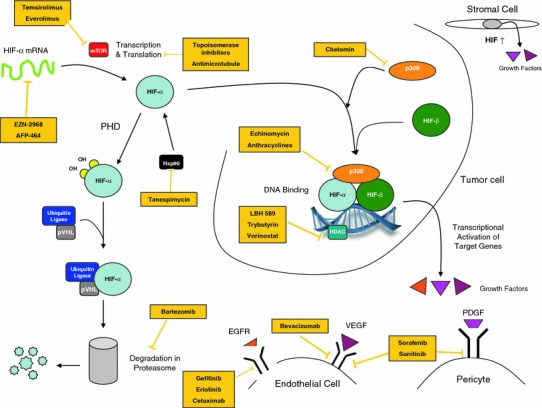
Antiangiogenic therapy has shown promise in the treatment of patients with hepatocellular carcinoma (HCC). Bevacizumab, sorafenib, and sunitinib showed efficacy in patients with HCC; and sorafenib is approved by the FDA for treatment of this cancer. In practice, the clinical benefit of these agents has been heterogeneous; and in patients who do respond, the benefit is modest and/or short-lived. Recent advances in the molecular understanding of tumor angiogenesis along with the rapid development of targeted drug discovery have made it possible to explore novel combination therapy for HCC. We review the clinical trial results, discuss possible molecular mechanisms of resistance, and suggest novel combinations with antiangiogenic therapy.

摘要

抗血管生成疗法在肝细胞癌(HCC)患者的治疗中已显示出前景。贝伐单抗、索拉非尼和舒尼替尼在HCC患者中显示出疗效;并且索拉非尼已获得美国食品药品监督管理局(FDA)批准用于治疗这种癌症。在实际应用中,这些药物的临床获益存在异质性;而且在有反应的患者中,获益程度不大和/或持续时间较短。肿瘤血管生成分子认识方面的最新进展以及靶向药物研发的快速发展使得探索HCC的新型联合治疗成为可能。我们回顾了临床试验结果,讨论了可能的耐药分子机制,并提出了抗血管生成疗法的新型联合方案。
https://cdn.ncbi.nlm.nih.gov/pmc/blobs/1f20/4525808/f7db242bfad5/12156_2011_82_Fig1_HTML.jpg

相似文献

1
Can we develop effective combination antiangiogenic therapy for patients with hepatocellular carcinoma?我们能否为肝细胞癌患者开发有效的联合抗血管生成疗法?
Oncol Rev. 2011 Sep;5(3):177-184. doi: 10.1007/s12156-011-0082-3.
2
Combination therapy for renal cell cancer: what are possible options?肾癌的联合治疗:有哪些可能的选择?
Oncology. 2011;81(3-4):220-9. doi: 10.1159/000333470. Epub 2011 Nov 12.
3
Clinical trials of antiangiogenic therapy for hepatocellular carcinoma.肝细胞癌抗血管生成治疗的临床试验
Int J Clin Oncol. 2016 Apr;21(2):213-218. doi: 10.1007/s10147-016-0966-0. Epub 2016 Feb 22.
4
Single-cell RNA sequencing-derived signatures define response patterns to atezolizumab + bevacizumab in advanced hepatocellular carcinoma.单细胞RNA测序衍生的特征定义了晚期肝细胞癌对阿替利珠单抗+贝伐单抗的反应模式。
J Hepatol. 2025 Jun;82(6):1036-1049. doi: 10.1016/j.jhep.2024.12.016. Epub 2024 Dec 19.
5
Antitumor effects of sunitinib or sorafenib in patients with metastatic renal cell carcinoma who received prior antiangiogenic therapy.舒尼替尼或索拉非尼对接受过先前抗血管生成治疗的转移性肾细胞癌患者的抗肿瘤作用。
J Urol. 2008 Jan;179(1):81-6; discussion 86. doi: 10.1016/j.juro.2007.08.127. Epub 2007 Nov 12.
6
Phase I/II Randomized Trial of Sorafenib and Bevacizumab as First-Line Therapy in Patients with Locally Advanced or Metastatic Hepatocellular Carcinoma: North Central Cancer Treatment Group Trial N0745 (Alliance).索拉非尼与贝伐单抗作为局部晚期或转移性肝细胞癌患者一线治疗的I/II期随机试验:北中部癌症治疗组试验N0745(联盟)
Target Oncol. 2017 Apr;12(2):201-209. doi: 10.1007/s11523-016-0467-0.
7
Efficacy of annexin A3 blockade in sensitizing hepatocellular carcinoma to sorafenib and regorafenib.阻断膜联蛋白 A3 可增强索拉非尼和瑞戈非尼对肝细胞癌的敏感性。
J Hepatol. 2018 Oct;69(4):826-839. doi: 10.1016/j.jhep.2018.05.034. Epub 2018 Jun 7.
8
Systemic treatment and targeted therapy in patients with advanced hepatocellular carcinoma.晚期肝细胞癌患者的全身治疗和靶向治疗
N Am J Med Sci. 2011 Apr;3(4):167-75. doi: 10.4297/najms.2011.3167.
9
Delivery of siRNA Using CXCR4-targeted Nanoparticles Modulates Tumor Microenvironment and Achieves a Potent Antitumor Response in Liver Cancer.使用靶向CXCR4的纳米颗粒递送小干扰RNA可调节肿瘤微环境并在肝癌中实现强效抗肿瘤反应。
Mol Ther. 2015 Nov;23(11):1772-1782. doi: 10.1038/mt.2015.147. Epub 2015 Aug 17.
10
Bacterial metabolite butyrate in modulating sorafenib-targeted microRNAs to curtail its resistance in hepatocellular carcinoma.细菌代谢产物丁酸盐通过调节索拉非尼靶向 microRNAs 来抑制肝癌的耐药性。
J Cancer Res Clin Oncol. 2023 Aug;149(9):5823-5839. doi: 10.1007/s00432-022-04544-7. Epub 2022 Dec 30.

引用本文的文献

1
Role of glioblastoma stem cells in cancer therapeutic resistance: a perspective on antineoplastic agents from natural sources and chemical derivatives.胶质母细胞瘤干细胞在癌症治疗耐药中的作用:从天然来源和化学衍生物的抗肿瘤药物角度看。
Stem Cell Res Ther. 2021 Mar 24;12(1):206. doi: 10.1186/s13287-021-02231-x.
2
In vitro and in silico characterization of angiogenic inhibitors from Sophora interrupta.苦参中断裂变种血管生成抑制剂的体外和计算机模拟表征
J Mol Model. 2016 Oct;22(10):247. doi: 10.1007/s00894-016-3102-1. Epub 2016 Sep 28.
3
Treating hepatocellular carcinoma progression following first-line sorafenib: therapeutic options and clinical observations.

本文引用的文献

1
Oncogenic KRAS modulates mitochondrial metabolism in human colon cancer cells by inducing HIF-1α and HIF-2α target genes.致癌性 KRAS 通过诱导 HIF-1α 和 HIF-2α 靶基因来调节人结肠癌细胞中的线粒体代谢。
Mol Cancer. 2010 Nov 13;9:293. doi: 10.1186/1476-4598-9-293.
2
Pericytes and vessel maturation during tumor angiogenesis and metastasis.肿瘤血管生成和转移过程中的周细胞和血管成熟。
Am J Hematol. 2010 Aug;85(8):593-8. doi: 10.1002/ajh.21745.
3
Pazopanib in locally advanced or metastatic renal cell carcinoma: results of a randomized phase III trial.
治疗一线索拉非尼治疗后肝细胞癌的进展:治疗选择和临床观察。
Therap Adv Gastroenterol. 2013 Nov;6(6):447-58. doi: 10.1177/1756283X13498540.
4
Hepatitis C virus-related hepatocellular carcinoma: An insight into molecular mechanisms and therapeutic strategies.丙型肝炎病毒相关肝细胞癌:对分子机制和治疗策略的深入洞察。
World J Hepatol. 2012 Dec 27;4(12):342-55. doi: 10.4254/wjh.v4.i12.342.
5
Phase II study of bevacizumab and erlotinib in the treatment of advanced hepatocellular carcinoma patients with sorafenib-refractory disease.贝伐珠单抗和厄洛替尼治疗索拉非尼耐药的晚期肝细胞癌患者的 II 期研究。
Invest New Drugs. 2012 Dec;30(6):2384-90. doi: 10.1007/s10637-012-9808-8. Epub 2012 Mar 9.
帕唑帕尼治疗局部晚期或转移性肾细胞癌:一项随机 III 期试验结果。
J Clin Oncol. 2010 Feb 20;28(6):1061-8. doi: 10.1200/JCO.2009.23.9764. Epub 2010 Jan 25.
4
Hypoxia-inducible factor-1 alpha, in association with inflammation, angiogenesis and MYC, is a critical prognostic factor in patients with HCC after surgery.缺氧诱导因子-1α与炎症、血管生成和 MYC 相关,是 HCC 患者手术后的一个关键预后因素。
BMC Cancer. 2009 Dec 1;9:418. doi: 10.1186/1471-2407-9-418.
5
Defining the role of hypoxia-inducible factor 1 in cancer biology and therapeutics.定义缺氧诱导因子 1 在癌症生物学和治疗学中的作用。
Oncogene. 2010 Feb 4;29(5):625-34. doi: 10.1038/onc.2009.441. Epub 2009 Nov 30.
6
HIF-1 inhibitors for cancer therapy: from gene expression to drug discovery.缺氧诱导因子-1 抑制剂在癌症治疗中的应用:从基因表达到药物研发。
Curr Pharm Des. 2009;15(33):3839-43. doi: 10.2174/138161209789649402.
7
Safety and efficacy of sunitinib in patients with advanced hepatocellular carcinoma: an open-label, multicentre, phase II study.舒尼替尼治疗晚期肝细胞癌患者的安全性和有效性:一项开放标签、多中心、II期研究。
Lancet Oncol. 2009 Aug;10(8):794-800. doi: 10.1016/S1470-2045(09)70171-8. Epub 2009 Jul 6.
8
Efficacy, safety, and potential biomarkers of sunitinib monotherapy in advanced hepatocellular carcinoma: a phase II study.舒尼替尼单药治疗晚期肝细胞癌的疗效、安全性及潜在生物标志物:一项II期研究
J Clin Oncol. 2009 Jun 20;27(18):3027-35. doi: 10.1200/JCO.2008.20.9908. Epub 2009 May 26.
9
Targeting both HIF-1 and HIF-2 in human colon cancer cells improves tumor response to sunitinib treatment.靶向人结肠癌细胞中的 HIF-1 和 HIF-2 可提高舒尼替尼治疗的肿瘤反应。
Mol Cancer Ther. 2009 May;8(5):1148-56. doi: 10.1158/1535-7163.MCT-08-0944. Epub 2009 May 12.
10
Antiangiogenic therapy elicits malignant progression of tumors to increased local invasion and distant metastasis.抗血管生成疗法会引发肿瘤的恶性进展,导致局部侵袭增加和远处转移。
Cancer Cell. 2009 Mar 3;15(3):220-31. doi: 10.1016/j.ccr.2009.01.027.