Department of Surgery Section Head liver Surgery-King Fahd General Hospital, Jeddah, Saudi Arabia.
Ann Thorac Med. 2011 Oct;6(4):193-8. doi: 10.4103/1817-1737.84772.
Venous thromboembolism (VTE) is a serious and underestimated potentially fatal disease with an effective prophylactic antithrombotic therapy that is usually underused.
The primary study objective is to determine the percentage of VTE patients who received prophylactic antithrombotic therapy according to ACCP guidelines. Secondary study objectives are determining prevalence of confirmed VTE mortality among all cause hospital mortalities, measuring adherence to anticoagulation treatment after discharge and number of VTE events among those patients.
During the period from first of July 2008 till 30 of June 2009, we collected all hospital deaths, all patients with confirmed VTE diagnosis at King Fahd General Hospital, Jeddah, Kingdom of Saudi Arabia. Only patients with confirmed VTE diagnosis were included in the analysis.
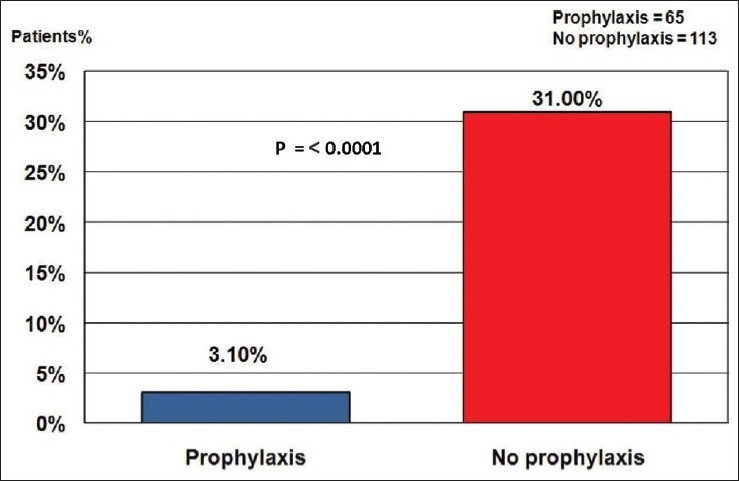
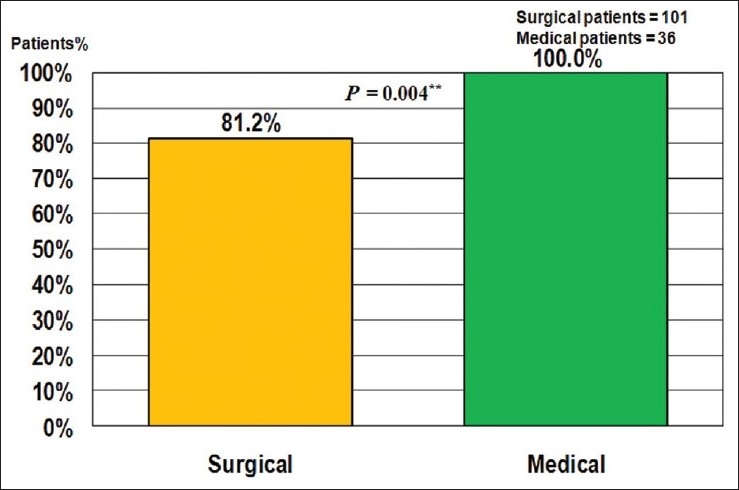
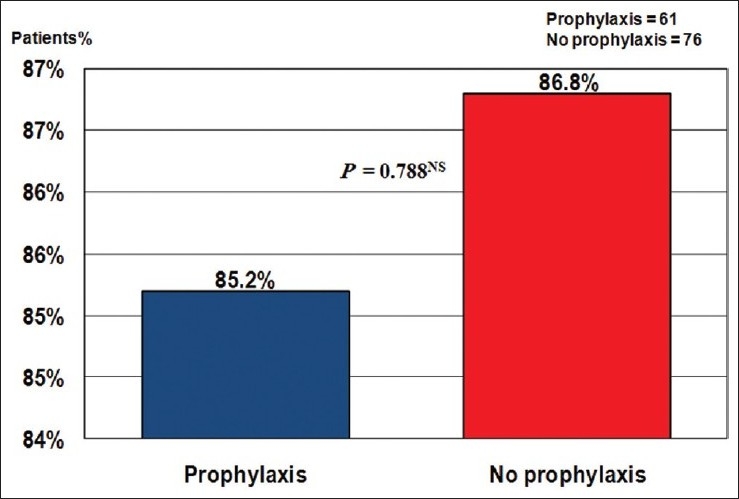
Five hundred cases with clinical diagnosis of VTE were identified. Out of them 178 were confirmed to be VTE. 36.5% of them received prophylactic antithrombotic therapy. Case fatality rate was 20.8% representing 1.9% of hospital deaths. Case fatality rate was 31% and 3.1% for patients who did not receive thromboprophylaxis and patients who received it, respectively (P < 0.0001). 66.3% and 33.7% of confirmed VTE cases occurred in surgical and medical patients respectively. Only 44.1% of surgical patients and 21.7% of medical patients received prophylaxis (P < 0.01). Case fatality rate is 11% for surgical patients and 40% for medical patients (P < 0.001). Of 141 survived cases, 118 (83.7%) were adherent to anticoagulation therapy after discharge.
VTE prophylaxis guideline is not properly implemented and extremely underutilized. Mortality from VTE is significantly higher in patients who did not receive VTE prophylaxis. In the absence of regular post-mortem practice VTE related mortality rate would be difficult to estimate and likely will be underestimated. Health authorities should enforce VTE prophylaxis guideline within the healthcare system.
静脉血栓栓塞症(VTE)是一种严重且被低估的潜在致命疾病,有有效的预防性抗血栓治疗方法,但通常未被充分应用。
主要研究目的是确定根据 ACCP 指南接受预防性抗血栓治疗的 VTE 患者的百分比。次要研究目的是确定所有死因住院死亡患者中确诊 VTE 死亡率的患病率,测量出院后抗凝治疗的依从性以及这些患者中 VTE 事件的数量。
在 2008 年 7 月 1 日至 2009 年 6 月 30 日期间,我们收集了沙特阿拉伯吉达法赫德国王总医院所有医院死亡患者和所有确诊 VTE 诊断的患者。只有确诊 VTE 诊断的患者被纳入分析。
共确定了 500 例 VTE 的临床诊断病例。其中 178 例被确认为 VTE。36.5%的患者接受了预防性抗血栓治疗。病死率为 20.8%,占医院死亡人数的 1.9%。未接受血栓预防的患者和接受预防的患者的病死率分别为 31%和 3.1%(P<0.0001)。确诊 VTE 病例中 66.3%和 33.7%分别发生在外科和内科患者中。只有 44.1%的外科患者和 21.7%的内科患者接受了预防治疗(P<0.01)。外科患者的病死率为 11%,内科患者为 40%(P<0.001)。在 141 例存活病例中,出院后有 118 例(83.7%)患者坚持抗凝治疗。
VTE 预防指南未得到妥善执行,且使用率极低。未接受 VTE 预防的患者 VTE 死亡率明显更高。在没有定期尸检的情况下,VTE 相关死亡率将难以估计,且可能被低估。卫生当局应在医疗保健系统内执行 VTE 预防指南。