Solomon H. Snyder Department of Neuroscience, Johns Hopkins University School of Medicine, Baltimore, MD 21205, USA.
Circ Res. 2011 Nov 11;109(11):1259-68. doi: 10.1161/CIRCRESAHA.111.240242. Epub 2011 Oct 6.
Nitric oxide, the classic endothelium-derived relaxing factor (EDRF), acts through cyclic GMP and calcium without notably affecting membrane potential. A major component of EDRF activity derives from hyperpolarization and is termed endothelium-derived hyperpolarizing factor (EDHF). Hydrogen sulfide (H(2)S) is a prominent EDRF, since mice lacking its biosynthetic enzyme, cystathionine γ-lyase (CSE), display pronounced hypertension with deficient vasorelaxant responses to acetylcholine.
The purpose of this study was to determine if H(2)S is a major physiological EDHF.
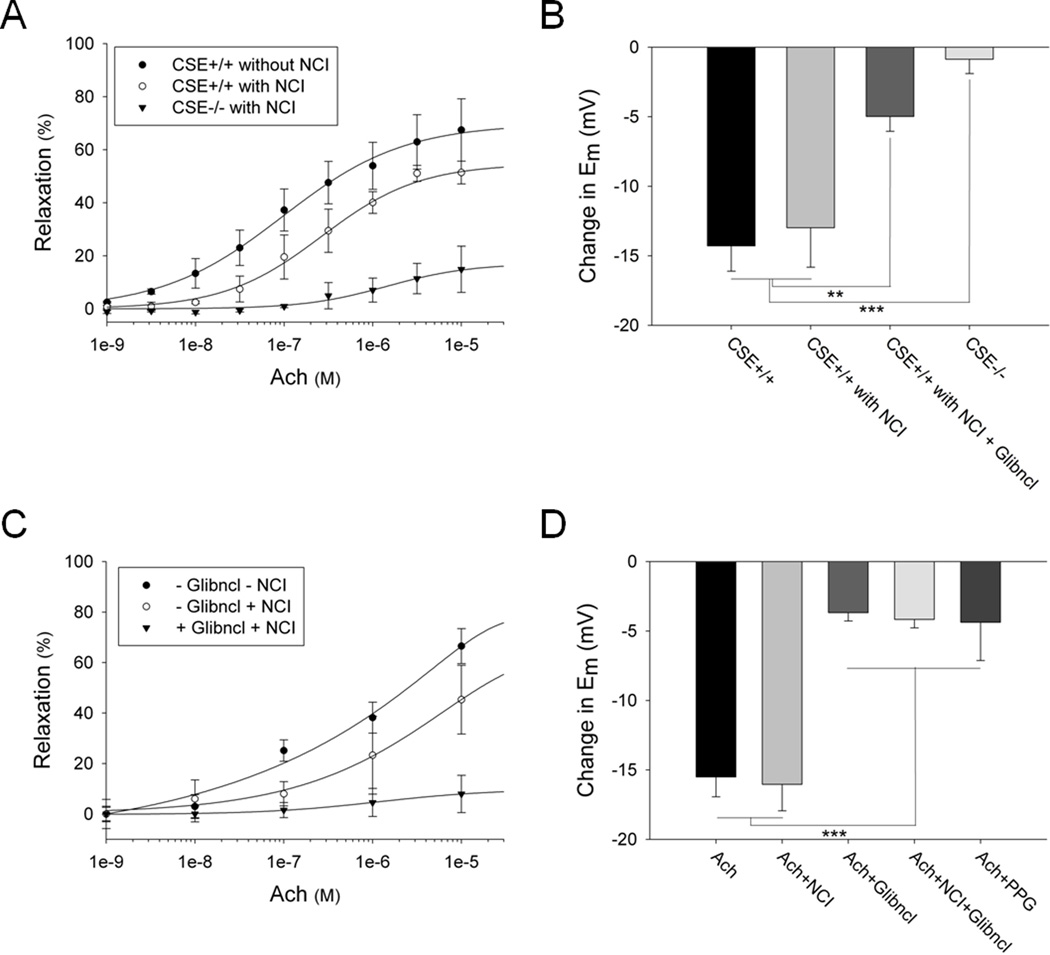
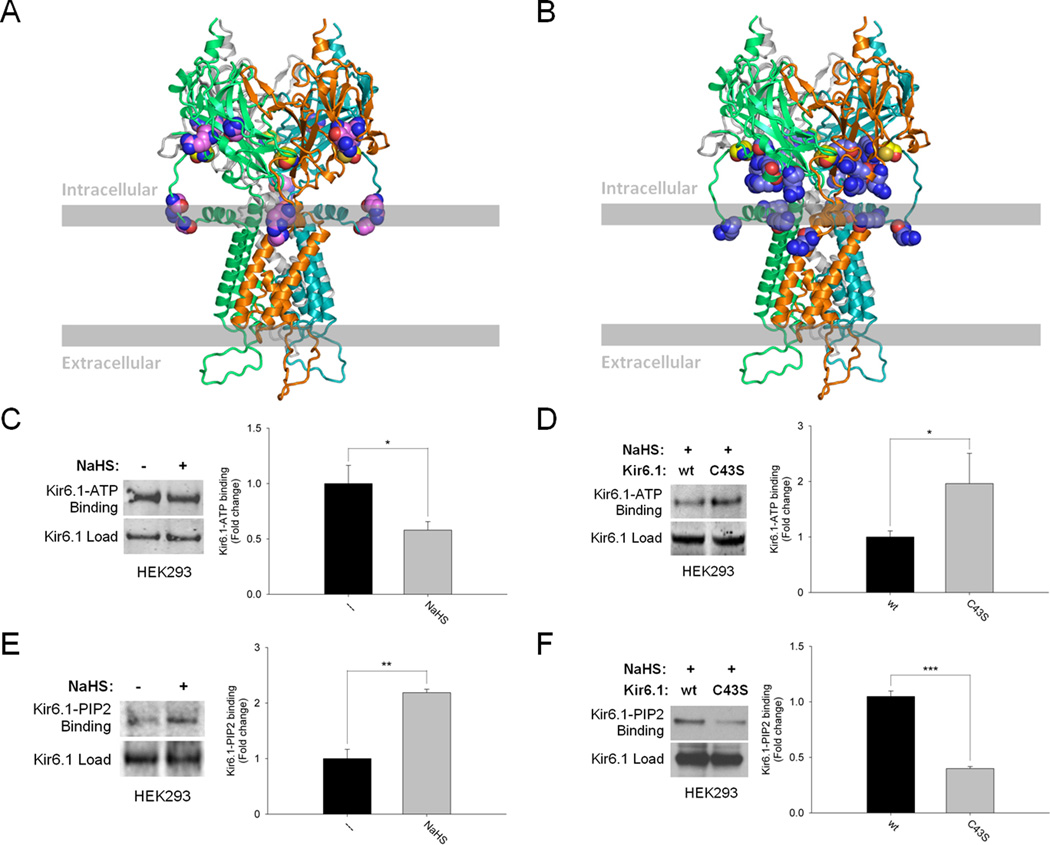
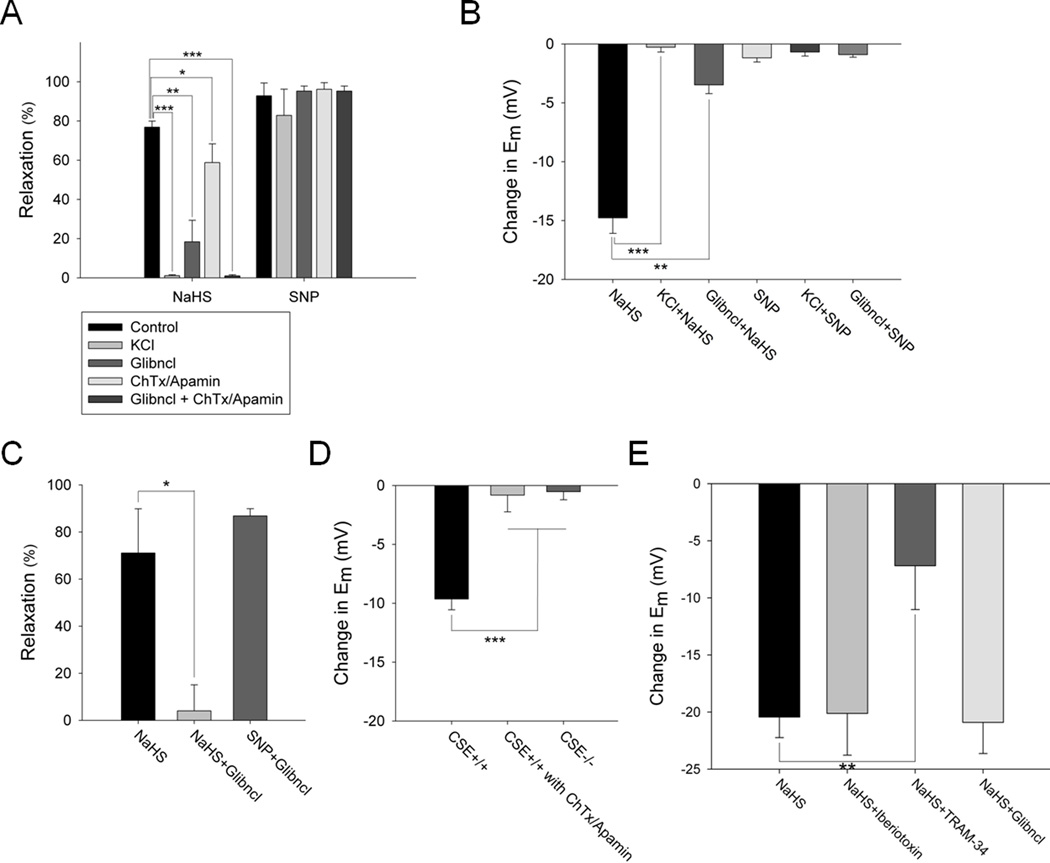
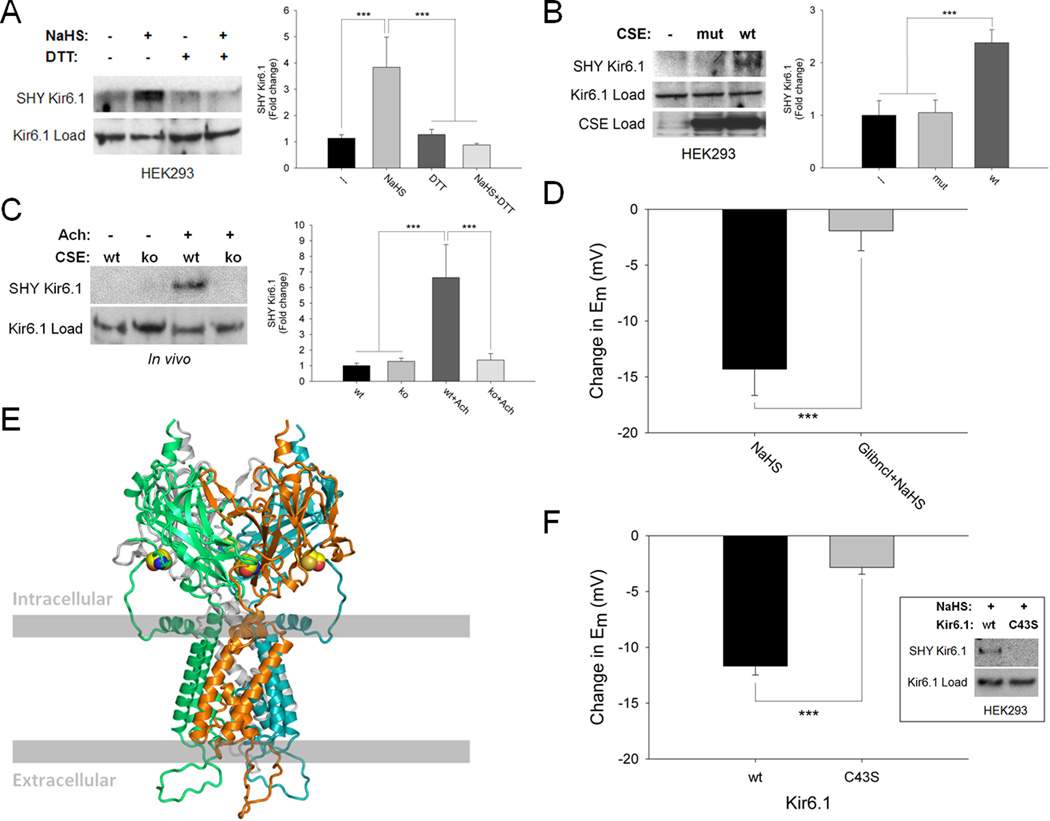
We now show that H(2)S is a major EDHF because in blood vessels of CSE-deleted mice, hyperpolarization is virtually abolished. H(2)S acts by covalently modifying (sulfhydrating) the ATP-sensitive potassium channel, as mutating the site of sulfhydration prevents H(2)S-elicited hyperpolarization. The endothelial intermediate conductance (IK(Ca)) and small conductance (SK(Ca)) potassium channels mediate in part the effects of H(2)S, as selective IK(Ca) and SK(Ca) channel inhibitors, charybdotoxin and apamin, inhibit glibenclamide-insensitive, H(2)S-induced vasorelaxation.
H(2)S is a major EDHF that causes vascular endothelial and smooth muscle cell hyperpolarization and vasorelaxation by activating the ATP-sensitive, intermediate conductance and small conductance potassium channels through cysteine S-sulfhydration. Because EDHF activity is a principal determinant of vasorelaxation in numerous vascular beds, drugs influencing H(2)S biosynthesis offer therapeutic potential.
一氧化氮(NO),经典的内皮衍生舒张因子(EDRF),通过环磷酸鸟苷(cGMP)和钙离子起作用,而不会明显影响膜电位。EDRF 活性的一个主要组成部分来自于超极化,被称为内皮衍生超极化因子(EDHF)。硫化氢(H₂S)是一种主要的 EDRF,因为缺乏其生物合成酶胱硫醚γ-裂解酶(CSE)的小鼠表现出明显的高血压,对乙酰胆碱的血管舒张反应不足。
本研究的目的是确定 H₂S 是否是一种主要的生理 EDHF。
我们现在表明 H₂S 是一种主要的 EDHF,因为在 CSE 缺失的小鼠的血管中,超极化几乎被完全消除。H₂S 通过共价修饰(巯基化)ATP 敏感性钾通道起作用,因为突变巯基化位点可防止 H₂S 诱导的超极化。内皮中间电导(IK(Ca))和小电导(SK(Ca))钾通道部分介导了 H₂S 的作用,因为选择性 IK(Ca)和 SK(Ca)通道抑制剂,霍乱毒素和阿帕米胺,抑制格列本脲不敏感的 H₂S 诱导的血管舒张。
H₂S 是一种主要的 EDHF,通过激活 ATP 敏感性、中间电导和小电导钾通道,导致血管内皮和平滑肌细胞超极化和血管舒张,通过半胱氨酸 S-巯基化。由于 EDHF 活性是许多血管床中血管舒张的主要决定因素,影响 H₂S 生物合成的药物具有治疗潜力。