Blizard Institute of Cell and Molecular Science, Barts and The London School of Medicine and Dentistry, Queen Mary University of London, London, United Kingdom.
PLoS Genet. 2011 Sep;7(9):e1002300. doi: 10.1371/journal.pgen.1002300. Epub 2011 Sep 29.
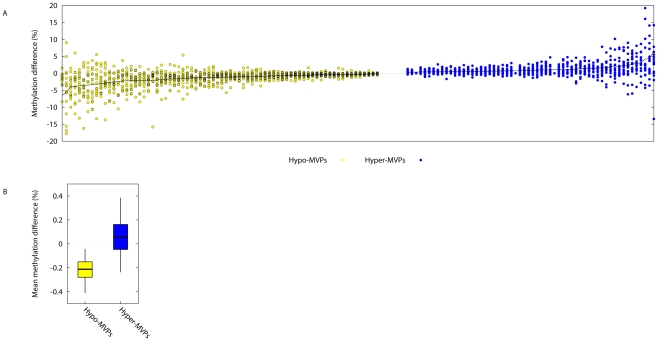
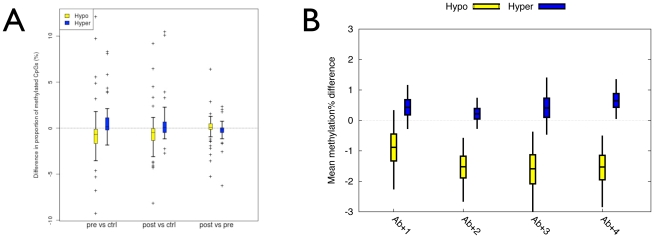
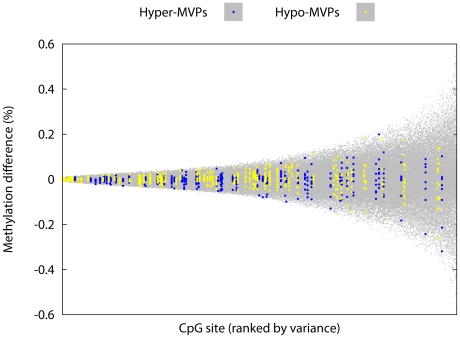
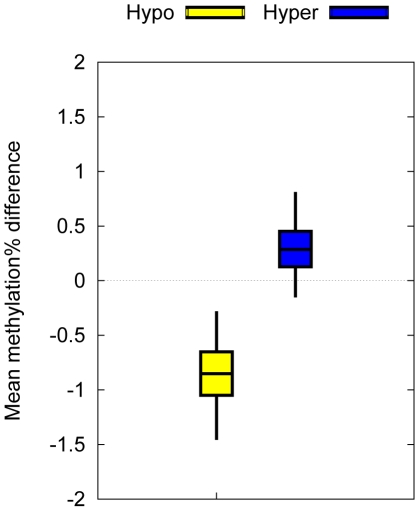
Monozygotic (MZ) twin pair discordance for childhood-onset Type 1 Diabetes (T1D) is ∼50%, implicating roles for genetic and non-genetic factors in the aetiology of this complex autoimmune disease. Although significant progress has been made in elucidating the genetics of T1D in recent years, the non-genetic component has remained poorly defined. We hypothesized that epigenetic variation could underlie some of the non-genetic component of T1D aetiology and, thus, performed an epigenome-wide association study (EWAS) for this disease. We generated genome-wide DNA methylation profiles of purified CD14+ monocytes (an immune effector cell type relevant to T1D pathogenesis) from 15 T1D-discordant MZ twin pairs. This identified 132 different CpG sites at which the direction of the intra-MZ pair DNA methylation difference significantly correlated with the diabetic state, i.e. T1D-associated methylation variable positions (T1D-MVPs). We confirmed these T1D-MVPs display statistically significant intra-MZ pair DNA methylation differences in the expected direction in an independent set of T1D-discordant MZ pairs (P = 0.035). Then, to establish the temporal origins of the T1D-MVPs, we generated two further genome-wide datasets and established that, when compared with controls, T1D-MVPs are enriched in singletons both before (P = 0.001) and at (P = 0.015) disease diagnosis, and also in singletons positive for diabetes-associated autoantibodies but disease-free even after 12 years follow-up (P = 0.0023). Combined, these results suggest that T1D-MVPs arise very early in the etiological process that leads to overt T1D. Our EWAS of T1D represents an important contribution toward understanding the etiological role of epigenetic variation in type 1 diabetes, and it is also the first systematic analysis of the temporal origins of disease-associated epigenetic variation for any human complex disease.
同卵(MZ)双胞胎儿童期 1 型糖尿病(T1D)发病不一致性约为 50%,这表明遗传和非遗传因素在这种复杂自身免疫性疾病的发病机制中发挥作用。尽管近年来在阐明 T1D 的遗传学方面取得了重大进展,但非遗传成分仍未得到很好的定义。我们假设表观遗传变异可能是 T1D 发病机制中非遗传成分的基础,因此对这种疾病进行了全基因组表观遗传关联研究(EWAS)。我们从 15 对 T1D 不一致的 MZ 双胞胎中生成了纯化 CD14+单核细胞(与 T1D 发病机制相关的免疫效应细胞类型)的全基因组 DNA 甲基化图谱。这确定了 132 个不同的 CpG 位点,其中 MZ 双胞胎内 DNA 甲基化差异的方向与糖尿病状态显著相关,即 T1D 相关的甲基化可变位置(T1D-MVP)。我们在另一组 T1D 不一致的 MZ 双胞胎中证实了这些 T1D-MVP 按预期方向显示出统计学上显著的 MZ 双胞胎内 DNA 甲基化差异(P=0.035)。然后,为了确定 T1D-MVP 的时间起源,我们生成了另外两个全基因组数据集,并确定与对照相比,T1D-MVP 在疾病诊断前(P=0.001)和诊断时(P=0.015)均在单体中富集,并且在糖尿病相关自身抗体阳性但即使在 12 年随访后也无疾病的单体中也富集(P=0.0023)。综合来看,这些结果表明 T1D-MVP 出现在导致明显 T1D 的发病过程的早期。我们对 T1D 的 EWAS 是朝着理解表观遗传变异在 1 型糖尿病发病机制中的作用迈出的重要一步,也是对任何人类复杂疾病的疾病相关表观遗传变异的时间起源进行的首次系统分析。