Dame Roma Mitchell Cancer Research Laboratories, Discipline of Medicine, University of Adelaide, Hanson Institute, Adelaide, Australia.
PLoS One. 2011;6(9):e25634. doi: 10.1371/journal.pone.0025634. Epub 2011 Sep 28.
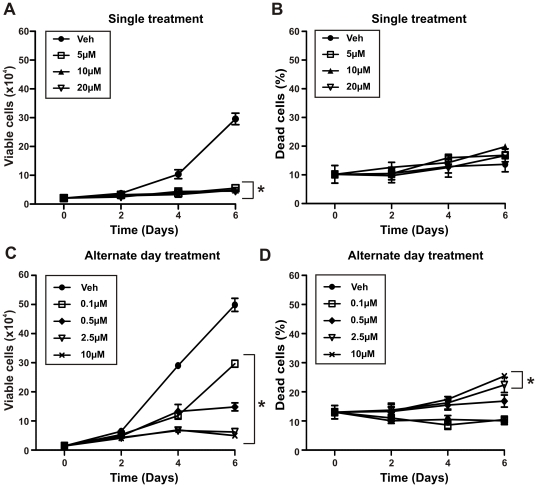
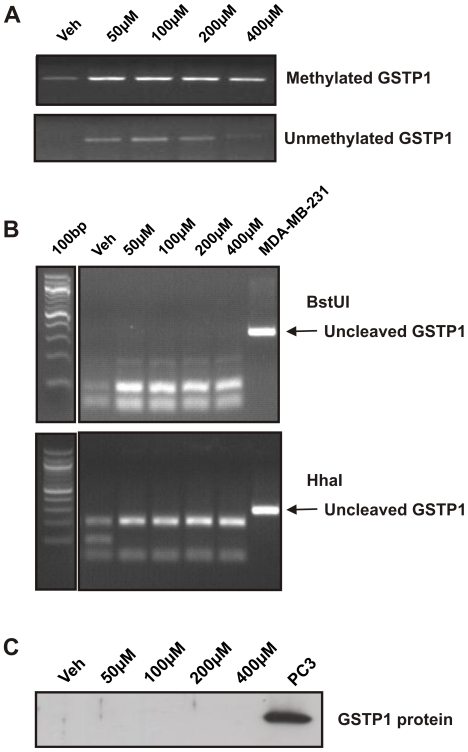
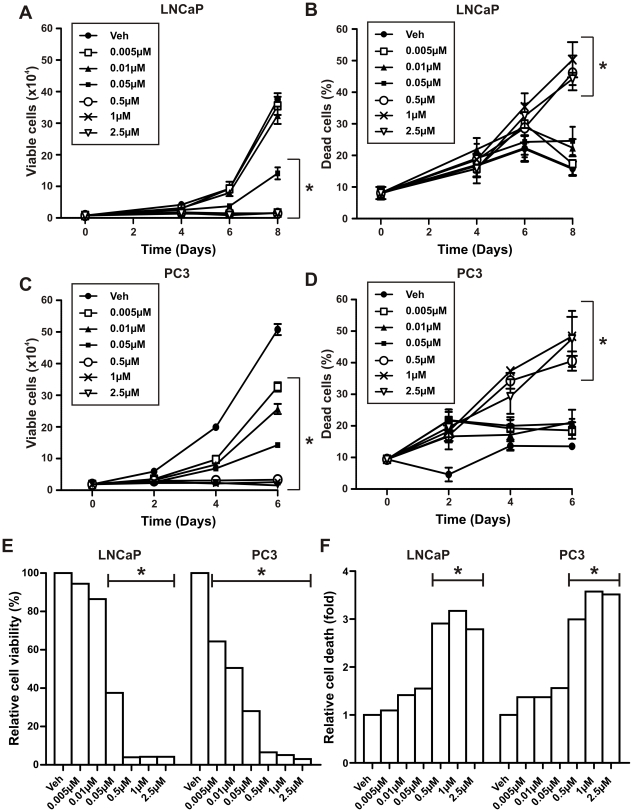
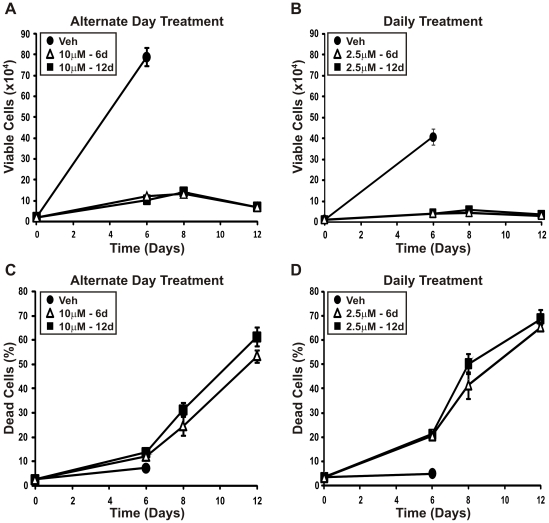
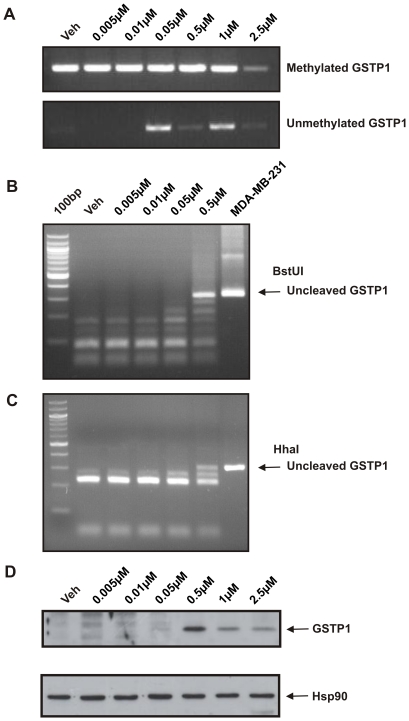
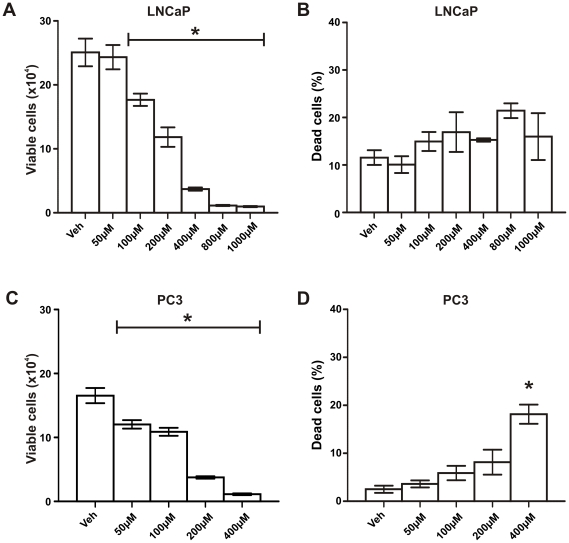
DNA methylation plays an important role in carcinogenesis and the reversibility of this epigenetic modification makes it a potential therapeutic target. To date, DNA methyltransferase inhibitors (DNMTi) have not demonstrated clinical efficacy in prostate cancer, with one of the major obstacles being the inability to monitor drug activity during the trial. Given the high frequency and specificity of GSTP1 DNA methylation in prostate cancer, we investigated whether GSTP1 is a useful marker of DNMTi treatment efficacy. LNCaP prostate cancer cells were treated with 5-aza-2'-deoxycytidine (5-aza-CdR) either with a single high dose (5-20 µM), every alternate day (0.1-10 µM) or daily (0.005-2.5 µM). A daily treatment regimen with 5-aza-CdR was optimal, with significant suppression of cell proliferation achieved with doses of 0.05 µM or greater (p<0.0001) and induction of cell death from 0.5 µM (p<0.0001). In contrast, treatment with a single high dose of 20 µM 5-aza-CdR inhibited cell proliferation but was not able to induce cell death. Demethylation of GSTP1 was observed with doses of 5-aza-CdR that induced significant suppression of cell proliferation (≥ 0.05 µM). Re-expression of the GSTP1 protein was observed only at doses of 5-aza-CdR (≥ 0.5 µM) associated with induction of cell death. Treatment of LNCaP cells with a more stable DNMTi, Zebularine required at least a 100-fold higher dose (≥ 50 µM) to inhibit proliferation and was less potent in inducing cell death, which corresponded to a lack of GSTP1 protein re-expression. We have shown that GSTP1 DNA methylation and protein expression status is correlated with DNMTi treatment response in prostate cancer cells. Since GSTP1 is methylated in nearly all prostate cancers, our results warrant its testing as a marker of epigenetic therapy response in future clinical trials. We conclude that the DNA methylation and protein expression status of GSTP1 are good indicators of DNMTi efficacy.
DNA 甲基化在致癌过程中起着重要作用,这种表观遗传修饰的可逆性使其成为潜在的治疗靶点。迄今为止,DNA 甲基转移酶抑制剂 (DNMTi) 在前列腺癌中并未显示出临床疗效,其中一个主要障碍是在试验过程中无法监测药物活性。鉴于 GSTP1 DNA 甲基化在前列腺癌中的高频率和特异性,我们研究了 GSTP1 是否是 DNMTi 治疗效果的有用标志物。用 5-氮杂-2'-脱氧胞苷(5-aza-CdR)处理 LNCaP 前列腺癌细胞,采用单次高剂量(5-20 μM)、隔天一次(0.1-10 μM)或每天一次(0.005-2.5 μM)给药。每天用 5-aza-CdR 处理是最佳的,剂量为 0.05 μM 或更高时,显著抑制细胞增殖(p<0.0001),0.5 μM 时诱导细胞死亡(p<0.0001)。相比之下,用 20 μM 5-aza-CdR 单次高剂量处理抑制细胞增殖,但不能诱导细胞死亡。用能够显著抑制细胞增殖(≥0.05 μM)的 5-aza-CdR 剂量观察到 GSTP1 的去甲基化。仅在与诱导细胞死亡相关的 5-aza-CdR 剂量(≥0.5 μM)时观察到 GSTP1 蛋白的重新表达。用更稳定的 DNMTi,Zebularine 处理 LNCaP 细胞,需要至少 100 倍更高的剂量(≥50 μM)才能抑制增殖,并且在诱导细胞死亡方面效果较弱,这与 GSTP1 蛋白的重新表达缺乏相对应。我们已经表明,GSTP1 DNA 甲基化和蛋白表达状态与前列腺癌细胞中的 DNMTi 治疗反应相关。由于 GSTP1 在几乎所有的前列腺癌中都被甲基化,我们的结果证明它可以作为未来临床试验中评估表观遗传治疗反应的标志物进行测试。我们得出结论,GSTP1 的 DNA 甲基化和蛋白表达状态是 DNMTi 疗效的良好指标。