Institut de Recherche pour le Développement (IRD), UMR DIA-DE, DYNADIV researche group, 911, avenue Agropolis, BP 64501, F-34394 Montpellier cedex 5, France.
BMC Evol Biol. 2011 Oct 11;11:296. doi: 10.1186/1471-2148-11-296.
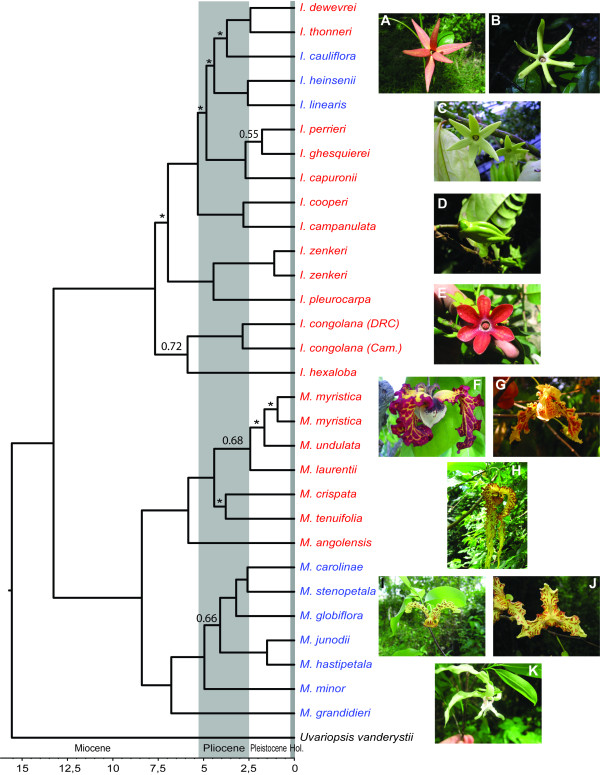
The tropical rain forests (TRF) of Africa are the second largest block of this biome after the Amazon and exhibit high levels of plant endemism and diversity. Two main hypotheses have been advanced to explain speciation processes that have led to this high level of biodiversity: allopatric speciation linked to geographic isolation and ecological speciation linked to ecological gradients. Both these hypotheses rely on ecology: in the former conservation of ecological niches through time is implied, while in the latter adaptation via selection to alternative ecological niches would be a prerequisite. Here, we investigate the role of ecology in explaining present day species diversity in African TRF using a species level phylogeny and ecological niche modeling of two predominantly restricted TRF tree genera, Isolona and Monodora (Annonaceae). Both these genera, with 20 and 14 species, respectively, are widely distributed in African TRFs, with a few species occurring in slightly less humid regions such as in East Africa.
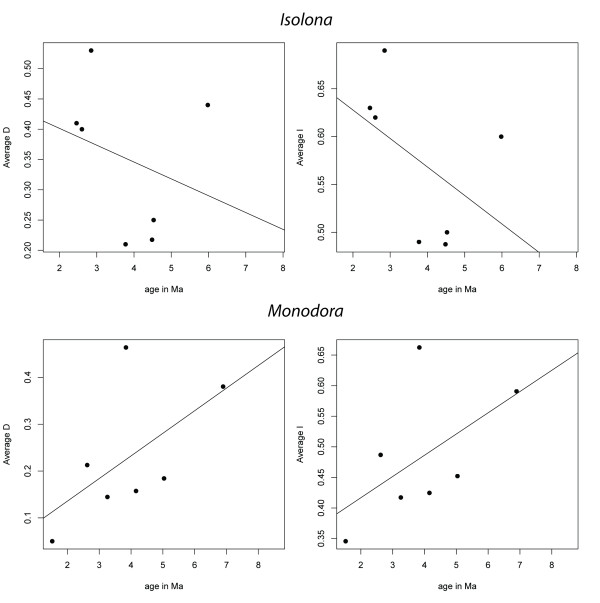
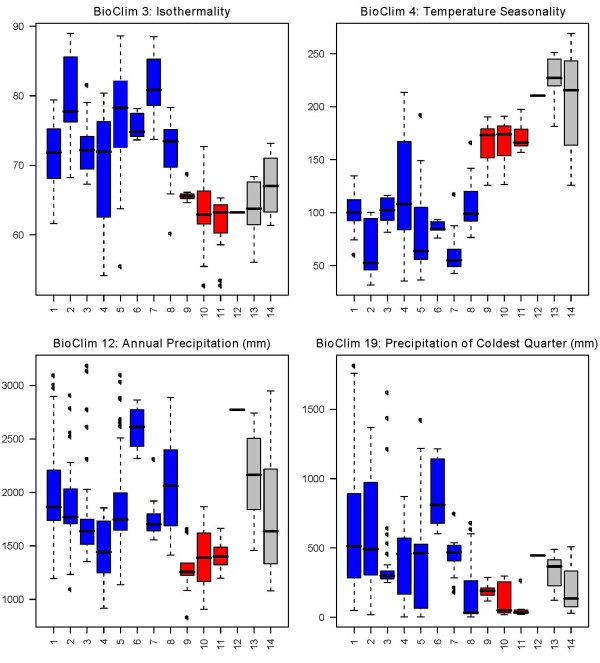
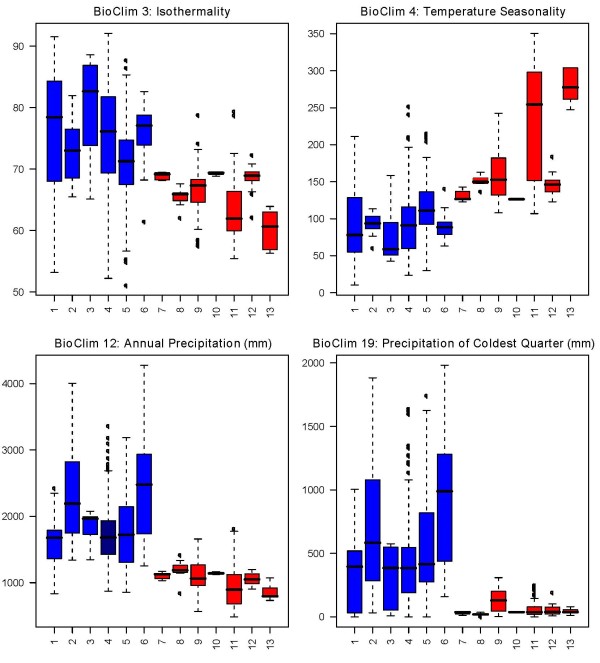
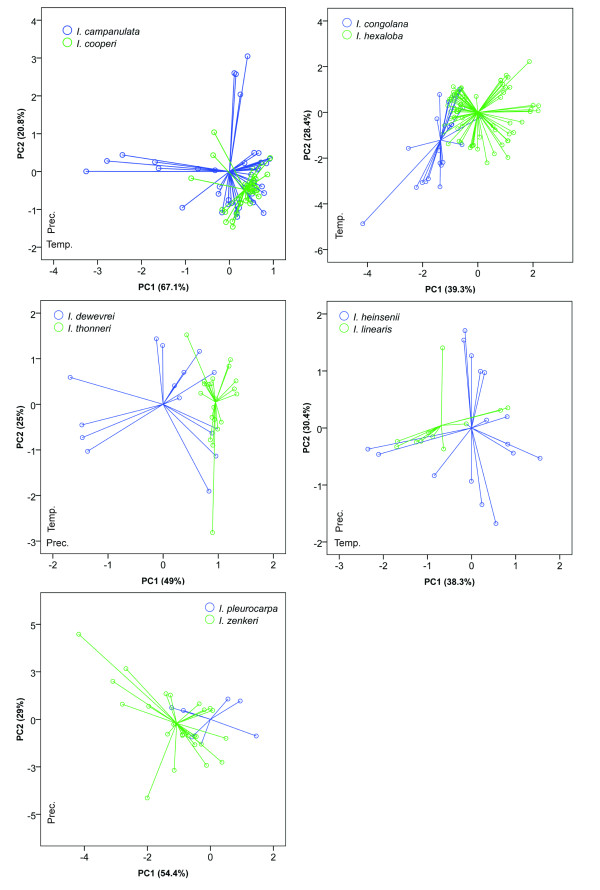
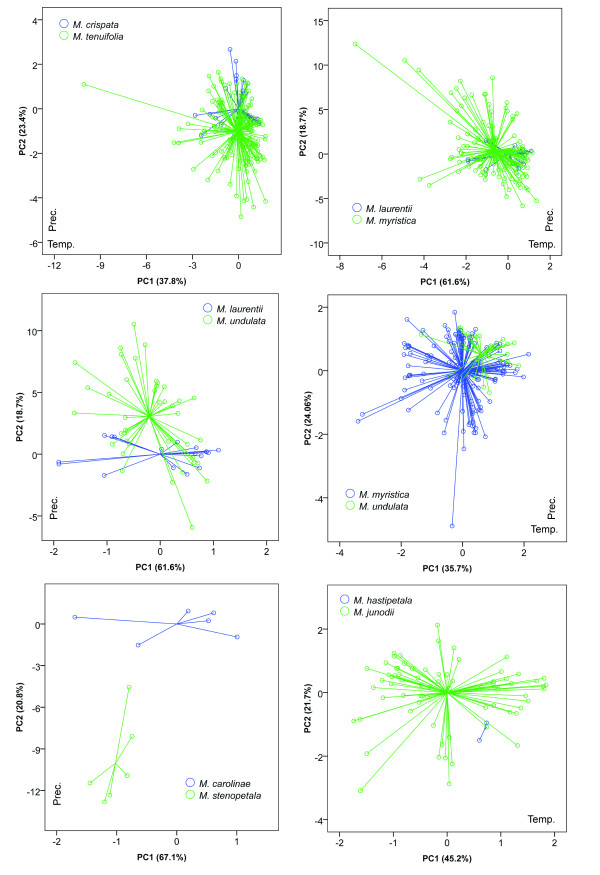
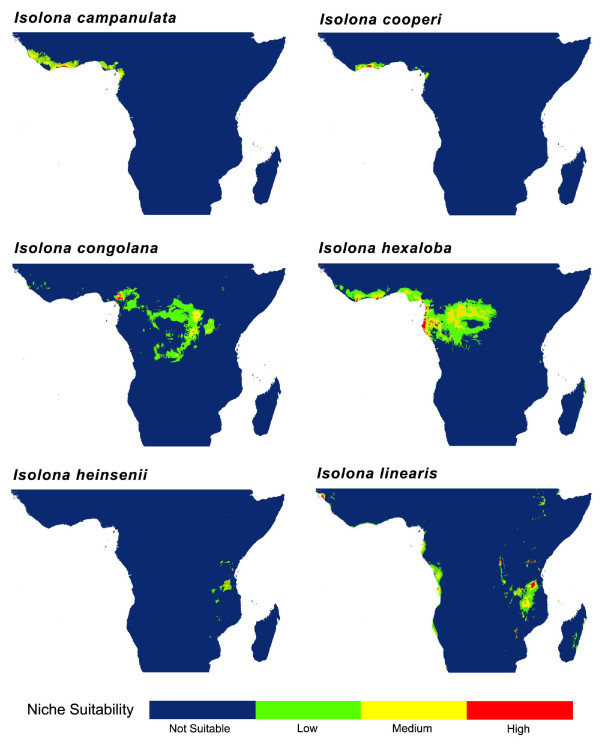
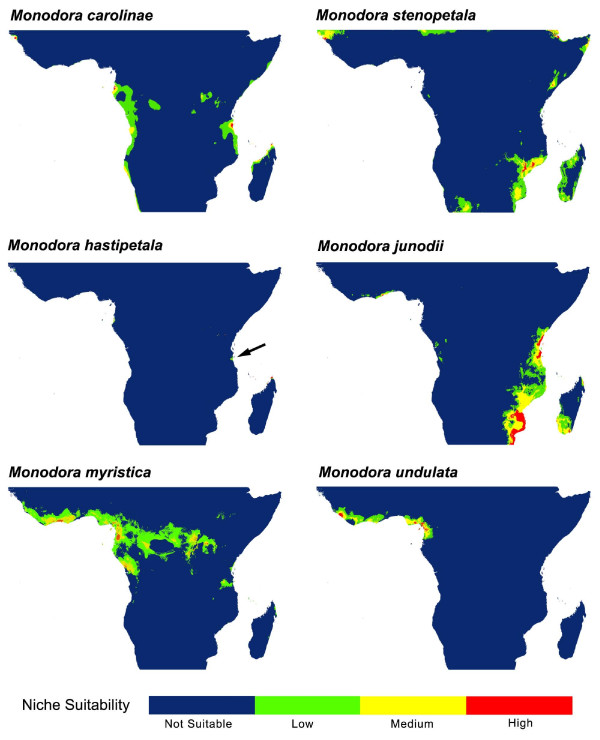
A total of 11 sister species pairs were identified most of them occurring in allopatry or with little geographical overlap. Our results provide a mixed answer on the role of ecology in speciation. Although no sister species have identical niches, just under half of the tests suggest that sister species do have more similar niches than expected by chance. PCA analyses also support little ecological differences between sister species. Most speciation events within both genera predate the Pleistocene, occurring during the Late Miocene and Pliocene periods.
Ecology is almost always involved in speciation, however, it would seem to have had a little role in species generation within Isolona and Monodora at the scale analyzed here. This is consistent with the geographical speciation model for TRF diversification. These results contrast to other studies for non-TRF plant species where ecological speciation was found to be an important factor of diversification. The Pliocene period appears to be a vital time in the generation of African TRF diversity, whereas Pleistocene climatic fluctuations have had a smaller role on speciation than previously thought.Ecological niche modeling, species level phylogeny, ecological speciation, African tropics, Isolona, Monodora, Annonaceae.
非洲的热带雨林(TRF)是仅次于亚马逊的第二大生物群落,表现出较高水平的植物特有性和多样性。有两个主要假说被提出来解释导致这种高生物多样性的物种形成过程:与地理隔离相关的异域物种形成和与生态梯度相关的生态物种形成。这两个假说都依赖于生态学:前者意味着通过时间保护生态位的保存,而后者则需要通过选择适应替代生态位。在这里,我们使用物种水平系统发育和两种主要局限于 TRF 的树属——Isolona 和 Monodora(番荔枝科)的生态位建模来研究生态学在解释当今非洲 TRF 物种多样性中的作用。这两个属分别有 20 种和 14 种,广泛分布在非洲 TRF 中,少数种出现在稍微不那么潮湿的地区,如东非。
总共鉴定出 11 对姐妹种,其中大多数是异域发生的,或者地理上很少重叠。我们的研究结果对生态学在物种形成中的作用提供了一个混合的答案。尽管没有姐妹种具有相同的生态位,但近一半的测试表明,姐妹种的生态位比随机预期的更相似。PCA 分析也支持姐妹种之间的生态差异很小。这两个属内的大多数物种形成事件都发生在更新世之前,发生在中新世和上新世时期。
生态学几乎总是参与物种形成,但在 Isolona 和 Monodora 这里分析的尺度上,它似乎在物种生成中只起了很小的作用。这与 TRF 多样化的地理物种形成模型一致。这些结果与其他非 TRF 植物物种的研究结果形成对比,在这些研究中,生态物种形成被发现是多样化的一个重要因素。上新世时期似乎是非洲 TRF 多样性产生的关键时期,而更新世气候波动对物种形成的作用比以前认为的要小。生态位建模、物种水平系统发育、生态物种形成、非洲热带地区、Isolona、Monodora、番荔枝科。