Institute of Virology, Hannover Medical School, Germany.
J Infect Dis. 2011 Nov;204 Suppl 3(Suppl 3):S840-9. doi: 10.1093/infdis/jir306.
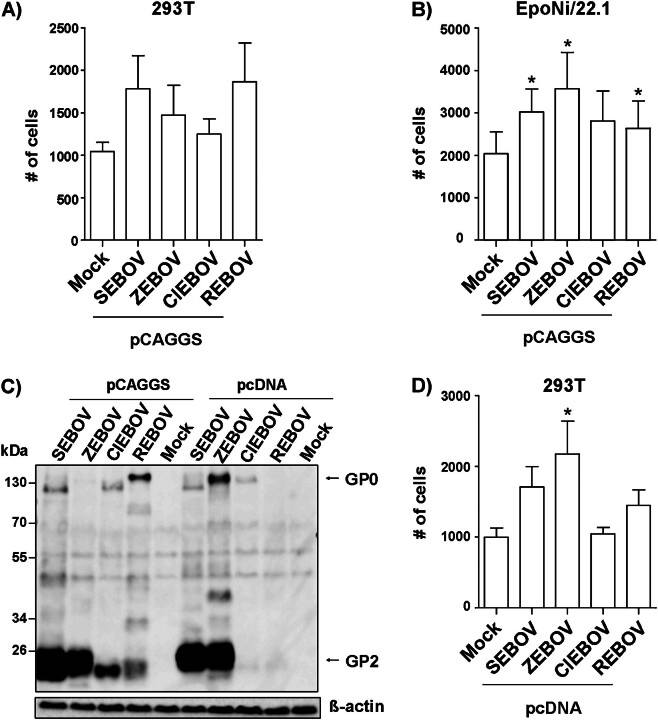
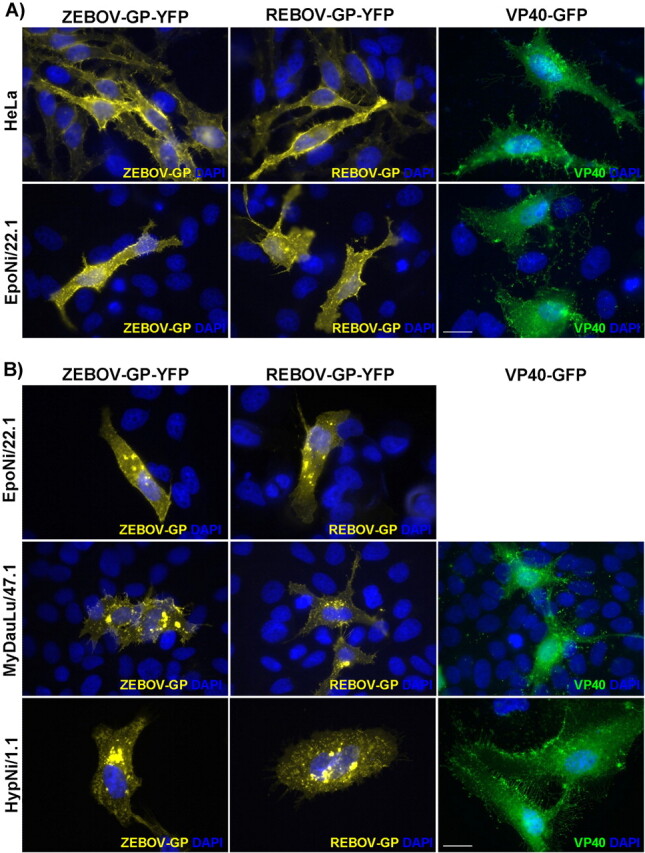
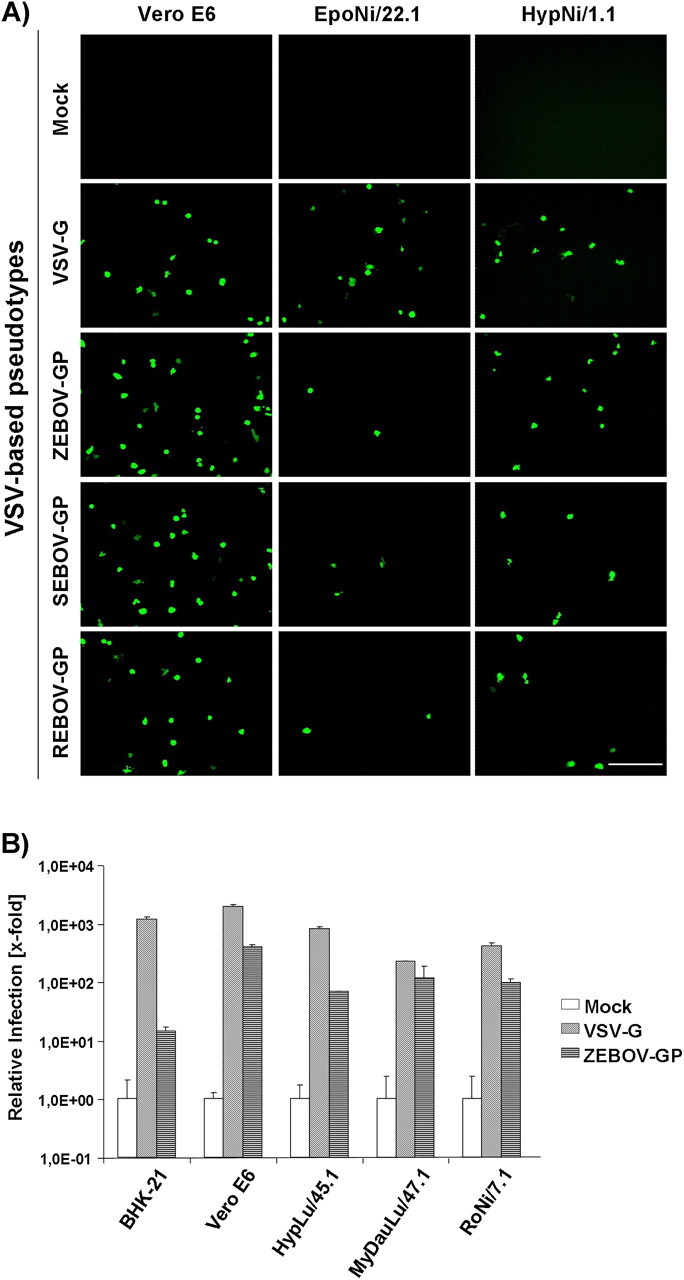
Infection with Ebola virus (EBOV) causes hemorrhagic fever in humans with high case-fatality rates. The EBOV-glycoprotein (EBOV-GP) facilitates viral entry and promotes viral release from human cells. African fruit bats are believed not to develop disease upon EBOV infection and have been proposed as a natural reservoir of EBOV. We compared EBOV-GP interactions with human cells and cells from African fruit bats. We found that susceptibility to EBOV-GP-dependent infection was not limited to bat cells from potential reservoir species, and we observed that GP displayed similar biological properties in human and bat cells. The only exception was GP localization, which was to a greater extent intracellular in bat cells as compared to human cells. Collectively, our results suggest that GP interactions with fruit bat and human cells are similar and do not limit EBOV tropism for certain bat species.
埃博拉病毒(EBOV)感染会导致人类出血热,死亡率很高。EBOV 糖蛋白(EBOV-GP)有助于病毒进入并促进病毒从人体细胞中释放。人们认为非洲果蝠在感染 EBOV 时不会发病,并被认为是 EBOV 的自然宿主。我们比较了 EBOV-GP 与人类细胞和非洲果蝠细胞的相互作用。我们发现,对 EBOV-GP 依赖性感染的易感性不仅限于可能为宿主的蝙蝠物种的蝙蝠细胞,并且我们观察到 GP 在人类和蝙蝠细胞中显示出相似的生物学特性。唯一的例外是 GP 的定位,与人类细胞相比,GP 在蝙蝠细胞中更多地定位于细胞内。总的来说,我们的结果表明,GP 与果蝠和人类细胞的相互作用相似,不会限制 EBOV 对某些蝙蝠物种的嗜性。