Duncan Joshua D, Pathak Monika, King Barnabas J, Bamber Holly, Radford Paul, Dey Jayasree, Richardson Charlotte, Astbury Stuart, McClure Patrick, Ball Jonathan K, Urbanowicz Richard A, Tarr Alexander W
School of Life Sciences, Faculty of Medicine and Health Sciences, The University of Nottingham, Nottingham, UK.
Wolfson Centre for Global Virus Research, The University of Nottingham, Nottingham, UK.
J Gen Virol. 2025 Jun;106(6). doi: 10.1099/jgv.0.002120.
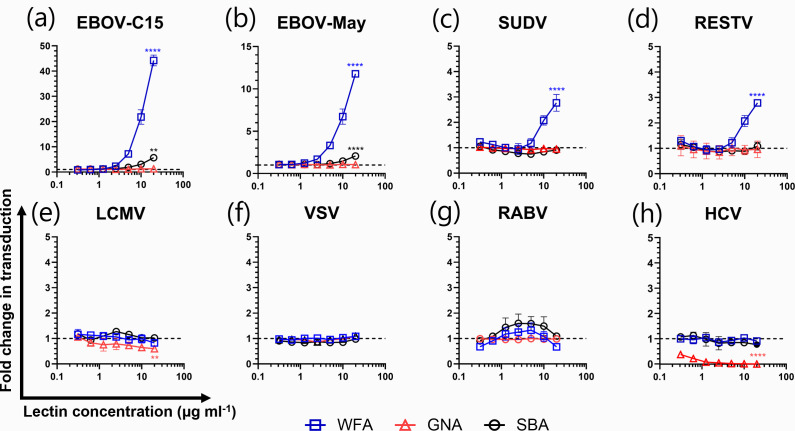
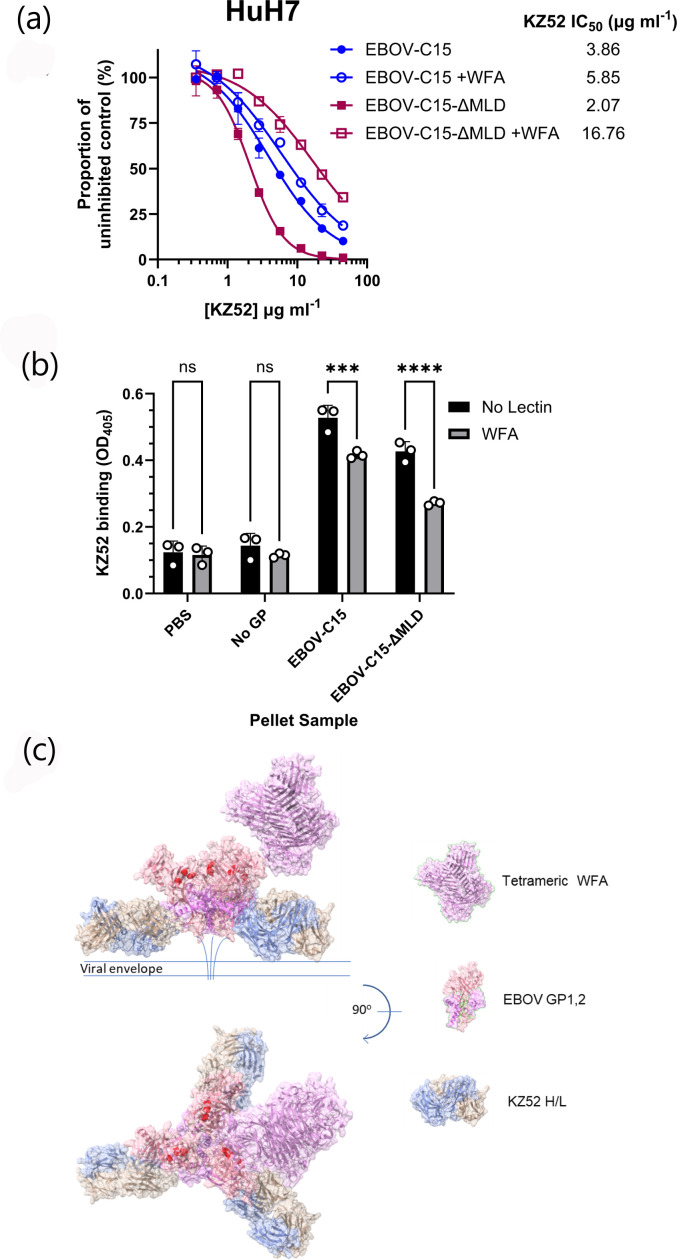
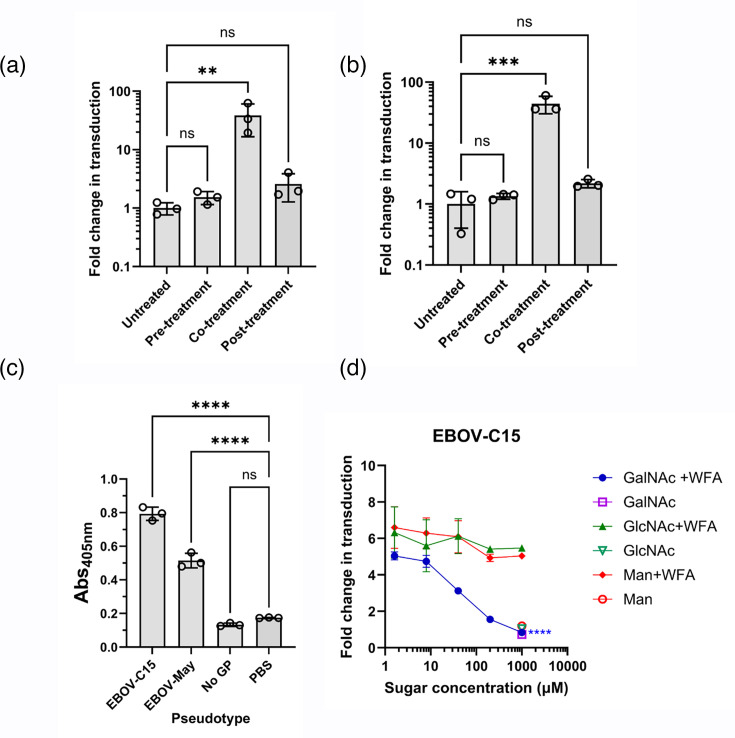
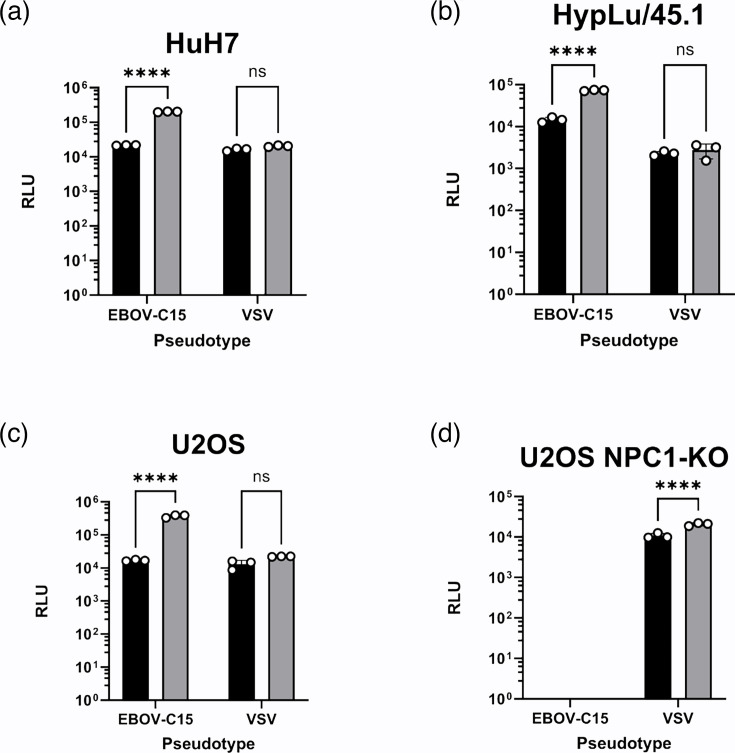
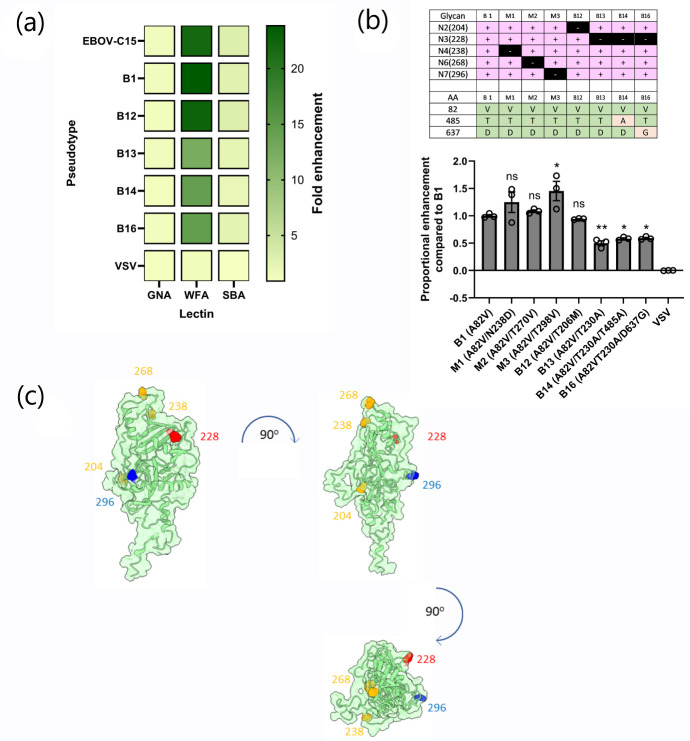
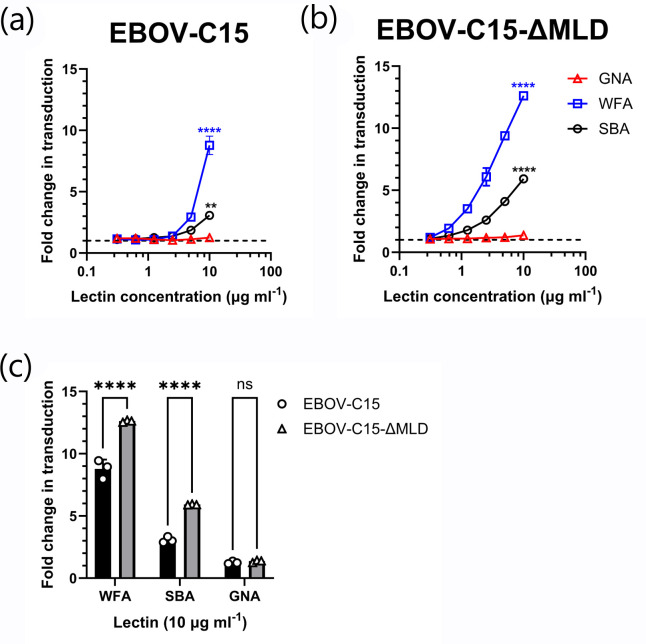
Entry of e (EBOV) into a host cell is a complex process requiring interactions between the viral glycoproteins (GPs) and cellular factors. These entry factors are cell-specific and can include cell surface lectins and phosphatidylserine receptors. Niemann-Pick type C1 is critical to the late stage of the entry process. Entry has been demonstrated to be enhanced by interactions between the virion and surface-expressed lectins, which interact with carbohydrate moieties attached to the GP. In addition, soluble lectins, including mannose-binding lectin, can enhance entry . However, the mechanism of lectin-mediated enhancement remains to be defined. This study investigated the possibility that plant lectins, agglutinin (WFA), soybean agglutinin (SBA) and agglutinin (GNA), which possess different carbohydrate-binding specificities, influence EBOV entry. WFA was observed to potently enhance entry of lentiviral pseudotype viruses (PVs) expressing the GP of three species [Zaire, Sudan () and Reston ()], with the greatest impact on EBOV. SBA had a modest enhancing effect on entry that was specific to EBOV, whilst GNA had no impact on the entry of any of the species. None of the lectins enhanced the entry of control PVs expressing the surface proteins of other RNA viruses tested. WFA was demonstrated to bind directly with the EBOV-GP via the glycans, and mutational analysis implicated N as contributing to the interaction. Furthermore, enhancement was observed in both human and bat cell lines, indicating a highly conserved mechanism of action. We conclude that the binding of WFA to EBOV-GP through interactions including the glycan at N results in GP alterations that enhance entry, providing evidence of a mechanism for lectin-mediated virus entry enhancement. Targeting lectin-ligand interactions presents a potential strategy for restricting entry.
埃博拉病毒(EBOV)进入宿主细胞是一个复杂的过程,需要病毒糖蛋白(GPs)与细胞因子之间相互作用。这些进入因子具有细胞特异性,可包括细胞表面凝集素和磷脂酰丝氨酸受体。尼曼-匹克C1型蛋白对进入过程的后期至关重要。已证明病毒粒子与表面表达的凝集素之间的相互作用可增强进入,这些凝集素与附着在GP上的碳水化合物部分相互作用。此外,包括甘露糖结合凝集素在内的可溶性凝集素也可增强进入。然而,凝集素介导增强作用的机制仍有待确定。本研究调查了具有不同碳水化合物结合特异性的植物凝集素,即荆豆凝集素(WFA)、大豆凝集素(SBA)和雪花莲凝集素(GNA)影响EBOV进入的可能性。观察到WFA能有效增强表达三种埃博拉病毒毒株[扎伊尔型、苏丹型()和莱斯顿型()]GP的慢病毒假型病毒(PVs)的进入,对EBOV的影响最大。SBA对EBOV特异性的进入有适度增强作用,而GNA对任何一种埃博拉病毒毒株的进入均无影响。这些凝集素均未增强表达所测试的其他RNA病毒表面蛋白的对照PVs的进入。已证明WFA通过聚糖直接与EBOV-GP结合,突变分析表明N参与了这种相互作用。此外,在人和蝙蝠细胞系中均观察到增强作用,表明作用机制高度保守。我们得出结论,WFA通过包括N处聚糖在内的相互作用与EBOV-GP结合,导致GP改变从而增强进入,这为凝集素介导的病毒进入增强机制提供了证据。靶向凝集素-配体相互作用为限制埃博拉病毒进入提供了一种潜在策略。