Graduate School of Agricultural and Life Sciences, University of Tokyo, Tokyo, Japan.
PLoS One. 2011;6(10):e25802. doi: 10.1371/journal.pone.0025802. Epub 2011 Oct 3.
Plants within the Orobanchaceae are an agriculturally important group of parasites that attack economically important crops to obtain water and nutrients from their hosts. Despite their agricultural importance, molecular mechanisms of the parasitism are poorly understood.
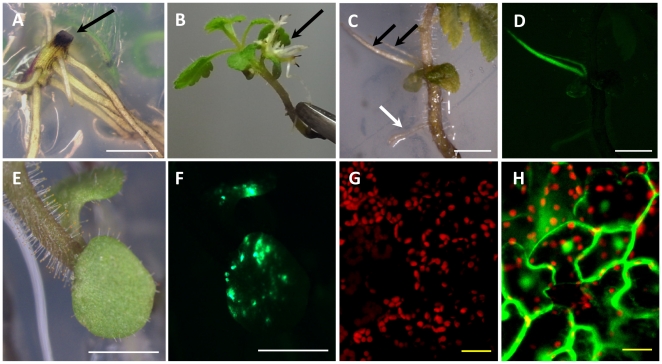
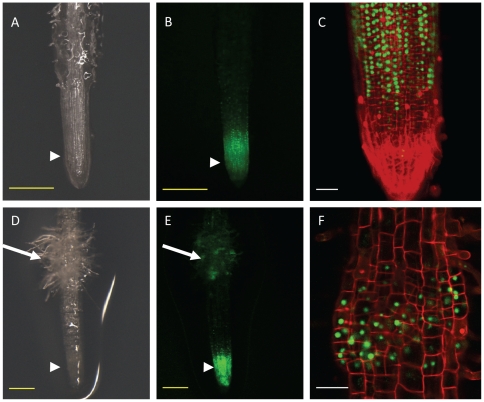
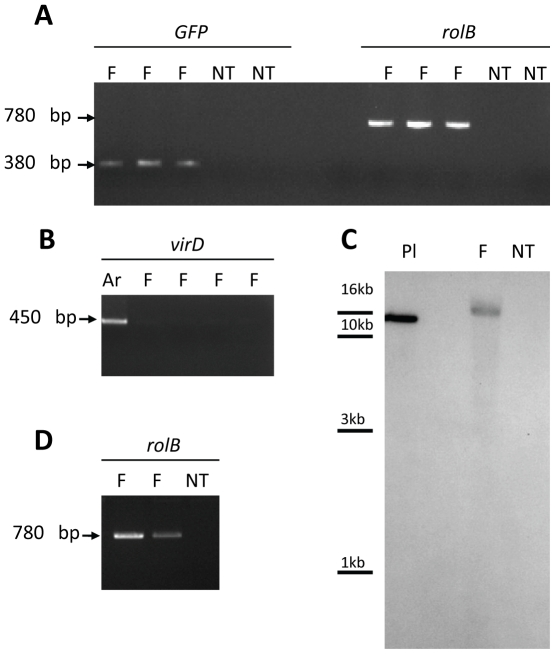
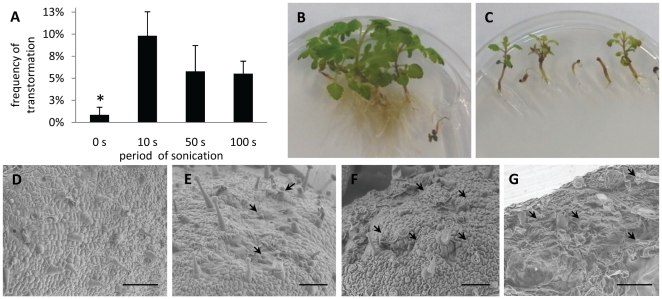
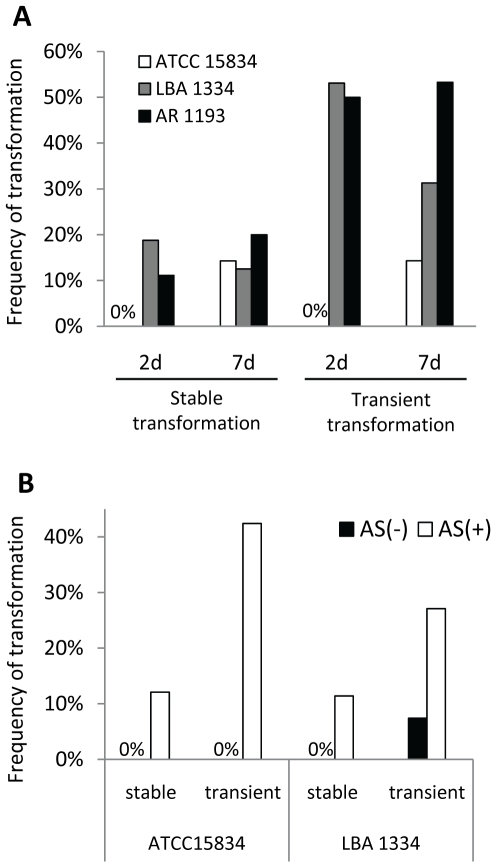
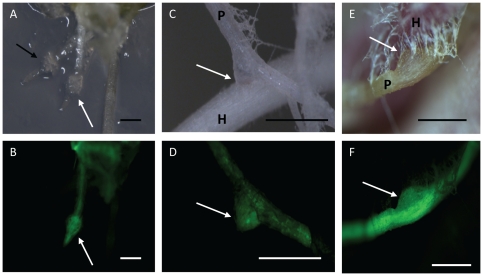
METHODOLOGY/PRINCIPAL FINDINGS: We developed transient and stable transformation systems for Phtheirospermum japonicum, a facultative parasitic plant in the Orobanchaceae. The transformation protocol was established by a combination of sonication and acetosyringone treatments using the hairy-root-inducing bacterium, Agrobacterium rhizogenes and young seedlings. Transgenic hairy roots of P. japonicum were obtained from cotyledons 2 to 3 weeks after A. rhizogenes inoculation. The presence and the expression of transgenes in P. japonicum were verified by genomic PCR, Southern blot and RT-PCR methods. Transgenic roots derived from A. rhizogenes-mediated transformation were able to develop haustoria on rice and maize roots. Transgenic roots also formed apparently competent haustoria in response to 2,6-dimethoxy-1,4-benzoquinone (DMBQ), a haustorium-inducing chemical. Using this system, we introduced a reporter gene with a Cyclin B1 promoter into P. japonicum, and visualized cell division during haustorium formation.
We provide an easy and efficient method for hairy-root transformation of P. japonicum. Transgenic marker analysis revealed that cell divisions during haustorium development occur 24 h after DMBQ treatment. The protocols described here will allow functional analysis of genes involved in plant parasitism.
列当科植物是一类具有农业重要性的寄生植物,它们攻击经济上重要的作物,以从宿主中获取水分和养分。尽管它们具有农业重要性,但寄生的分子机制仍知之甚少。
方法/主要发现:我们为列当科中的兼性寄生植物 Phtheirospermum japonicum 开发了瞬时和稳定的转化系统。该转化方案是通过使用发根农杆菌和幼苗的超声处理和乙酰丁香酮处理相结合而建立的。在 A. rhizogenes 接种后 2 至 3 周,从子叶获得 P. japonicum 的转基因毛状根。通过基因组 PCR、Southern blot 和 RT-PCR 方法验证了 P. japonicum 中转基因的存在和表达。通过 A. rhizogenes 介导的转化获得的转基因根能够在水稻和玉米根上形成吸器。转基因根也能对 2,6-二甲氧基-1,4-苯醌(DMBQ)(一种吸器诱导化学物质)作出反应,形成明显有能力的吸器。使用该系统,我们将带有细胞周期蛋白 B1 启动子的报告基因引入 P. japonicum,并可视化了吸器形成过程中的细胞分裂。
我们为 P. japonicum 的毛状根转化提供了一种简单有效的方法。转基因标记分析表明,DMBQ 处理后 24 小时,吸器发育过程中发生细胞分裂。这里描述的方案将允许对参与植物寄生的基因进行功能分析。