Bone Cell Biology Group, Discipline of Orthopaedics and Trauma, University of Adelaide, and the Hanson Institute, Adelaide, Australia.
PLoS One. 2011;6(10):e25900. doi: 10.1371/journal.pone.0025900. Epub 2011 Oct 4.
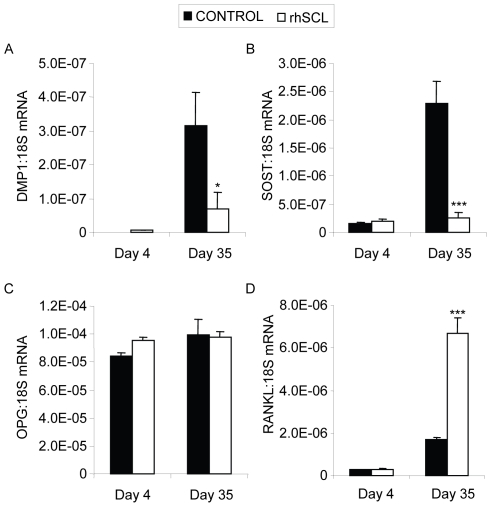
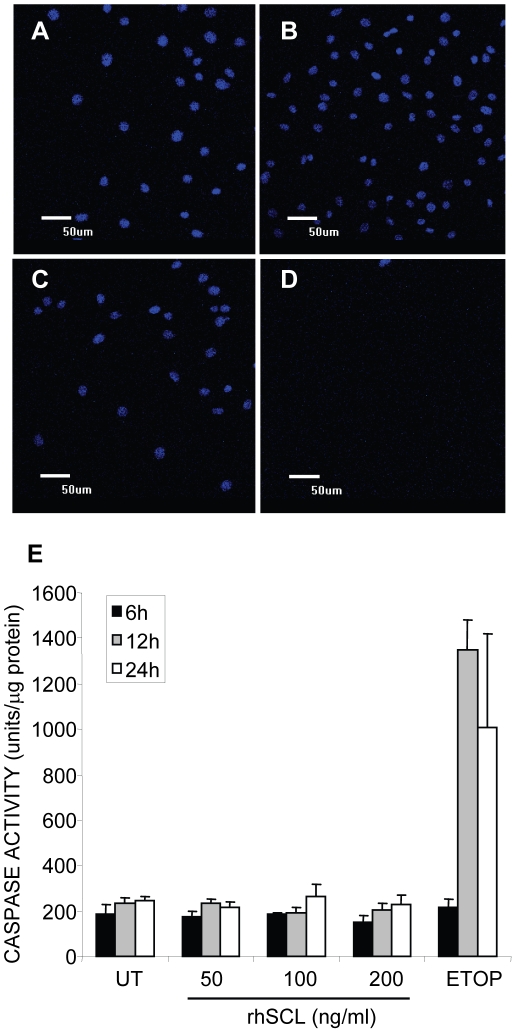
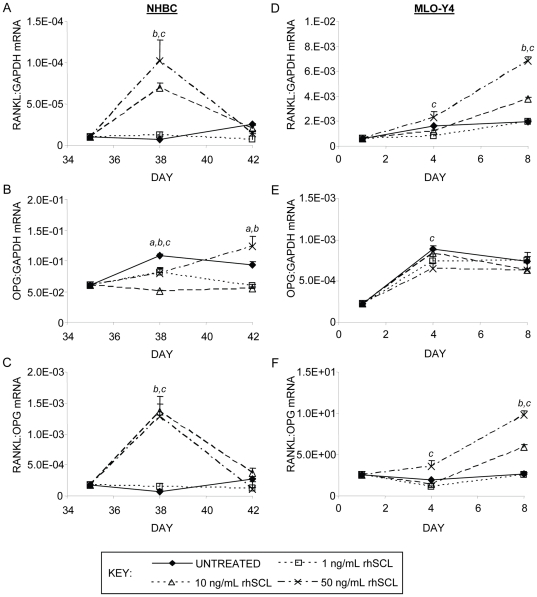
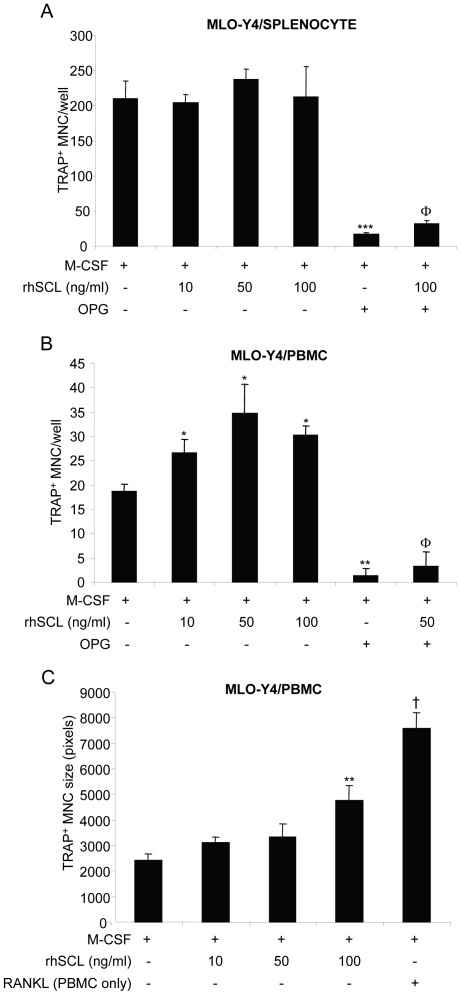
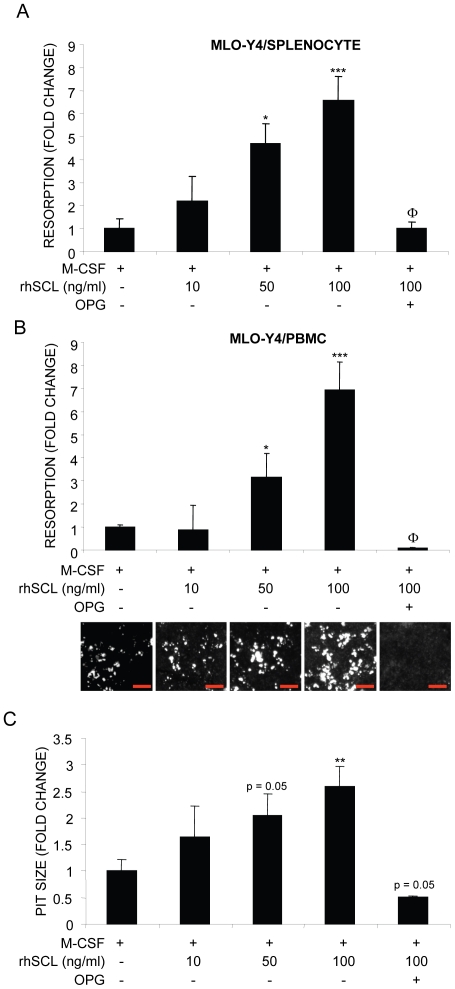
Sclerostin is a product of mature osteocytes embedded in mineralised bone and is a negative regulator of bone mass and osteoblast differentiation. While evidence suggests that sclerostin has an anti-anabolic role, the possibility also exists that sclerostin has catabolic activity. To test this we treated human primary pre-osteocyte cultures, cells we have found are exquisitely sensitive to sclerostin, or mouse osteocyte-like MLO-Y4 cells, with recombinant human sclerostin (rhSCL) and measured effects on pro-catabolic gene expression. Sclerostin dose-dependently up-regulated the expression of receptor activator of nuclear factor kappa B (RANKL) mRNA and down-regulated that of osteoprotegerin (OPG) mRNA, causing an increase in the RANK:OPG mRNA ratio. To examine the effects of rhSCL on resulting osteoclastic activity, MLO-Y4 cells plated onto a bone-like substrate were primed with rhSCL for 3 days and then either mouse splenocytes or human peripheral blood mononuclear cells (PBMC) were added. This resulted in cultures with elevated osteoclastic resorption (approximately 7-fold) compared to untreated co-cultures. The increased resorption was abolished by co-addition of recombinant OPG. In co-cultures of MLO-Y4 cells with PBMC, SCL also increased the number and size of the TRAP-positive multinucleated cells formed. Importantly, rhSCL had no effect on TRAP-positive cell formation from monocultures of either splenocytes or PBMC. Further, rhSCL did not induce apoptosis of MLO-Y4 cells, as determined by caspase activity assays, demonstrating that the osteoclastic response was not driven by dying osteocytes. Together, these results suggest that sclerostin may have a catabolic action through promotion of osteoclast formation and activity by osteocytes, in a RANKL-dependent manner.
骨硬化蛋白是矿化骨中嵌入的成熟成骨细胞的产物,是骨量和成骨细胞分化的负调节剂。虽然有证据表明骨硬化蛋白具有抗合成代谢作用,但它也可能具有分解代谢活性。为了验证这一点,我们用重组人骨硬化蛋白(rhSCL)处理人原代前成骨细胞培养物(我们发现这些细胞对骨硬化蛋白非常敏感)或鼠类成骨细胞样 MLO-Y4 细胞,并测量其对前分解代谢基因表达的影响。骨硬化蛋白呈剂量依赖性地上调核因子κB 受体激活剂(RANKL)mRNA 的表达,下调骨保护素(OPG)mRNA 的表达,导致 RANK:OPG mRNA 比值增加。为了研究 rhSCL 对破骨细胞活性的影响,将 MLO-Y4 细胞接种在类似骨的基质上,用 rhSCL 预培养 3 天,然后加入鼠脾细胞或人外周血单核细胞(PBMC)。与未处理的共培养物相比,这导致破骨细胞的吸收增加(约 7 倍)。用重组 OPG 共同添加可消除增加的吸收。在 MLO-Y4 细胞与 PBMC 的共培养物中,SCL 还增加了形成的 TRAP 阳性多核细胞的数量和大小。重要的是,rhSCL 对来自脾细胞或 PBMC 的单核培养物中 TRAP 阳性细胞的形成没有影响。此外,rhSCL 不会诱导 MLO-Y4 细胞凋亡,如 caspase 活性测定所示,表明破骨细胞反应不是由死亡的成骨细胞驱动的。总之,这些结果表明,骨硬化蛋白可能通过骨细胞以依赖于 RANKL 的方式促进破骨细胞的形成和活性来发挥分解代谢作用。