Program in Public Health, University of California Irvine, Irvine, California, United States of America.
PLoS One. 2011;6(10):e26011. doi: 10.1371/journal.pone.0026011. Epub 2011 Oct 4.
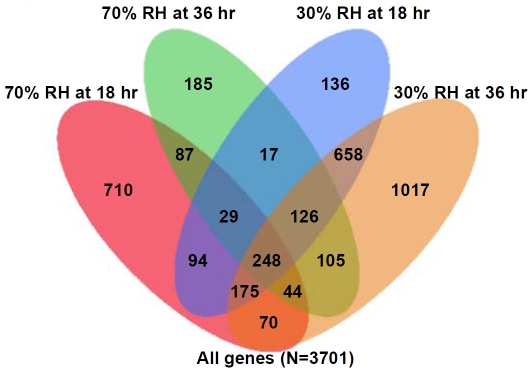
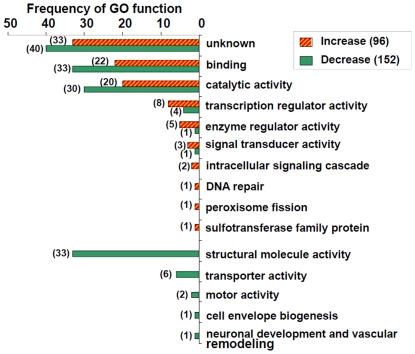
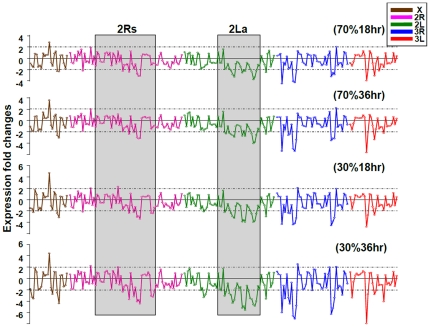
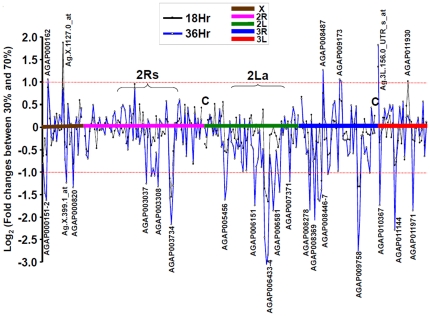
Malaria transmission in sub-Saharan Africa varies seasonally in intensity. Outbreaks of malaria occur after the beginning of the rainy season, whereas, during the dry season, reports of the disease are less frequent. Anopheles gambiae mosquitoes, the main malaria vector, are observed all year long but their densities are low during the dry season that generally lasts several months. Aestivation, seasonal migration, and local adaptation have been suggested as mechanisms that enable mosquito populations to persist through the dry season. Studies of chromosomal inversions have shown that inversions 2La, 2Rb, 2Rc, 2Rd, and 2Ru are associated with various physiological changes that confer aridity resistance. However, little is known about how phenotypic plasticity responds to seasonally dry conditions. This study examined the effects of desiccation stress on transcriptional regulation in An. gambiae. We exposed female An. gambiae G3 mosquitoes to acute desiccation and conducted a genome-wide analysis of their transcriptomes using the Affymetrix Plasmodium/Anopheles Genome Array. The transcription of 248 genes (1.7% of all transcripts) was significantly affected in all experimental conditions, including 96 with increased expression and 152 with decreased expression. In general, the data indicate a reduction in the metabolic rate of mosquitoes exposed to desiccation. Transcripts accumulated at higher levels during desiccation are associated with oxygen radical detoxification, DNA repair and stress responses. The proportion of transcripts within 2La and 2Rs (2Rb, 2Rc, 2Rd, and 2Ru) (67/248, or 27%) is similar to the percentage of transcripts located within these inversions (31%). These data may be useful in efforts to elucidate the role of chromosomal inversions in aridity tolerance. The scope of application of the anopheline genome demonstrates that examining transcriptional activity in relation to genotypic adaptations greatly expands the number of candidate regions involved in the desiccation response in this important malaria vector.
撒哈拉以南非洲的疟疾传播强度随季节而变化。疟疾疫情在雨季开始后爆发,而在旱季,疾病报告则较少。疟蚊主要传播媒介冈比亚按蚊全年都有发现,但在持续数月的旱季,其密度较低。休眠、季节性迁徙和局部适应被认为是蚊群在旱季得以生存的机制。染色体倒位的研究表明,2La、2Rb、2Rc、2Rd 和 2Ru 倒位与各种赋予耐旱性的生理变化有关。然而,对于表型可塑性如何应对季节性干旱条件,人们知之甚少。本研究探讨了干旱胁迫对冈比亚按蚊转录调控的影响。我们将雌性冈比亚按蚊 G3 暴露于急性干旱中,并使用 Affymetrix Plasmodium/Anopheles Genome Array 对其转录组进行了全基因组分析。在所有实验条件下,有 248 个基因(占所有转录本的 1.7%)的转录显著受到影响,其中包括 96 个表达上调和 152 个表达下调的基因。总体而言,数据表明暴露于干旱中的蚊子代谢率降低。在干旱中积累水平较高的转录本与氧自由基解毒、DNA 修复和应激反应有关。位于 2La 和 2Rs(2Rb、2Rc、2Rd 和 2Ru)内的转录本比例(67/248,或 27%)与位于这些倒位内的转录本比例(31%)相似。这些数据可能有助于阐明染色体倒位在耐旱性中的作用。按蚊基因组的应用范围表明,在与基因型适应相关的情况下检查转录活性,极大地扩展了与这个重要的疟疾传播媒介的干旱响应相关的候选区域的数量。