Department of Medical Oncology, Dana-Farber Cancer Institute, Boston, MA 02115, USA.
Eur J Haematol. 2012 Jan;88(1):1-7. doi: 10.1111/j.1600-0609.2011.01721.x. Epub 2011 Nov 22.
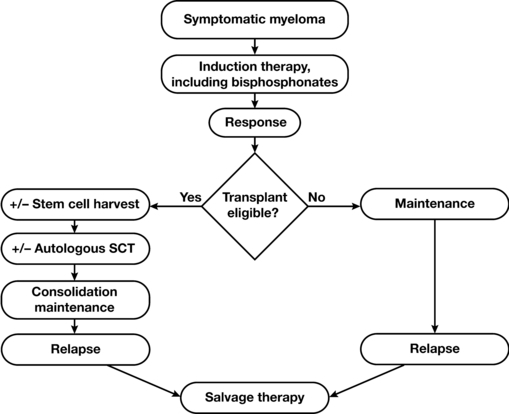
Osteolytic bone disease is a hallmark of symptomatic multiple myeloma. Bisphosphonates have been the mainstay of treatment to preserve skeletal integrity and prevent skeletal-related events in patients with myeloma-related bone disease. Recently, the MRC Myeloma IX trial demonstrated for the first time improved survival and delayed disease progression with the use of an intravenous amino-bisphosphonate, zoledronic acid, vs. an oral agent, clodronate, with intensive and non-intensive anti-myeloma treatment regimens in patients with newly diagnosed multiple myeloma. These results validate a large body of preclinical, translational and other clinical data suggesting anti-myeloma effects of amino-bisphosphonates. In addition, this trial also provided the first head-to-head evidence for superiority of one bisphosphonate over another (zoledronic acid vs. clodronate) for reducing skeletal morbidity in patients with multiple myeloma, as well as a prospective comparison of toxicities. Despite the use of non-bortezomib containing anti-myeloma treatment regimens in the MRC Myeloma IX trial, these results are encouraging and provide an impetus to continue to evaluate current treatment guidelines for myeloma-associated bone disease.
溶骨性骨病是有症状多发性骨髓瘤的一个标志。双膦酸盐一直是治疗多发性骨髓瘤相关骨病患者保持骨骼完整性和预防骨骼相关事件的主要方法。最近,MRC Myeloma IX 试验首次证明,与使用口服药物氯屈膦酸相比,静脉注射氨基双膦酸盐唑来膦酸与强化和非强化抗骨髓瘤治疗方案联合使用可改善新诊断多发性骨髓瘤患者的生存并延迟疾病进展。这些结果验证了大量临床前、转化和其他临床数据表明氨基双膦酸盐具有抗骨髓瘤作用。此外,该试验还首次提供了头对头的证据,证明一种双膦酸盐(唑来膦酸与氯屈膦酸相比)在降低多发性骨髓瘤患者骨骼发病率方面具有优越性,以及对毒性的前瞻性比较。尽管 MRC Myeloma IX 试验中使用了不含硼替佐米的抗骨髓瘤治疗方案,但这些结果令人鼓舞,并为继续评估多发性骨髓瘤相关骨病的现有治疗指南提供了动力。