Biosciences, Centre for Cell and Chromosome Biology, Brunel University, Uxbridge UB8 3PH, UK.
Clin Sci (Lond). 2012 Apr;122(7):349-59. doi: 10.1042/CS20110378.
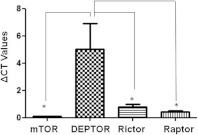
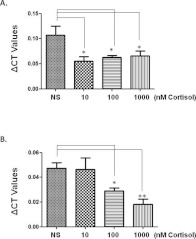
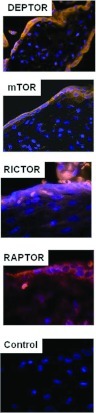
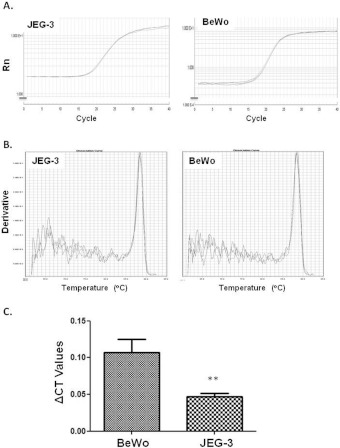
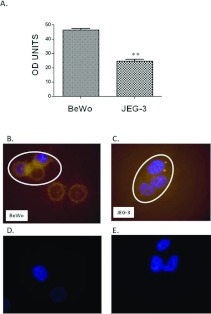
DEPTOR [DEP-domain-containing and mTOR (mammalian target of rapamycin)-interacting protein] is a modulator of mTOR signalling that binds to mTORC (mTOR complex) 1 and mTORC2. However, to date, the precise functions of DEPTOR are not fully elucidated, particularly in reproductive tissues where mTOR acts as a placental nutrient sensor. Pregnancy is associated with major physiological and psychosocial changes and adaptation to these changes is crucial for normal fetal development. In the present study, we tested the hypothesis that maternal stress can affect mTOR signalling at term, and, as a result, influence placental growth. We first investigated the expression of DEPTOR, mTOR, rictor (rapamycin-insensitive companion of mTOR) and raptor (regulatory associated protein of mTOR) from human placentas (n=23) using Q-PCR (quantitative PCR), and correlated these data to days of pregnancy and maternal stress, as well as placental and fetal weight. Maternal and fetal cortisol levels were also measured. JEG-3 and BeWo cells, used as placental in vitro models, were treated with cortisol and DEPTOR expression was assessed using Q-PCR. DEPTOR appears to be the predominant transcript in the human placenta compared with mTOR, rictor and raptor in both term (n=13) and preterm (n=10) placentas as assessed by Q-PCR. There was a significantly lower level only of log-DEPTOR gene expression in the high stress group (-1.34) than in the low stress group (0.07; t₂₀=2.41, P=0.026). Interestingly, mothers with high stress had significantly elevated levels of cortisol (8555 pg/ml) compared with those with low stress (4900 pg/ml). We then tested the hypothesis that cortisol can directly affect DEPTOR expression. When BeWo cells were treated with cortisol 10, 100 and 1000 nM, the expression of DEPTOR was significantly down-regulated by 50, 41 and 39% (all P<0.05) respectively when compared with basal levels. Treatment of JEG-3 cells with cortisol, led to a significant decrease of DEPTOR expression at 100 nM (39%, P<0.05) and at 1000 nM (73%, P<0.01). These novel findings are indicative of a higher order of complexity of DEPTOR signalling in the human placenta that is affected by maternal stress, which could affect pregnancy outcome.
DEPTOR [DEP 结构域包含蛋白和雷帕霉素靶蛋白(mTOR)相互作用蛋白] 是 mTOR 信号的调节剂,它与 mTORC1 和 mTORC2 结合。然而,迄今为止,DEPTOR 的精确功能尚未完全阐明,特别是在 mTOR 作为胎盘营养传感器的生殖组织中。怀孕与重大的生理和心理社会变化有关,适应这些变化对正常胎儿发育至关重要。在本研究中,我们检验了以下假设:母体应激可以影响足月时的 mTOR 信号,从而影响胎盘生长。我们首先使用 Q-PCR(定量 PCR)检测了来自 23 个人胎盘的 DEPTOR、mTOR、rictor(雷帕霉素不敏感的 mTOR 伴侣)和 raptor(mTOR 调节相关蛋白)的表达,并将这些数据与怀孕天数和母体应激以及胎盘和胎儿体重相关联。还测量了母体和胎儿皮质醇水平。我们使用 Q-PCR 检测了用作胎盘体外模型的 JEG-3 和 BeWo 细胞在皮质醇和 DEPTOR 表达处理后的情况。通过 Q-PCR 评估,与足月(n=13)和早产(n=10)胎盘相比,DEPTOR 在人胎盘似乎是主要的转录本,而 mTOR、rictor 和 raptor 则是主要的转录本。仅在高应激组(-1.34)中,log-DEPTOR 基因表达水平明显低于低应激组(0.07;t₂₀=2.41,P=0.026)。有趣的是,高应激组的母亲皮质醇水平明显升高(8555 pg/ml),而低应激组的母亲皮质醇水平(4900 pg/ml)则较低。然后,我们检验了以下假设:皮质醇可以直接影响 DEPTOR 表达。当 BeWo 细胞用 10、100 和 1000 nM 皮质醇处理时,与基础水平相比,DEPTOR 的表达分别显著下调 50%、41%和 39%(均 P<0.05)。用皮质醇处理 JEG-3 细胞,在 100 nM(39%,P<0.05)和 1000 nM(73%,P<0.01)时,DEPTOR 的表达明显下降。这些新发现表明,受母体应激影响的人胎盘的 DEPTOR 信号具有更高阶的复杂性,这可能会影响妊娠结局。