Department of Virology, Erasmus MC, 3000 CA Rotterdam, The Netherlands.
Viruses. 2011 Jun;3(6):811-28. doi: 10.3390/v3060811. Epub 2011 Jun 15.
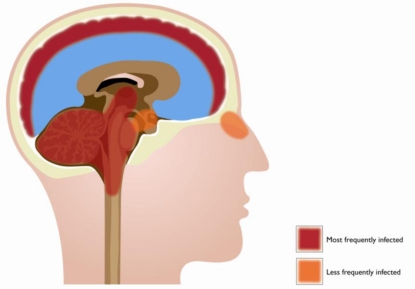
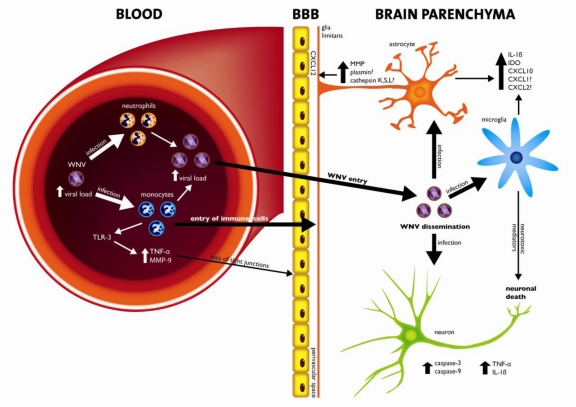
West Nile virus (WNV) is a neurotropic, arthropod-borne flavivirus that is maintained in an enzootic cycle between mosquitoes and birds, but can also infect and cause disease in horses and humans. WNV is endemic in parts of Africa, Europe, the Middle East, and Asia, and since 1999 has spread to North America, Mexico, South America, and the Caribbean. WNV infects the central nervous system (CNS) and can cause severe disease in a small minority of infected humans, mostly immunocompromised or the elderly. This review discusses some of the mechanisms by which the immune system can limit dissemination of WNV infection and elaborates on the mechanisms involved in pathogenesis. Reasons for susceptibility to WNV-associated neuroinvasive disease in less than 1% of cases remain unexplained, but one favored hypothesis is that the involvement of the CNS is associated with a weak immune response allowing robust WNV replication in the periphery and spread of the virus to the CNS.
西尼罗河病毒(WNV)是一种亲神经性、节肢动物传播的黄病毒,在蚊子和鸟类之间维持着地方性循环,但也可以感染并导致马和人类患病。WNV 在非洲、欧洲、中东和亚洲的部分地区流行,自 1999 年以来已传播到北美、墨西哥、南美洲和加勒比海地区。WNV 感染中枢神经系统(CNS),在少数感染人类中可引起严重疾病,主要是免疫功能低下者或老年人。本文综述了免疫系统限制 WNV 感染传播的一些机制,并详细阐述了发病机制涉及的机制。不到 1%的病例对 WNV 相关神经侵袭性疾病的易感性仍未得到解释,但一个被认可的假设是,CNS 的参与与较弱的免疫反应有关,允许在周围大量复制 WNV 并将病毒传播到 CNS。