Department of Experimental Psychology, University of Oxford, Oxford, Oxfordshire, United Kingdom.
PLoS One. 2011;6(10):e25616. doi: 10.1371/journal.pone.0025616. Epub 2011 Oct 6.
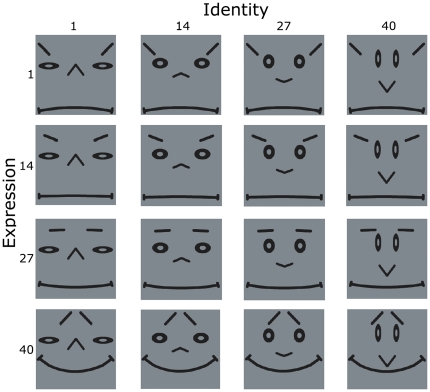
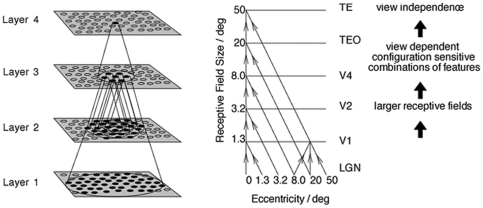
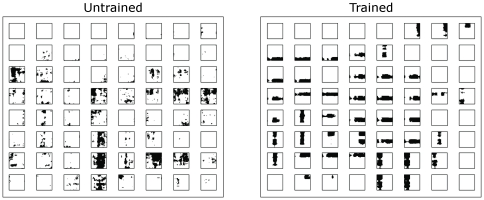
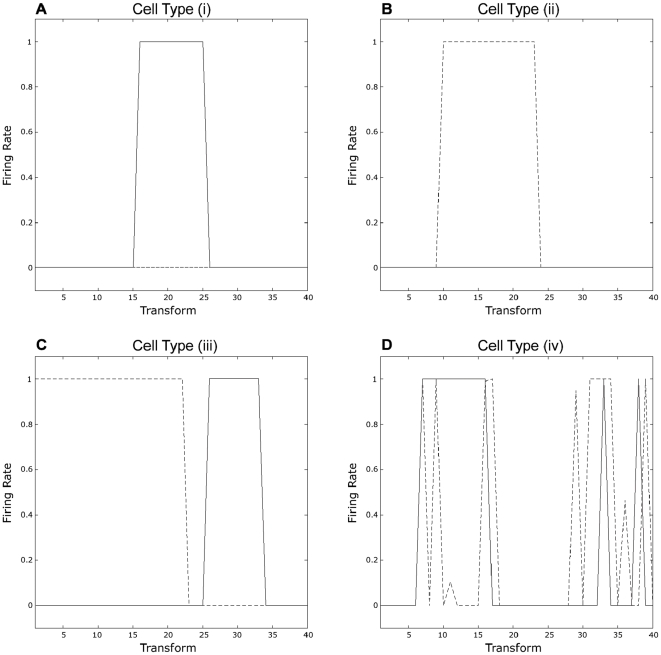
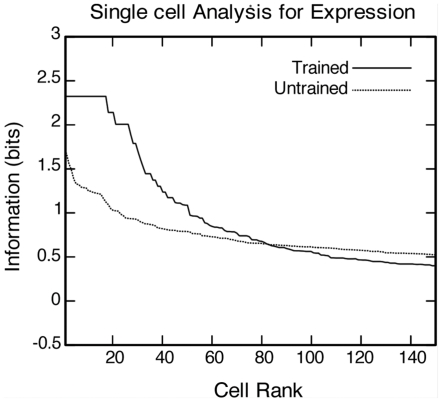
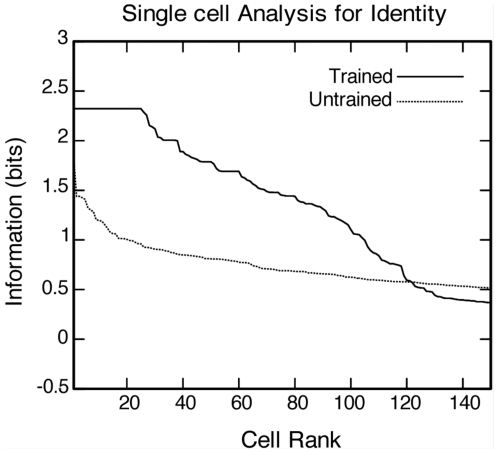
Experimental studies have provided evidence that the visual processing areas of the primate brain represent facial identity and facial expression within different subpopulations of neurons. For example, in non-human primates there is evidence that cells within the inferior temporal gyrus (TE) respond primarily to facial identity, while cells within the superior temporal sulcus (STS) respond to facial expression. More recently, it has been found that the orbitofrontal cortex (OFC) of non-human primates contains some cells that respond exclusively to changes in facial identity, while other cells respond exclusively to facial expression. How might the primate visual system develop physically separate representations of facial identity and expression given that the visual system is always exposed to simultaneous combinations of facial identity and expression during learning? In this paper, a biologically plausible neural network model, VisNet, of the ventral visual pathway is trained on a set of carefully-designed cartoon faces with different identities and expressions. The VisNet model architecture is composed of a hierarchical series of four Self-Organising Maps (SOMs), with associative learning in the feedforward synaptic connections between successive layers. During learning, the network develops separate clusters of cells that respond exclusively to either facial identity or facial expression. We interpret the performance of the network in terms of the learning properties of SOMs, which are able to exploit the statistical indendependence between facial identity and expression.
实验研究已经提供了证据,表明灵长类动物大脑的视觉处理区域在不同神经元亚群中代表面部身份和面部表情。例如,在非人类灵长类动物中,有证据表明颞下回(TE)内的细胞主要对面部身份做出反应,而颞上沟(STS)内的细胞则对面部表情做出反应。最近,人们发现,非人类灵长类动物的眶额皮层(OFC)中有些细胞仅对面部身份的变化做出反应,而其他细胞则仅对面部表情做出反应。鉴于视觉系统在学习过程中总是同时暴露于面部身份和表情的组合,灵长类动物的视觉系统如何发展出对身份和表情的物理分离表示?在本文中,我们使用了一种名为 VisNet 的基于生物学的神经网络模型,对一组精心设计的具有不同身份和表情的卡通面孔进行了训练。VisNet 模型的架构由一个分层的四个自组织映射(SOM)系列组成,在层间的前馈突触连接中进行联想学习。在学习过程中,网络会发展出仅对身份或表情做出反应的单独细胞簇。我们根据 SOM 的学习特性来解释网络的性能,SOM 能够利用面部身份和表情之间的统计独立性。