Academic Unit of Clinical Oncology, School of Medicine and Biomedical Sciences, University of Sheffield, Sheffield, South Yorkshire, S10 2RX, UK.
J Transl Med. 2011 Oct 17;9:177. doi: 10.1186/1479-5876-9-177.
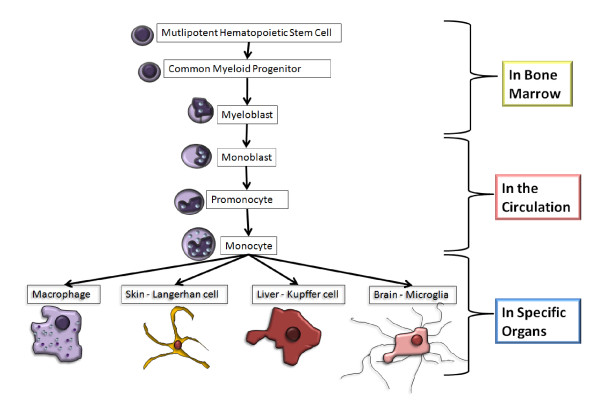
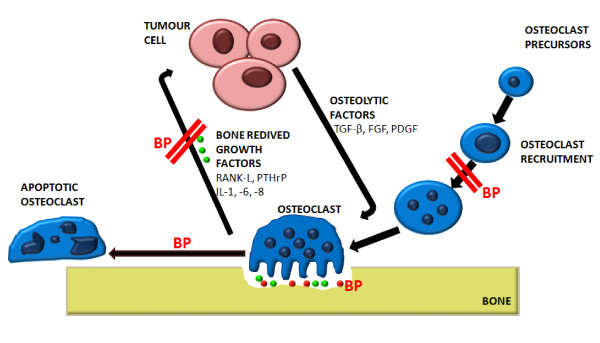
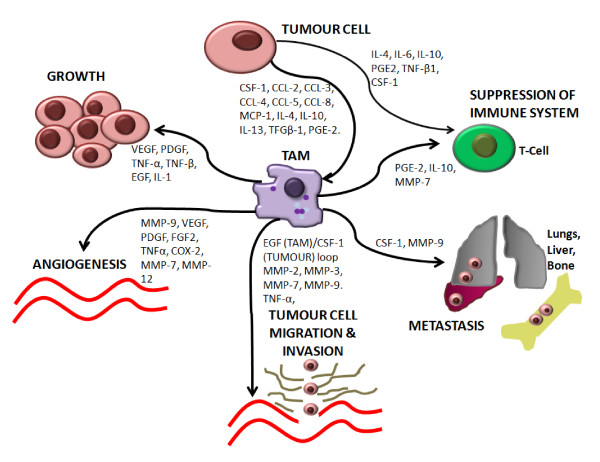
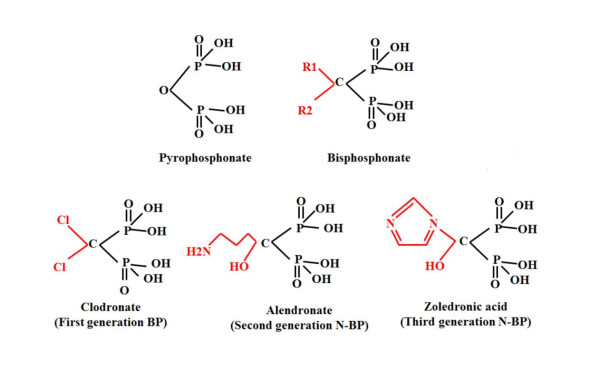
Tumour cells communicate with the cells of their microenvironment via a series of molecular and cellular interactions to aid their progression to a malignant state and ultimately their metastatic spread. Of the cells in the microenvironment with a key role in cancer development, tumour associated macrophages (TAMs) are among the most notable. Tumour cells release a range of chemokines, cytokines and growth factors to attract macrophages, and these in turn release numerous factors (e.g. VEGF, MMP-9 and EGF) that are implicated in invasion-promoting processes such as tumour cell growth, flicking of the angiogenic switch and immunosuppression. TAM density has been shown to correlate with poor prognosis in breast cancer, suggesting that these cells may represent a potential therapeutic target. However, there are currently no agents that specifically target TAM's available for clinical use.Bisphosphonates (BPs), such as zoledronic acid, are anti-resorptive agents approved for treatment of skeletal complication associated with metastatic breast cancer and prostate cancer. These agents act on osteoclasts, key cells in the bone microenvironment, to inhibit bone resorption. Over the past 30 years this has led to a great reduction in skeletal-related events (SRE's) in patients with advanced cancer and improved the morbidity associated with cancer-induced bone disease. However, there is now a growing body of evidence, both from in vitro and in vivo models, showing that zoledronic acid can also target tumour cells to increase apoptotic cell death and decrease proliferation, migration and invasion, and that this effect is significantly enhanced in combination with chemotherapy agents. Whether macrophages in the peripheral tumour microenvironment are exposed to sufficient levels of bisphosphonate to be affected is currently unknown. Macrophages belong to the same cell lineage as osteoclasts, the major target of BPs, and are highly phagocytic cells shown to be sensitive to bisphosphonates in model studies; In vitro, zoledronic acid causes increased apoptotic cell death; in vivo the drug has been shown to inhibit the production of pro-angiogenic factor MMP-9, as well as most recent evidence showing it can trigger the reversal of the TAMs phenotype from pro-tumoral M2 to tumoricidal M1. There is thus accumulating evidence supporting the hypothesis that effects on TAMs may contribute to the anti-tumour effect of bisphosphonates. This review will focus in detail on the role of tumour associated macrophages in breast cancer progression, the actions of bisphosphonates on macrophages in vitro and in tumour models in vivo and summarise the evidence supporting the potential for the targeting of tumour macrophages with bisphosphonates.
肿瘤细胞通过一系列分子和细胞相互作用与微环境中的细胞进行通讯,以帮助它们进展为恶性状态,并最终实现转移扩散。在微环境中,与癌症发展密切相关的细胞中,肿瘤相关巨噬细胞(TAMs)最为引人注目。肿瘤细胞释放一系列趋化因子、细胞因子和生长因子来吸引巨噬细胞,而这些巨噬细胞反过来又释放许多因子(例如 VEGF、MMP-9 和 EGF),这些因子参与促进肿瘤细胞生长、血管生成开关翻转和免疫抑制等侵袭促进过程。TAM 密度与乳腺癌预后不良相关,表明这些细胞可能是潜在的治疗靶点。然而,目前尚无专门针对 TAM 的药物可供临床使用。双膦酸盐(BPs),如唑来膦酸,是一种抗吸收剂,被批准用于治疗与转移性乳腺癌和前列腺癌相关的骨骼并发症。这些药物作用于破骨细胞,即骨骼微环境中的关键细胞,以抑制骨质吸收。在过去的 30 年中,这使得晚期癌症患者的骨骼相关事件(SRE)大大减少,并改善了与癌症引起的骨病相关的发病率。然而,现在越来越多的证据表明,无论是在体外还是体内模型中,唑来膦酸都可以靶向肿瘤细胞,增加细胞凋亡,减少增殖、迁移和侵袭,并且这种作用在与化疗药物联合使用时显著增强。目前尚不清楚外周肿瘤微环境中的巨噬细胞是否暴露于足以受影响的双膦酸盐水平。巨噬细胞与破骨细胞同属一个细胞谱系,是双膦酸盐的主要靶点,并且在模型研究中被证明是对双膦酸盐敏感的吞噬细胞;在体外,唑来膦酸导致细胞凋亡增加;在体内,该药物已被证明可抑制促血管生成因子 MMP-9 的产生,以及最近的证据表明,它可以触发 TAMs 表型从促肿瘤 M2 向杀肿瘤 M1 的逆转。因此,越来越多的证据支持这样一种假设,即双膦酸盐对 TAMs 的作用可能有助于其抗肿瘤作用。本综述将详细讨论肿瘤相关巨噬细胞在乳腺癌进展中的作用、双膦酸盐在体外和体内肿瘤模型中对巨噬细胞的作用,并总结支持用双膦酸盐靶向肿瘤巨噬细胞的潜在证据。