Chirico William J
Department of Cell Biology and Molecular & Cellular Biology Program, State University of New York Downstate Medical Center, Brooklyn, 11203, USA.
BMC Cell Biol. 2011 Oct 18;12:46. doi: 10.1186/1471-2121-12-46.
Nonclassical (unconventional) protein secretion is thought to represent the primary secretion mechanism for several cytosolic proteins, such as HIV-Tat, galectin 1, interleukin-1β, and several proteins that shuttle between the nucleus and cytosol, such as fibroblast growth factor 1 (FGF1), FGF2, and nucleolin. Four nonclassical secretory pathways have been described including direct transport (presumably through transporters in the plasma membrane), secretion via exosomes, lysosomal secretion, and blebbing. The purpose of this study was to gain mechanistic insight into nonclassical protein secretion using phosphoglycerate kinase 1 (PGK1), a previously identified nonclassical secretory protein, as a reporter protein.
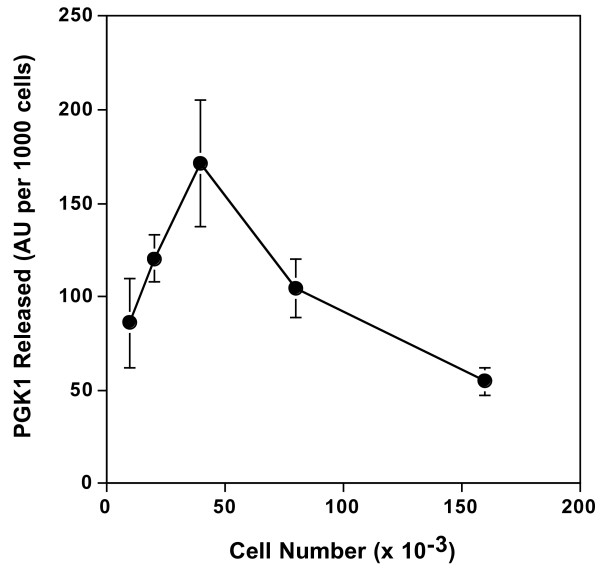
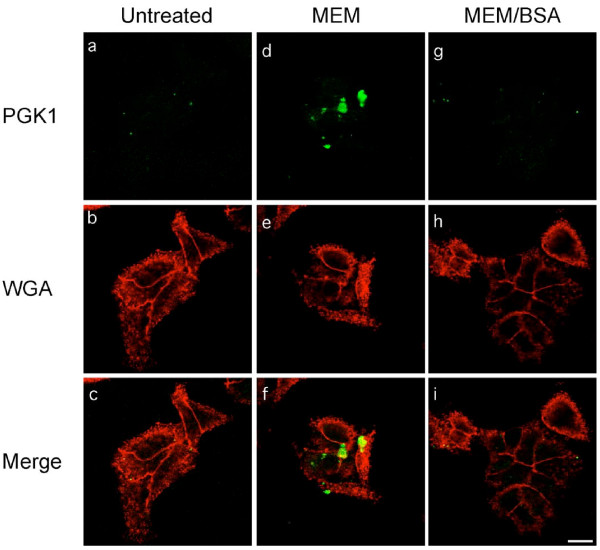
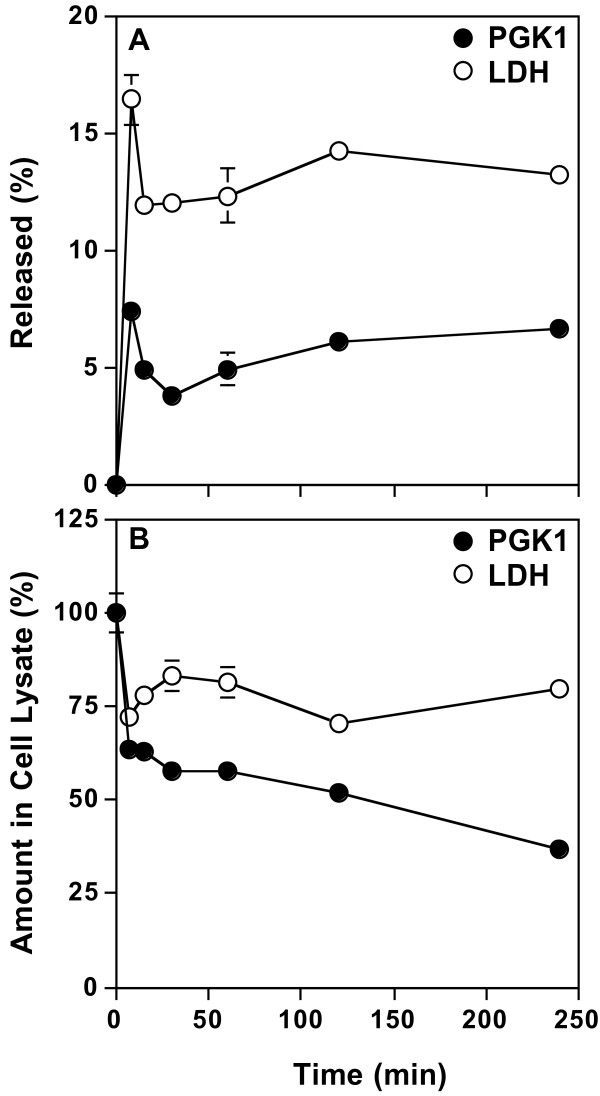
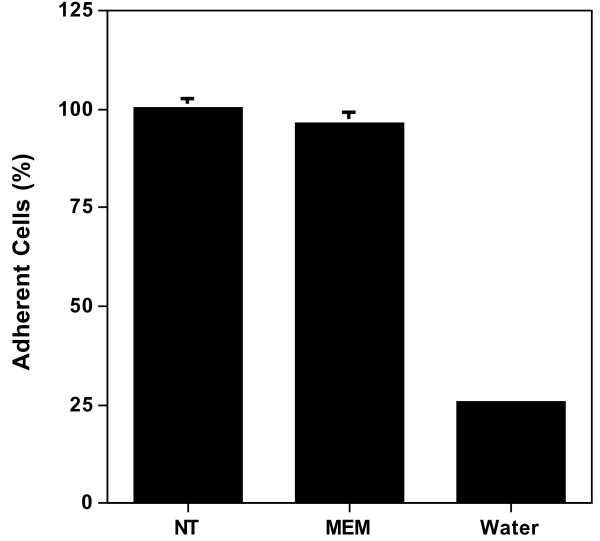
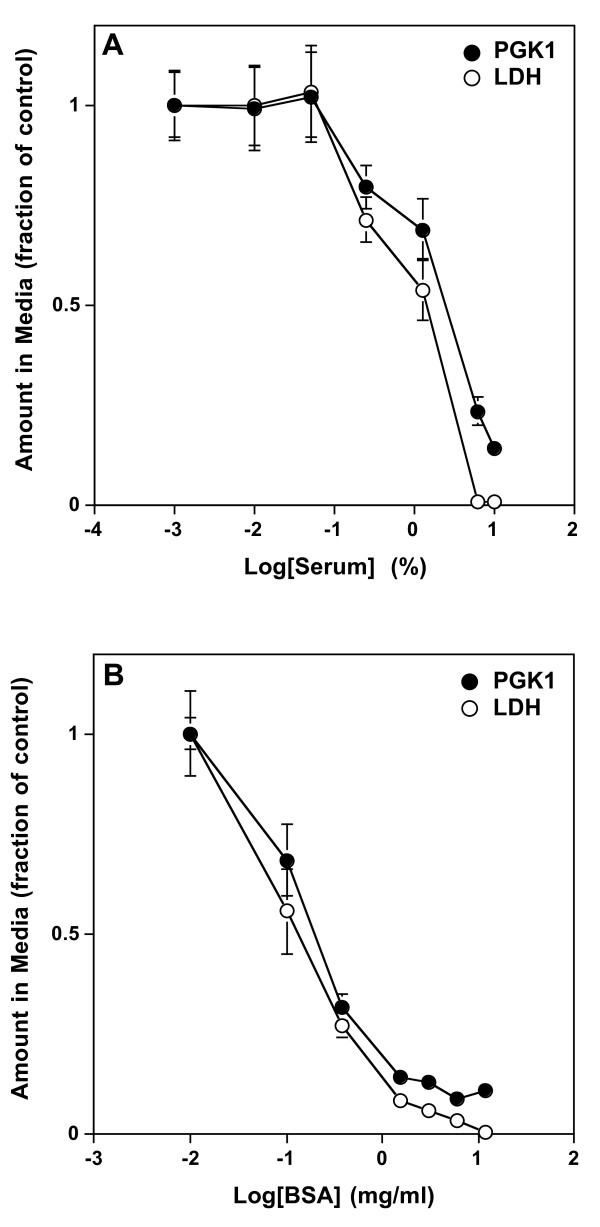
Upon shifting HeLa cells into serum-free media PGK1 was released as a free soluble protein without cell loss. Release occurred in two phases: a rapid early phase and a slow late phase. Using a repertory of inhibitors, PGK1 release was shown not to rely on the classical secretory pathway. However, components of the cytoskeleton partially contributed to its release. Significantly, the presence of serum or bovine serum albumin in the media inhibited PGK1 release.
These results are consistent with a novel model of protein release termed oncotic release, in which a change in the colloidal osmotic pressure (oncotic pressure) upon serum withdrawal creates nonlethal oncotic pores in the plasma membrane through which PGK1 - and likely other nearby proteins - are released before the pores are rapidly resealed. These findings identify an alternative mechanism of release for FGF1, HIV-Tat, and galectin 1 whose reported nonclassical secretion is induced by serum withdrawal. Oncotic release may occur in routine cell biological experiments during which cells are washed with serum-free buffers or media and in pathophysiological conditions, such as edema, during which extracellular protein concentrations change.
非经典(非常规)蛋白质分泌被认为是几种胞质蛋白的主要分泌机制,如HIV-Tat、半乳糖凝集素1、白细胞介素-1β,以及几种在细胞核和细胞质之间穿梭的蛋白质,如成纤维细胞生长因子1(FGF1)、FGF2和核仁素。已描述了四种非经典分泌途径,包括直接转运(可能通过质膜中的转运蛋白)、通过外泌体分泌、溶酶体分泌和泡形成。本研究的目的是利用磷酸甘油酸激酶1(PGK1)(一种先前鉴定的非经典分泌蛋白)作为报告蛋白,深入了解非经典蛋白质分泌的机制。
将HeLa细胞转移至无血清培养基后,PGK1作为游离可溶性蛋白释放,且无细胞损失。释放分两个阶段进行:快速早期阶段和缓慢晚期阶段。使用一系列抑制剂表明,PGK1的释放不依赖于经典分泌途径。然而,细胞骨架的成分部分促成了其释放。重要的是,培养基中血清或牛血清白蛋白的存在会抑制PGK1的释放。
这些结果与一种称为渗透性释放的蛋白质释放新模型一致,即血清撤出后胶体渗透压(渗透压)的变化在质膜上形成非致死性渗透孔,PGK1以及可能其他附近的蛋白质在孔迅速重新封闭之前通过这些孔释放。这些发现确定了FGF1、HIV-Tat和半乳糖凝集素1的另一种释放机制,其报道的非经典分泌是由血清撤出诱导的。渗透性释放在常规细胞生物学实验(在此期间细胞用无血清缓冲液或培养基洗涤)以及病理生理条件(如水肿,在此期间细胞外蛋白质浓度发生变化)中可能会发生。