Cenini Giovanna, Dowling Amy L S, Beckett Tina L, Barone Eugenio, Mancuso Cesare, Murphy Michael Paul, Levine Harry, Lott Ira T, Schmitt Frederick A, Butterfield D Allan, Head Elizabeth
Department of Chemistry, Center of Membrane Sciences, and Sanders-Brown Center on Aging, University of Kentucky, Lexington, KY 40536-0055, USA.
Biochim Biophys Acta. 2012 Feb;1822(2):130-8. doi: 10.1016/j.bbadis.2011.10.001. Epub 2011 Oct 8.
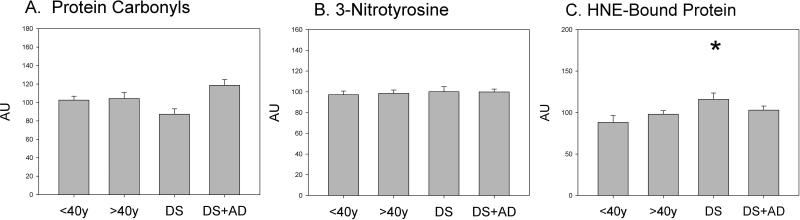
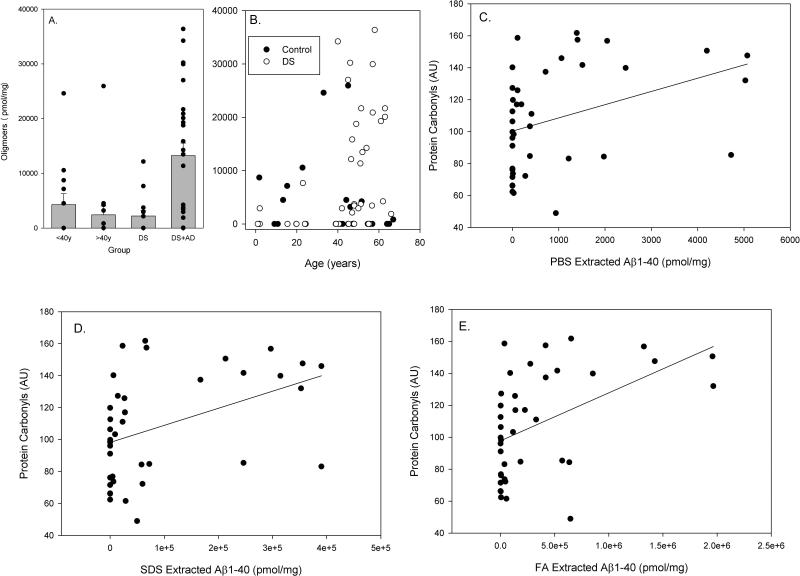
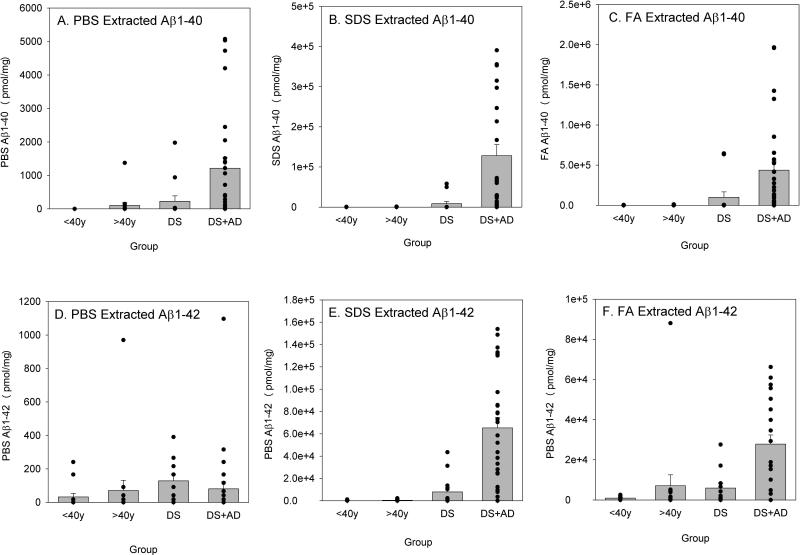
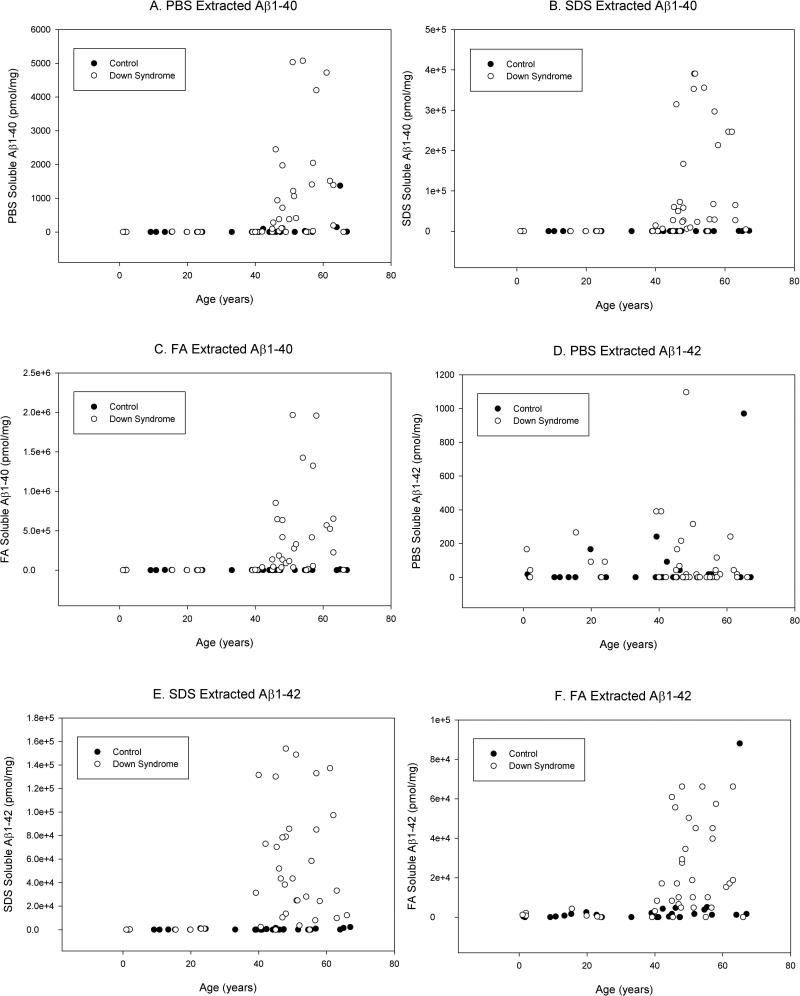
Down syndrome (DS) is the most common genetic cause of intellectual disability in children, and the number of adults with DS reaching old age is increasing. By the age of 40 years, virtually all people with DS have sufficient neuropathology for a postmortem diagnosis of Alzheimer disease (AD). Trisomy 21 in DS leads to an overexpression of many proteins, of which at least two are involved in oxidative stress and AD: superoxide dismutase 1 (SOD1) and amyloid precursor protein (APP). In this study, we tested the hypothesis that DS brains with neuropathological hallmarks of AD have more oxidative and nitrosative stress than those with DS but without significant AD pathology, as compared with similarly aged-matched non-DS controls. The frontal cortex was examined in 70 autopsy cases (n=29 control and n=41 DS). By ELISA, we quantified soluble and insoluble Aβ40 and Aβ42, as well as oligomers. Oxidative and nitrosative stress levels (protein carbonyls, 4-hydroxy-2-trans-nonenal (HNE)-bound proteins, and 3-nitrotyrosine) were measured by slot-blot. We found that soluble and insoluble amyloid beta peptide (Aβ) and oligomers increase as a function of age in DS frontal cortex. Of the oxidative stress markers, HNE-bound proteins were increased overall in DS. Protein carbonyls were correlated with Aβ40 levels. These results suggest that oxidative damage, but not nitrosative stress, may contribute to the onset and progression of AD pathogenesis in DS. Conceivably, treatment with antioxidants may provide a point of intervention to slow pathological alterations in DS.
唐氏综合征(DS)是儿童智力残疾最常见的遗传病因,且步入老年的成年DS患者数量正在增加。到40岁时,几乎所有DS患者都有足够的神经病理学特征用于死后诊断阿尔茨海默病(AD)。DS中的21号染色体三体导致许多蛋白质过度表达,其中至少有两种蛋白质与氧化应激和AD有关:超氧化物歧化酶1(SOD1)和淀粉样前体蛋白(APP)。在本研究中,我们检验了这样一个假设:与年龄匹配的非DS对照相比,具有AD神经病理学特征的DS大脑比没有明显AD病理学特征的DS大脑具有更多的氧化应激和亚硝化应激。在70例尸检病例(n = 29例对照和n = 41例DS)中检查了额叶皮质。通过酶联免疫吸附测定(ELISA),我们定量了可溶性和不可溶性Aβ40和Aβ42以及寡聚体。通过狭缝印迹法测量氧化应激和亚硝化应激水平(蛋白质羰基、4-羟基-2-反式壬烯醛(HNE)结合蛋白和3-硝基酪氨酸)。我们发现,在DS额叶皮质中,可溶性和不可溶性淀粉样β肽(Aβ)及寡聚体随年龄增加而增加。在氧化应激标志物中,DS中HNE结合蛋白总体上增加。蛋白质羰基与Aβ40水平相关。这些结果表明,氧化损伤而非亚硝化应激可能导致DS中AD发病机制的发生和进展。可以想象,用抗氧化剂治疗可能提供一个干预点,以减缓DS中的病理改变。