Department of Surgery, University of Colorado, Aurora, Colorado, USA.
Cancer Res. 2011 Dec 15;71(24):7398-409. doi: 10.1158/0008-5472.CAN-11-2427. Epub 2011 Oct 19.
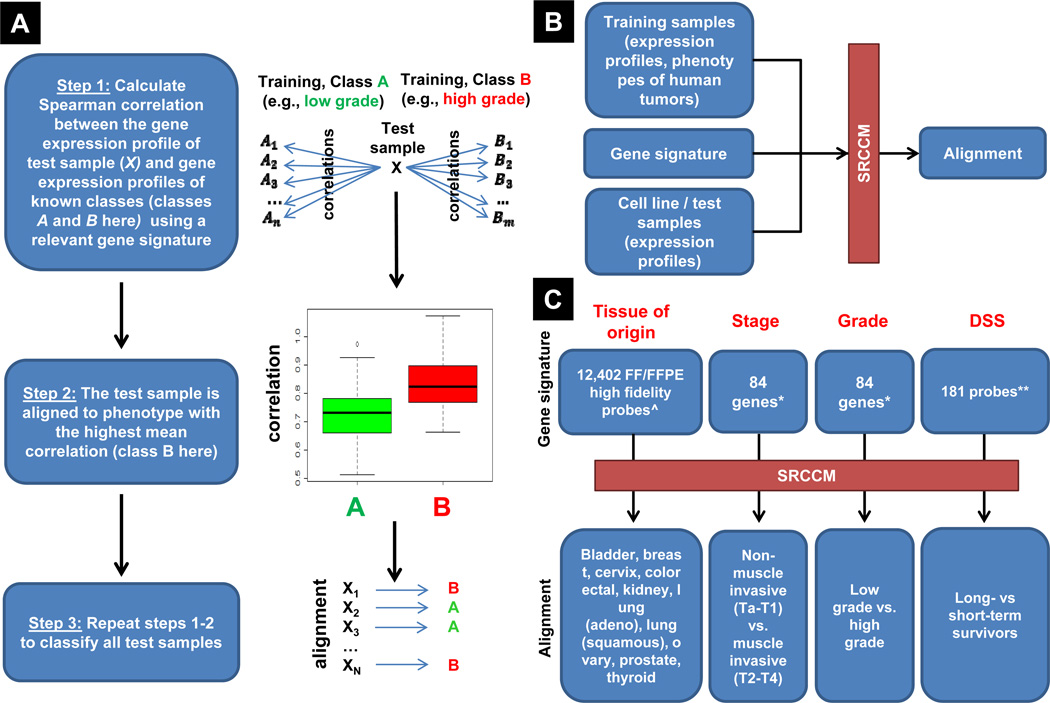
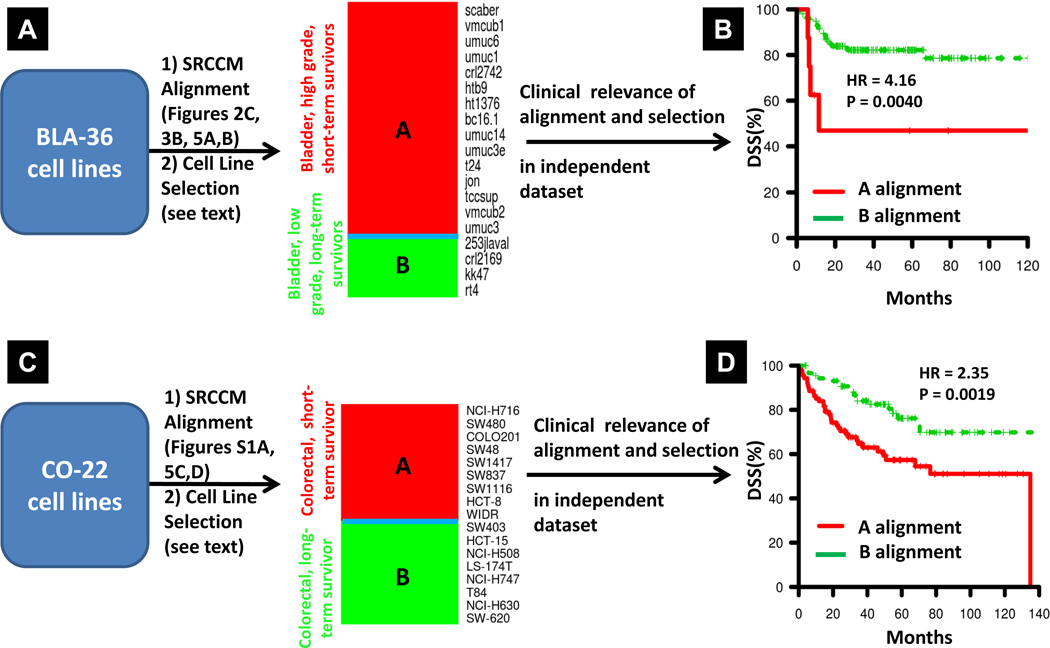
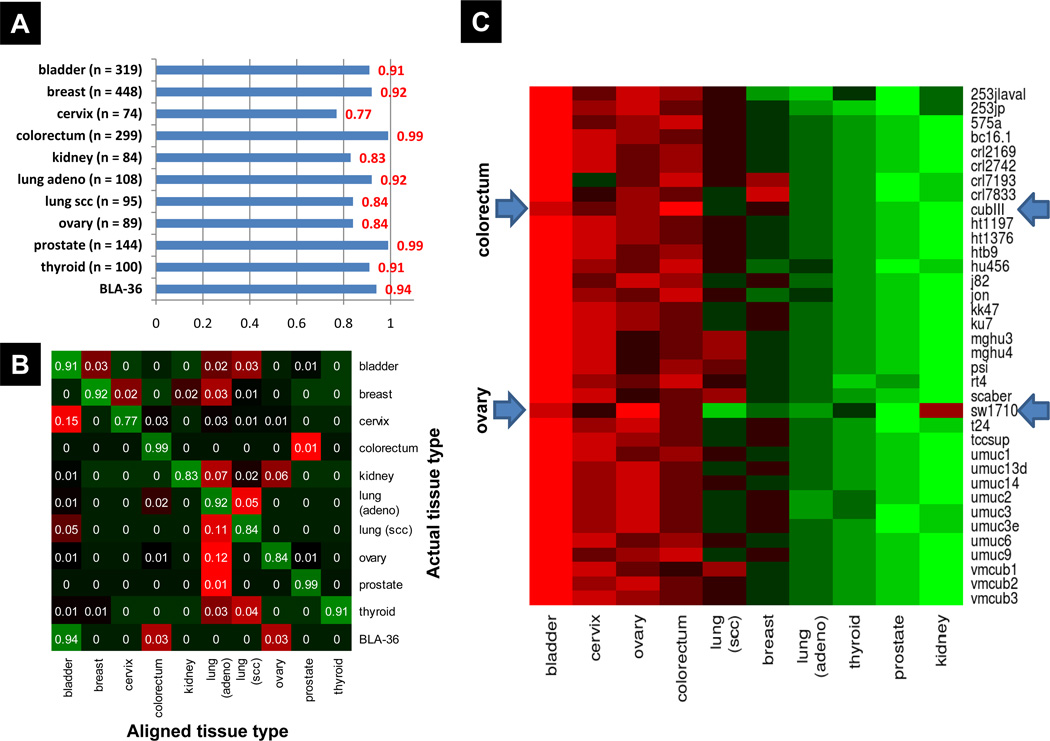
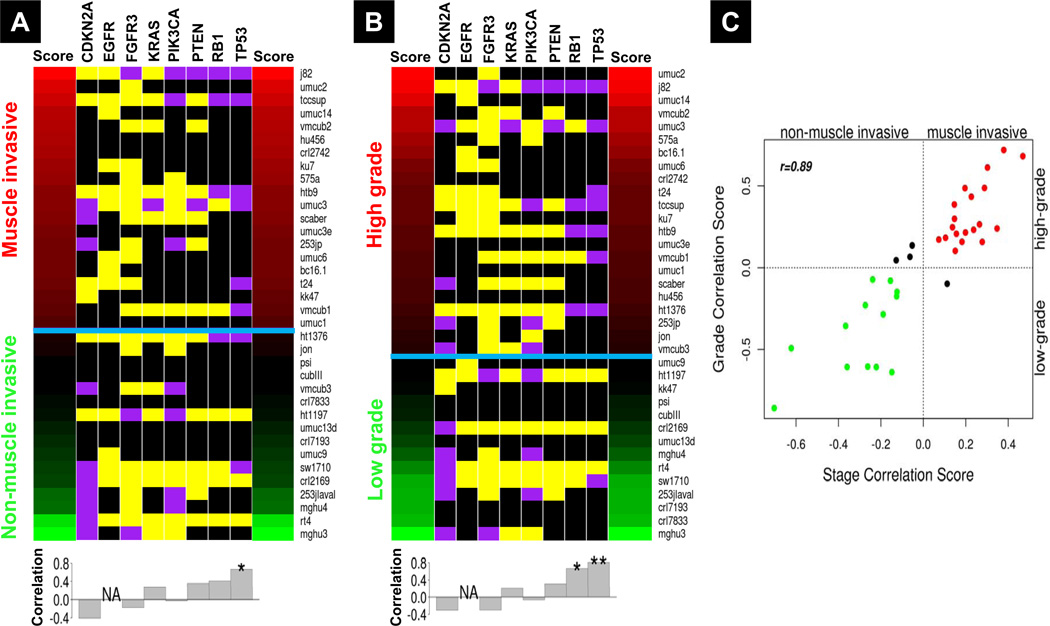
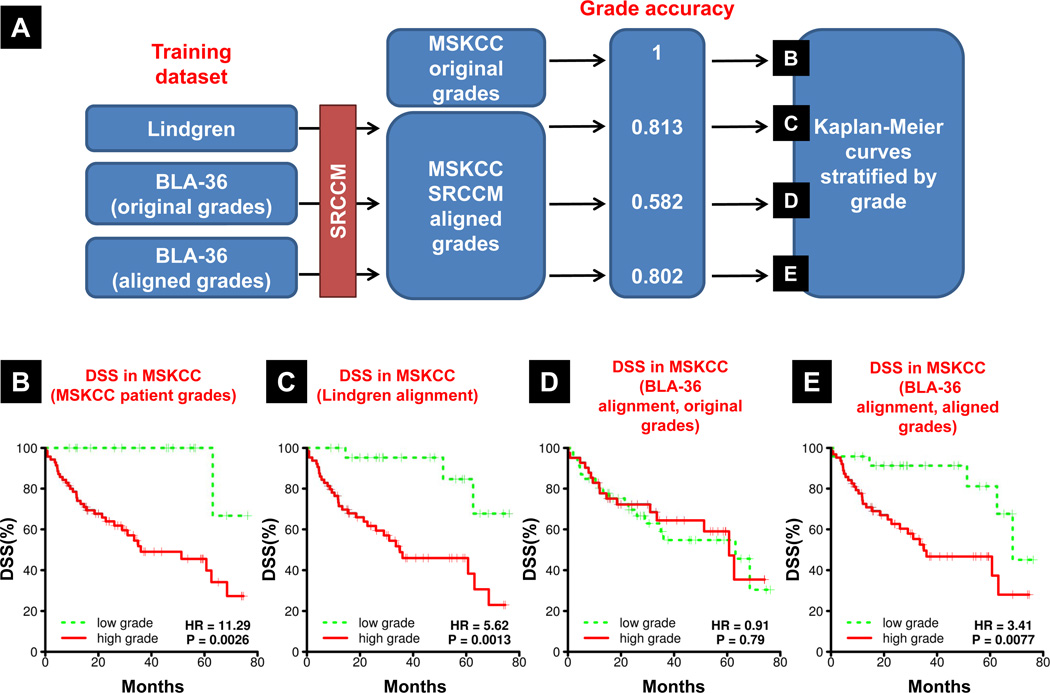
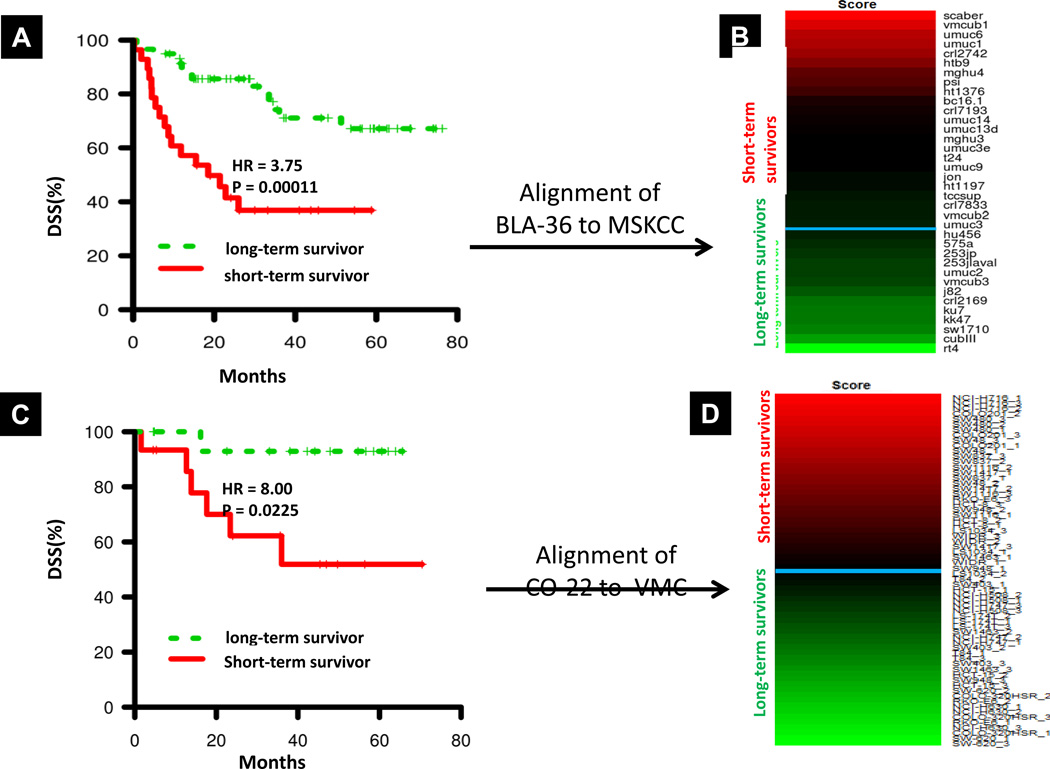
Experimental work on human cancer cell lines often does not translate to the clinic. We posit that this is because some cells undergo changes in vitro that no longer make them representative of human tumors. Here, we describe a novel alignment method named Spearman's rank correlation classification method (SRCCM) that measures similarity between cancer cell lines and human tumors via gene expression profiles, for the purpose of selecting lines that are biologically relevant. To show utility, we used SRCCM to assess similarity of 36 bladder cancer lines with 10 epithelial human tumor types (N = 1,630 samples) and with bladder tumors of different stages and grades (N = 144 samples). Although 34 of 36 lines aligned to bladder tumors rather than other histologies, only 16 of 28 had SRCCM assigned grades identical to that of their original source tumors. To evaluate the clinical relevance of this approach, we show that gene expression profiles of aligned cell lines stratify survival in an independent cohort of 87 bladder patients (HR = 3.41, log-rank P = 0.0077) whereas unaligned cell lines using original tumor grades did not. We repeated this process on 22 colorectal cell lines and found that gene expression profiles of 17 lines aligning to colorectal tumors and selected based on their similarity with 55 human tumors stratified survival in an independent cohort of 177 colorectal cancer patients (HR = 2.35, log-rank P = 0.0019). By selecting cell lines that reflect human tumors, our technique promises to improve the clinical translation of laboratory investigations in cancer.
在人类癌细胞系上进行的实验工作往往不能转化为临床实践。我们假设这是因为一些细胞在体外发生了变化,不再代表人类肿瘤。在这里,我们描述了一种名为斯皮尔曼等级相关分类法(SRCCM)的新型对齐方法,该方法通过基因表达谱来衡量癌细胞系与人类肿瘤之间的相似性,目的是选择具有生物学相关性的细胞系。为了展示其实用性,我们使用 SRCCM 评估了 36 条膀胱癌系与 10 种上皮人类肿瘤类型(N = 1630 个样本)以及不同阶段和分级的膀胱癌(N = 144 个样本)之间的相似性。尽管 36 条线中的 34 条与膀胱癌而非其他组织学类型对齐,但只有 28 条中的 16 条具有 SRCCM 分配的等级与原始来源肿瘤的等级相同。为了评估这种方法的临床相关性,我们表明,对齐细胞系的基因表达谱可对 87 名膀胱癌患者的独立队列进行分层(HR = 3.41,对数秩 P = 0.0077),而使用原始肿瘤等级的未对齐细胞系则不能。我们在 22 条结直肠癌细胞系上重复了这个过程,发现 17 条与结直肠肿瘤对齐的细胞系的基因表达谱根据其与 55 个人类肿瘤的相似性选择,可对 177 名结直肠癌患者的独立队列进行分层(HR = 2.35,对数秩 P = 0.0019)。通过选择反映人类肿瘤的细胞系,我们的技术有望提高癌症实验室研究的临床转化。