Metabolic Discovery Technology Group, Molecular Discovery Research, GlaxoSmithKline, 5 Moore Drive, Research Triangle Park, NC 27709, USA.
PPAR Res. 2011;2011:179454. doi: 10.1155/2011/179454. Epub 2011 Oct 15.
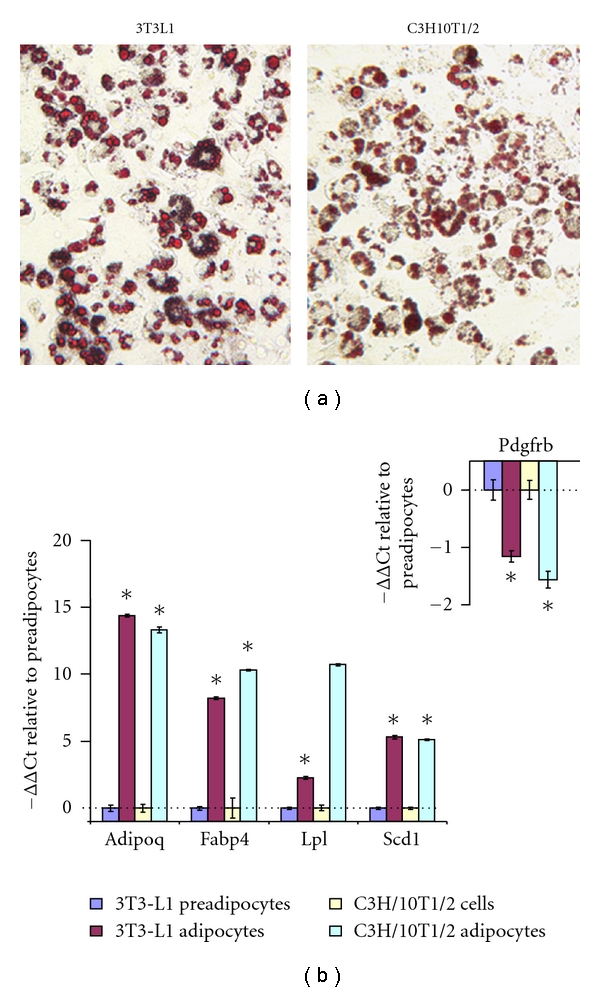
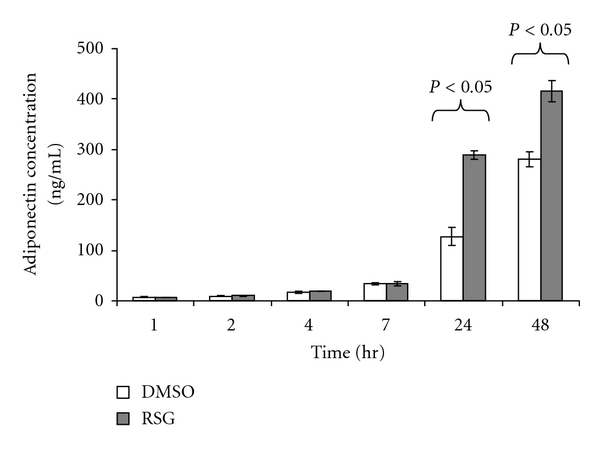
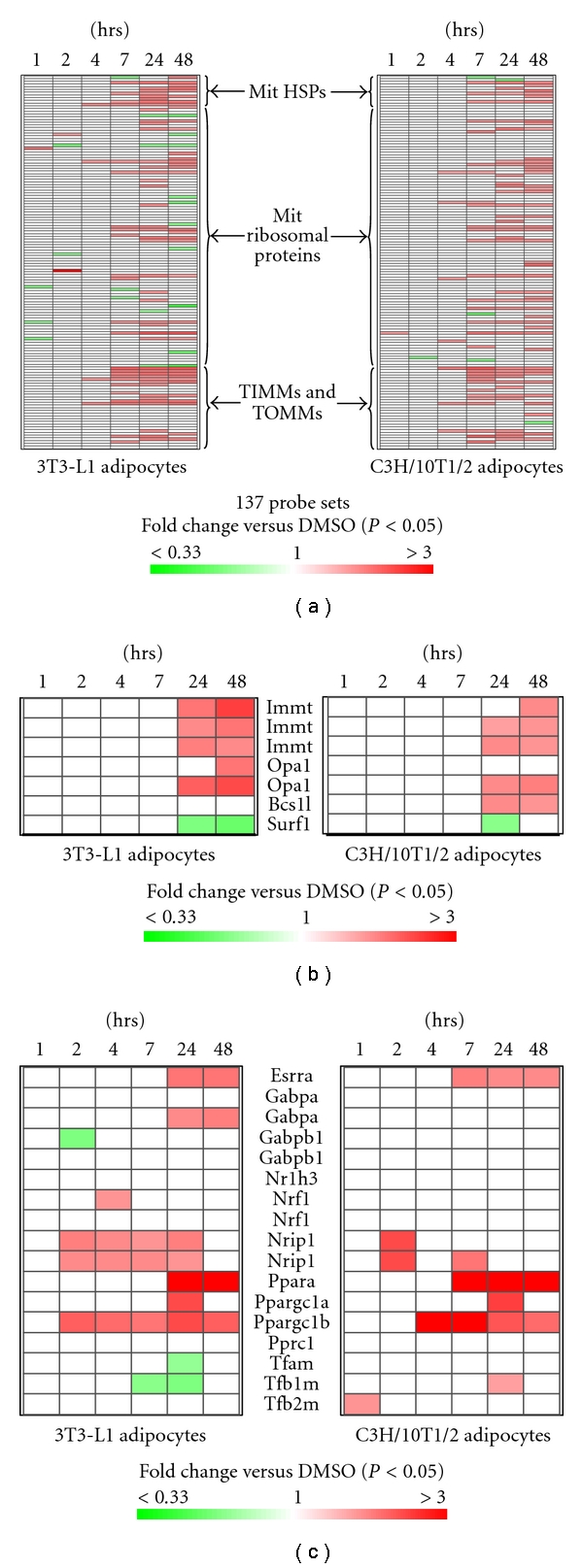
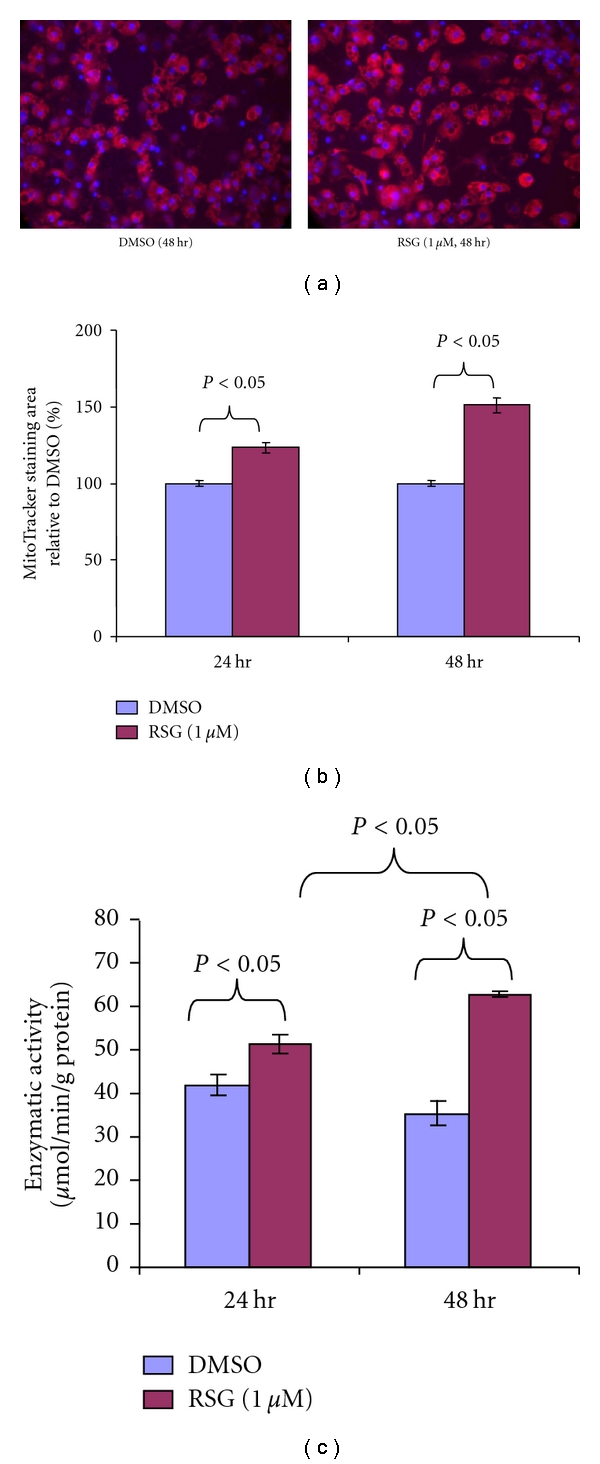
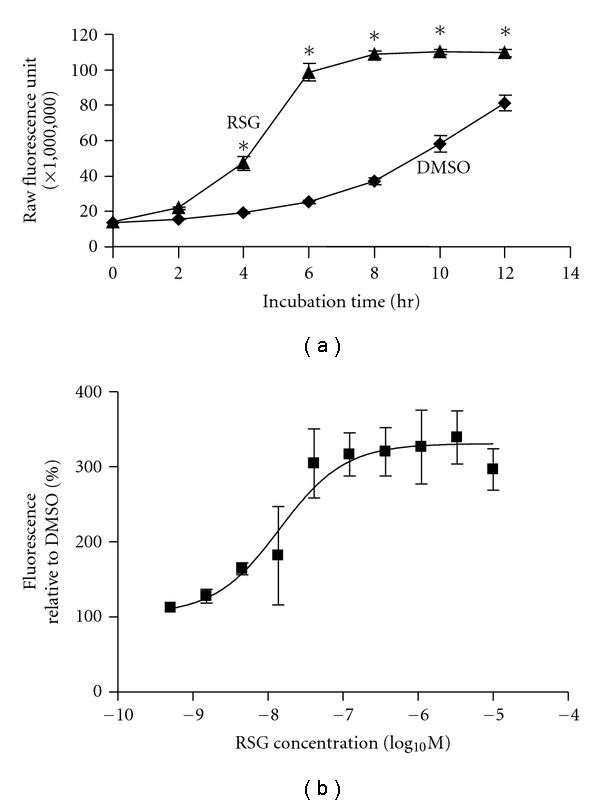
Growing evidence indicates that PPARγ agonists, including rosiglitazone (RSG), induce adipose mitochondrial biogenesis. By systematically analyzing mitochondrial gene expression in two common murine adipocyte models, the current study aimed to further establish the direct role of RSG and capture temporal changes in gene transcription. Microarray profiling revealed that in fully differentiated 3T3-L1 and C3H/10T1/2 adipocytes treated with RSG or DMSO vehicle for 1, 2, 4, 7, 24, and 48 hrs, RSG overwhelmingly increased mitochondrial gene transcripts time dependently. The timing of the increases was consistent with the cascade of organelle biogenesis, that is, initiated by induction of transcription factor(s), followed by increases in the biosynthesis machinery, and then by increases in functional components. The transcriptional increases were further validated by increased mitochondrial staining, citrate synthase activity, and O(2) consumption, and were found to be associated with increased adiponectin secretion. The work provided further insight on the mechanism of PPARγ-induced mitochondrial biogenesis in differentiated adipocytes.
越来越多的证据表明,过氧化物酶体增殖物激活受体γ(PPARγ)激动剂,包括罗格列酮(RSG),可诱导脂肪组织中线粒体的生物发生。通过系统分析两种常见的鼠脂肪细胞模型中的线粒体基因表达,本研究旨在进一步确立 RSG 的直接作用,并捕捉基因转录的时间变化。微阵列分析显示,在经 RSG 或 DMSO 溶剂处理 1、2、4、7、24 和 48 小时的完全分化的 3T3-L1 和 C3H/10T1/2 脂肪细胞中,RSG 时间依赖性地极大地增加了线粒体基因转录物。增加的时间与细胞器生物发生的级联一致,即由转录因子的诱导开始,随后是生物合成机制的增加,然后是功能成分的增加。通过增加的线粒体染色、柠檬酸合酶活性和 O(2)消耗进一步验证了转录增加,并发现与脂联素分泌增加有关。这项工作为分化脂肪细胞中 PPARγ 诱导的线粒体生物发生的机制提供了进一步的见解。