Mohamad Sharifah, Surikumaran Hemavathy, Raoov Muggundha, Marimuthu Tilagam, Chandrasekaram Kumuthini, Subramaniam Puvaneswary
University of Malaya Centre for Ionic Liquids, Department of Chemistry, Faculty of Science, University of Malaya, Kuala Lumpur 50603, Malaysia; E-Mails:
Int J Mol Sci. 2011;12(9):6329-45. doi: 10.3390/ijms12096329. Epub 2011 Sep 23.
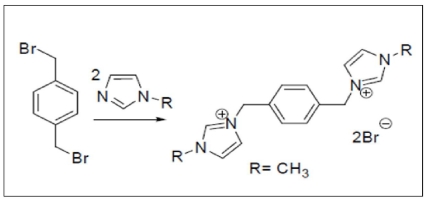
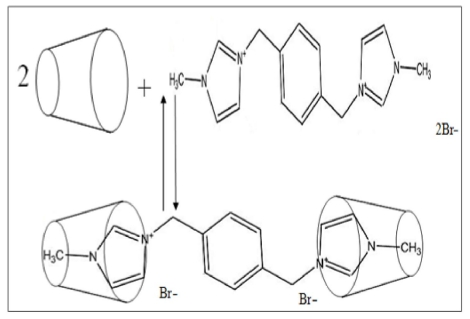
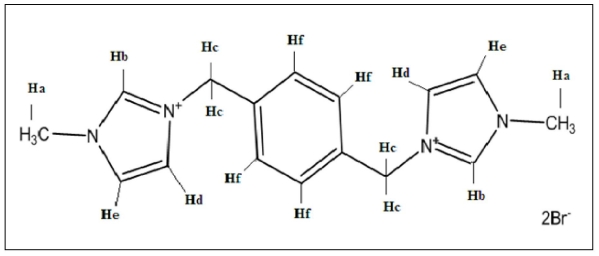
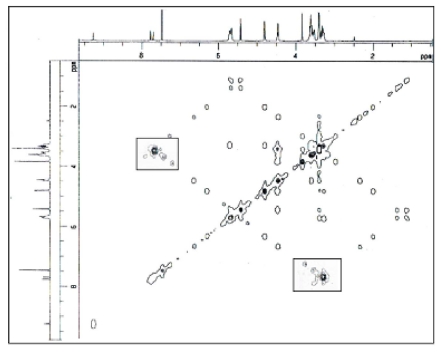
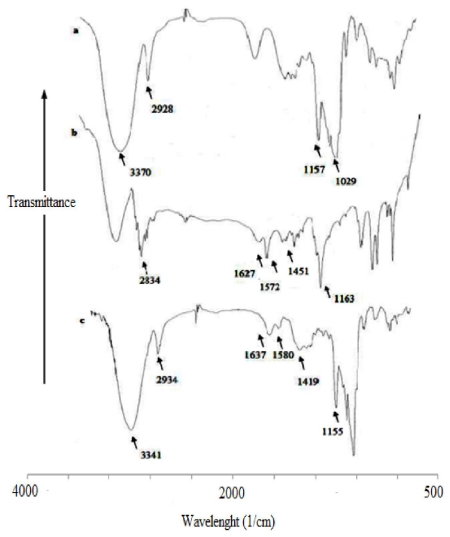
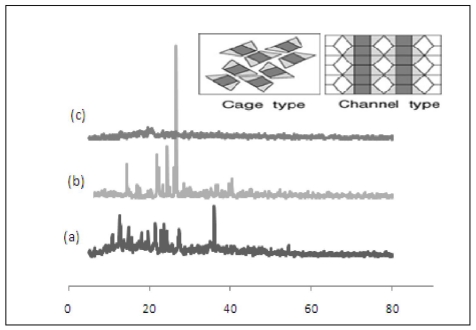
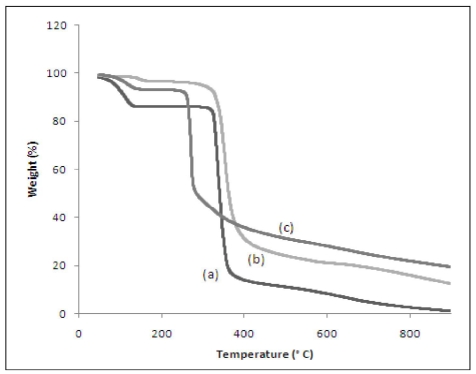
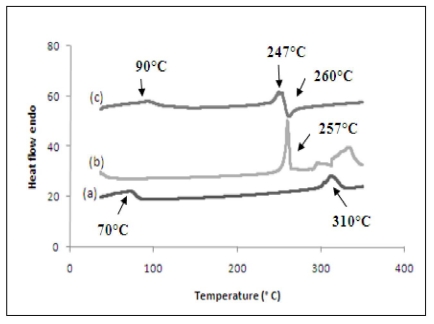
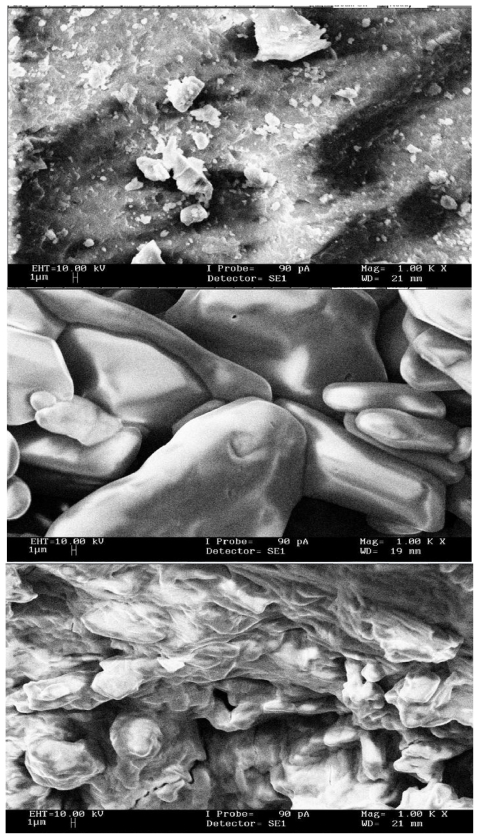
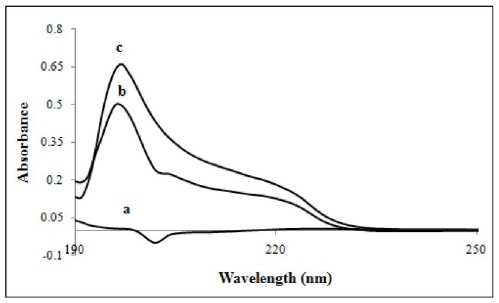
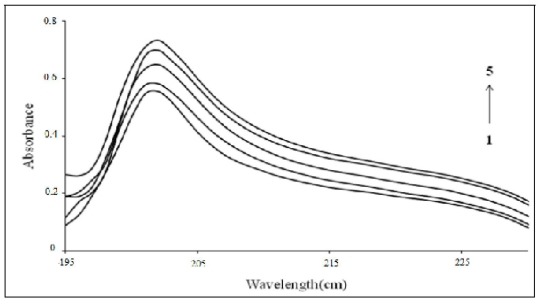
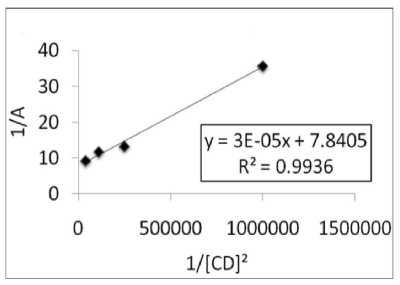
This study focuses on the synthesis and characterization of the inclusion complex of β-Cyclodextrin (β-CD) with dicationic ionic liquid, 3,3'-(1,4-Phenylenebis [methylene]) bis(1-methyl-1H-imidazol-3-ium) di(bromide) (PhenmimBr). The inclusion complex was prepared at room temperature utilizing conventional kneading technique. Proton ((1)H) NMR and 2D ((1)H-(1)H) COSY NMR were the primary characterization tools employed to verify the formation of the inclusion complex. COSY spectra showed strong correlations between protons of imidazolium and protons of β-CD which indicates that the imidazolium ring of PhenmimBr has entered the cavity of β-CD. UV absorption indicated that β-CD reacts with PhenmimBr to form a 2:1 β-CD-PhenmimBr complex with an apparent formation constant of 2.61 × 10(5) mol&(-2) L(2). Other characterization studies such as UV, FT-IR, XRD, TGA, DSC and SEM studies were also used to further support the formation of the β-CD-PhenmimBr inclusion complex.
本研究聚焦于β-环糊精(β-CD)与双阳离子离子液体3,3'-(1,4-亚苯基双[亚甲基])双(1-甲基-1H-咪唑-3-鎓)二(溴化物)(PhenmimBr)包合物的合成与表征。该包合物在室温下采用传统捏合技术制备。质子((1)H)核磁共振和二维((1)H-(1)H)COSY核磁共振是用于验证包合物形成的主要表征工具。COSY谱显示咪唑鎓质子与β-CD质子之间有强相关性,这表明PhenmimBr的咪唑鎓环已进入β-CD的空腔。紫外吸收表明β-CD与PhenmimBr反应形成2:1的β-CD-PhenmimBr配合物,表观形成常数为2.61×10(5) mol&(-2) L(2)。其他表征研究如紫外、傅里叶变换红外光谱、X射线衍射、热重分析、差示扫描量热法和扫描电子显微镜研究也用于进一步支持β-CD-PhenmimBr包合物的形成。