Institute of Protein Biochemistry, National Research Council (CNR-IBP), Napoli, Italy.
PLoS One. 2011;6(10):e25888. doi: 10.1371/journal.pone.0025888. Epub 2011 Oct 10.
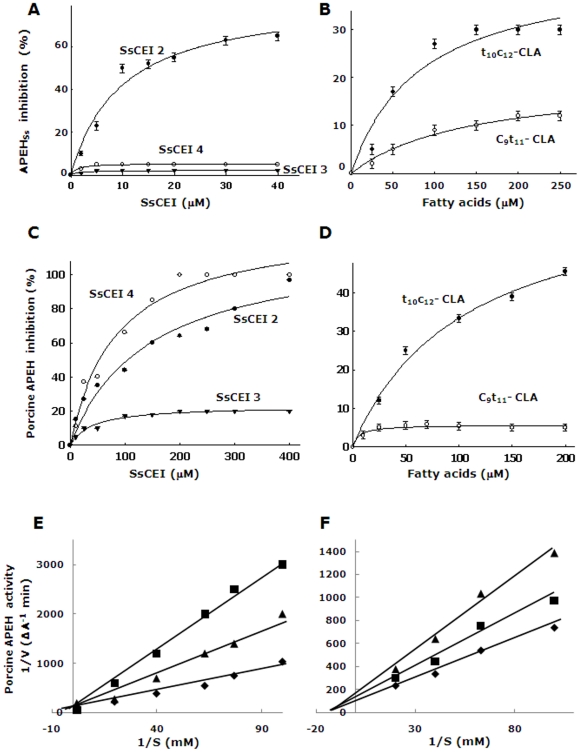
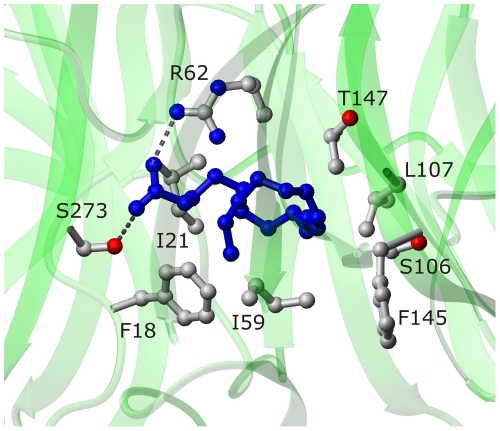
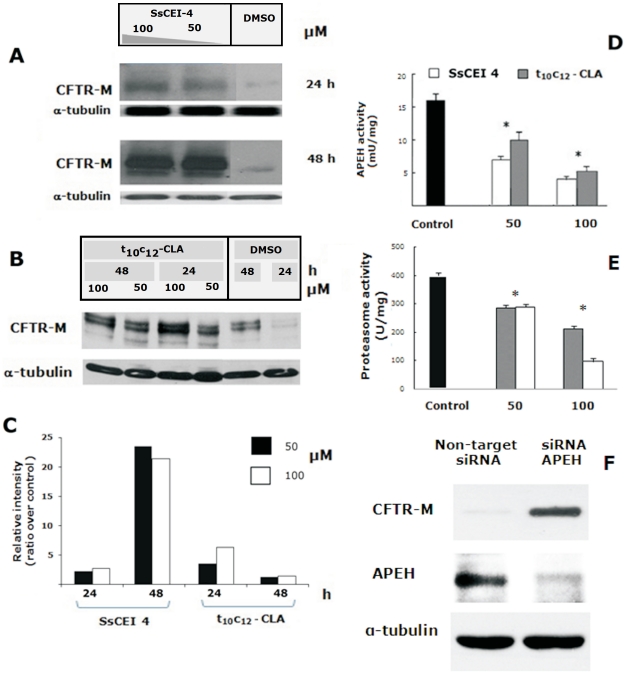
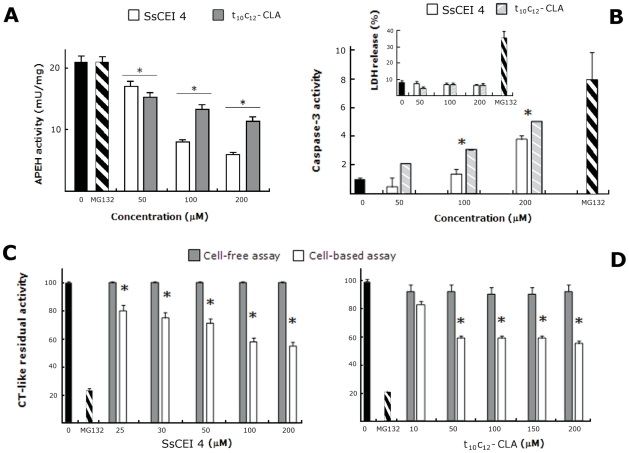
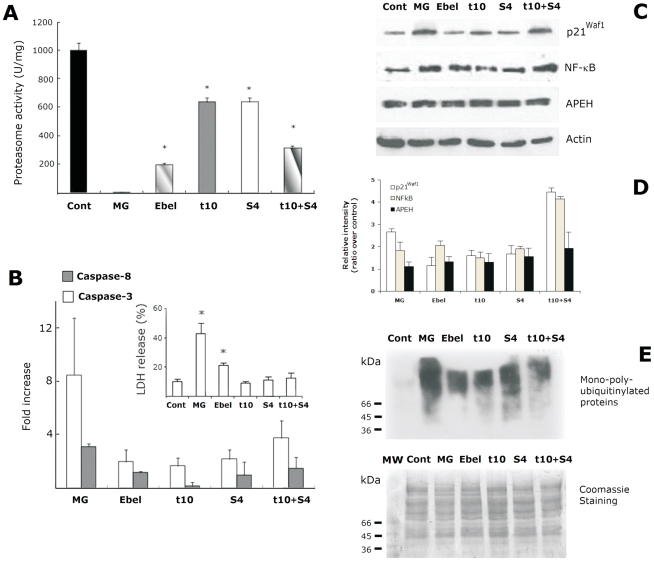
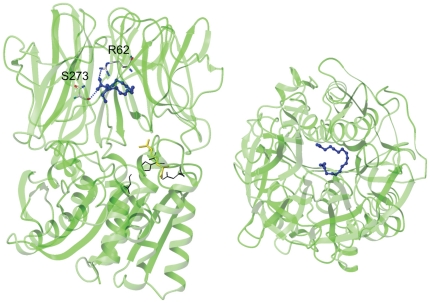
Acylpeptide hydrolase (APEH), one of the four members of the prolyl oligopeptidase class, catalyses the removal of N-acylated amino acids from acetylated peptides and it has been postulated to play a key role in protein degradation machinery. Disruption of protein turnover has been established as an effective strategy to down-regulate the ubiquitin-proteasome system (UPS) and as a promising approach in anticancer therapy.Here, we illustrate a new pathway modulating UPS and proteasome activity through inhibition of APEH. To find novel molecules able to down-regulate APEH activity, we screened a set of synthetic peptides, reproducing the reactive-site loop of a known archaeal inhibitor of APEH (SsCEI), and the conjugated linoleic acid (CLA) isomers. A 12-mer SsCEI peptide and the trans10-cis12 isomer of CLA, were identified as specific APEH inhibitors and their effects on cell-based assays were paralleled by a dose-dependent reduction of proteasome activity and the activation of the pro-apoptotic caspase cascade. Moreover, cell treatment with the individual compounds increased the cytoplasm levels of several classic hallmarks of proteasome inhibition, such as NFkappaB, p21, and misfolded or polyubiquitinylated proteins, and additive effects were observed in cells exposed to a combination of both inhibitors without any cytotoxicity. Remarkably, transfection of human bronchial epithelial cells with APEH siRNA, promoted a marked accumulation of a mutant of the cystic fibrosis transmembrane conductance regulator (CFTR), herein used as a model of misfolded protein typically degraded by UPS. Finally, molecular modeling studies, to gain insights into the APEH inhibition by the trans10-cis12 CLA isomer, were performed.Our study supports a previously unrecognized role of APEH as a negative effector of proteasome activity by an unknown mechanism and opens new perspectives for the development of strategies aimed at modulation of cancer progression.
酰肽水解酶 (APEH) 是脯氨酰寡肽酶家族的四个成员之一,可催化乙酰化肽中 N-酰化氨基酸的去除,据推测它在蛋白质降解机制中发挥关键作用。破坏蛋白质周转已被确立为下调泛素-蛋白酶体系统 (UPS) 的有效策略,并且是癌症治疗中很有前途的方法。在这里,我们说明了通过抑制 APEH 调节 UPS 和蛋白酶体活性的新途径。为了找到能够下调 APEH 活性的新型分子,我们筛选了一组合成肽,这些肽复制了已知的 APEH 古菌抑制剂 (SsCEI) 的反应环和共轭亚油酸 (CLA) 异构体。发现 12 肽 SsCEI 肽和 CLA 的反式 10-顺式 12 异构体是 APEH 的特异性抑制剂,其对细胞基础测定的影响与蛋白酶体活性的剂量依赖性降低和促凋亡半胱天冬酶级联的激活平行。此外,用单个化合物处理细胞会增加几种经典蛋白酶体抑制物的细胞质水平,例如 NFkappaB、p21 和错误折叠或多泛素化的蛋白质,并且在同时暴露于两种抑制剂的细胞中观察到相加作用而没有任何细胞毒性。值得注意的是,用 APEH siRNA 转染人支气管上皮细胞可显著促进囊性纤维化跨膜电导调节剂 (CFTR) 突变体的积累,在此用作 UPS 通常降解的错误折叠蛋白的模型。最后,进行了分子建模研究,以深入了解反式 10-顺式 12 CLA 异构体对 APEH 的抑制作用,进行了分子建模研究,以深入了解反式 10-顺式 12 CLA 异构体对 APEH 的抑制作用,进行了分子建模研究,以深入了解反式 10-顺式 12 CLA 异构体对 APEH 的抑制作用,以深入了解反式 10-顺式 12 CLA 异构体对 APEH 的抑制作用。我们的研究支持 APEH 作为未知机制的蛋白酶体活性的负效因子的先前未知作用,并为旨在调节癌症进展的策略的发展开辟了新的前景。