Ackermann Maegen A, Kontrogianni-Konstantopoulos Aikaterini
Department of Biochemistry and Molecular Biology, School of Medicine, University of Maryland, Baltimore, MD 21201, USA.
J Biomed Biotechnol. 2011;2011:636403. doi: 10.1155/2011/636403. Epub 2011 Oct 16.
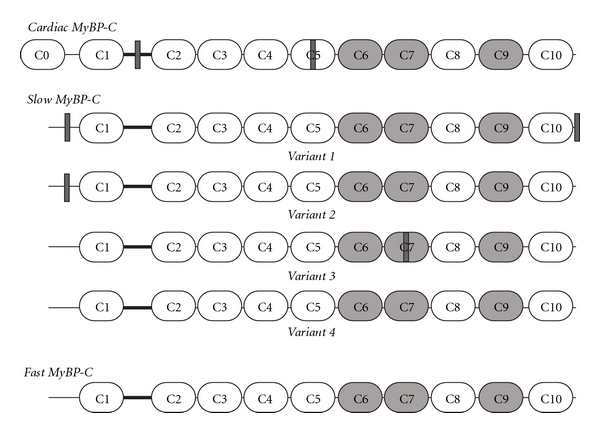
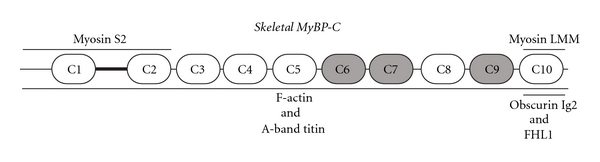
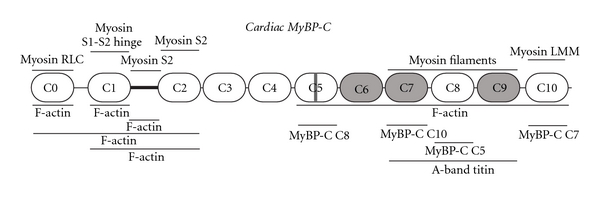
Myosin-Binding protein-C (MyBP-C) is a family of accessory proteins of striated muscles that contributes to the assembly and stabilization of thick filaments, and regulates the formation of actomyosin cross-bridges, via direct interactions with both thick myosin and thin actin filaments. Three distinct MyBP-C isoforms have been characterized; cardiac, slow skeletal, and fast skeletal. Numerous mutations in the gene for cardiac MyBP-C (cMyBP-C) have been associated with familial hypertrophic cardiomyopathy (FHC) and have led to increased interest in the regulation and roles of the cardiac isoform. This review will summarize our current knowledge on MyBP-C and its role in modulating contractility, focusing on its interactions with both myosin and actin filaments in cardiac and skeletal muscles.
肌球蛋白结合蛋白C(MyBP-C)是横纹肌的一种辅助蛋白家族,它通过与粗肌球蛋白丝和细肌动蛋白丝直接相互作用,有助于粗肌丝的组装和稳定,并调节肌动球蛋白横桥的形成。已鉴定出三种不同的MyBP-C同工型;心脏型、慢骨骼肌型和快骨骼肌型。心脏肌球蛋白结合蛋白C(cMyBP-C)基因中的大量突变与家族性肥厚性心肌病(FHC)相关,并引发了人们对心脏同工型的调节和作用的更多关注。本综述将总结我们目前对MyBP-C及其在调节收缩性方面作用的认识,重点关注其在心肌和骨骼肌中与肌球蛋白和肌动蛋白丝的相互作用。