Department of Biology, McGill University, Montréal, Canada.
PLoS One. 2011;6(10):e26116. doi: 10.1371/journal.pone.0026116. Epub 2011 Oct 10.
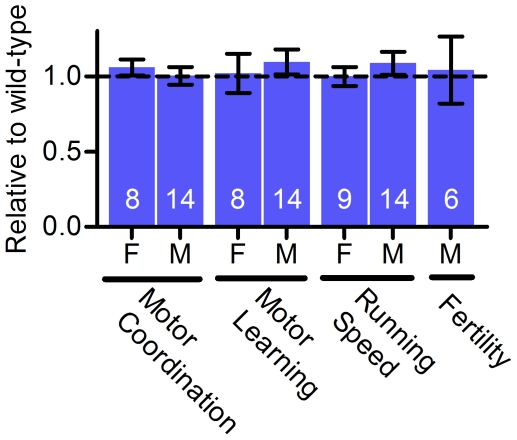
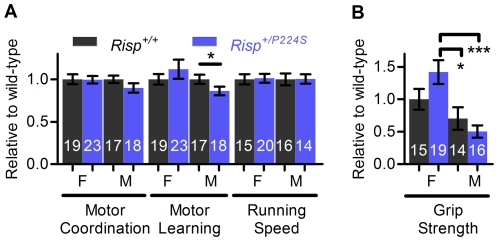
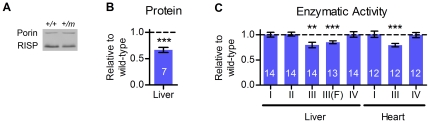
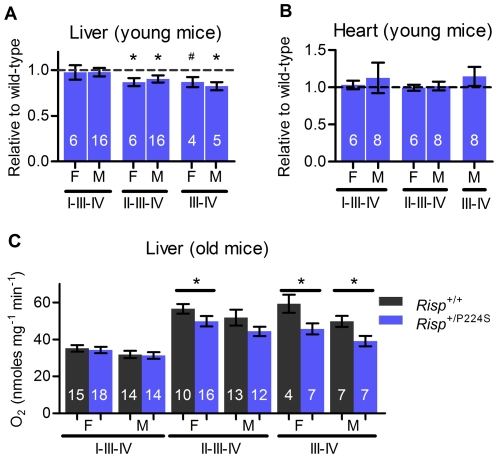
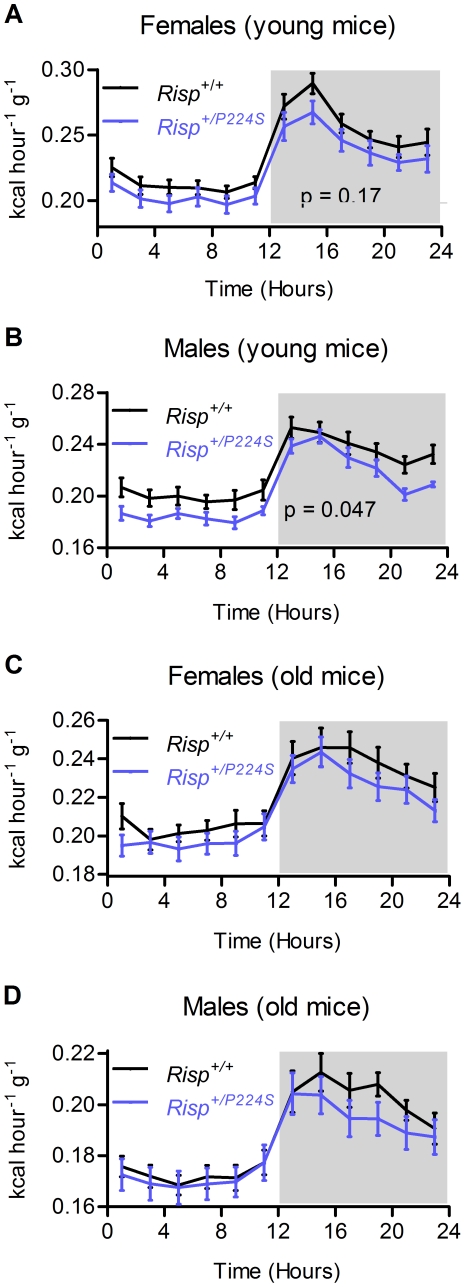
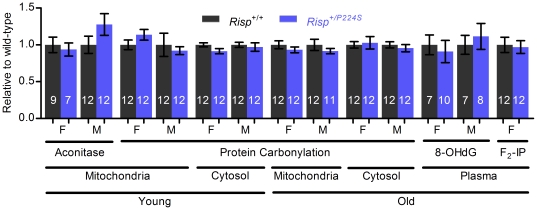
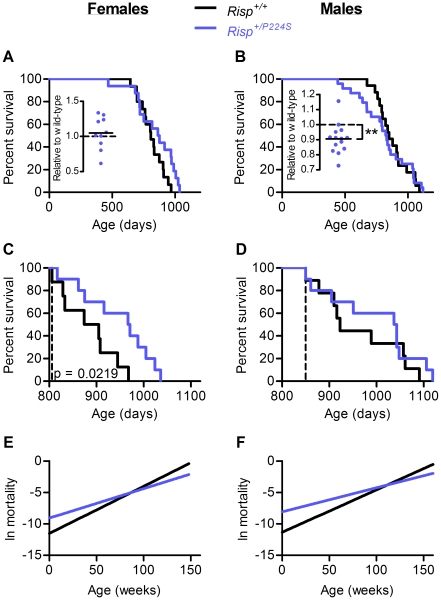
Impairments of various aspects of mitochondrial function have been associated with increased lifespan in various model organisms ranging from Caenorhabditis elegans to mice. For example, disruption of the function of the 'Rieske' iron-sulfur protein (RISP) of complex III of the mitochondrial electron transport chain can result in increased lifespan in the nematode worm C. elegans. However, the mechanisms by which impaired mitochondrial function affects aging remain under investigation, including whether or not they require decreased electron transport. We have generated knock-in mice with a loss-of-function Risp mutation that is homozygous lethal. However, heterozygotes (Risp(+/P224S)) were viable and had decreased levels of RISP protein and complex III enzymatic activity. This decrease was sufficient to impair mitochondrial respiration and to decrease overall metabolic rate in males, but not females. These defects did not appear to exert an overtly deleterious effect on the health of the mutants, since young Risp(+/P224S) mice are outwardly normal, with unaffected performance and fertility. Furthermore, biomarkers of oxidative stress were unaffected in both young and aged animals. Despite this, the average lifespan of male Risp(+/P224S) mice was shortened and aged Risp(+/P224S) males showed signs of more rapidly deteriorating health. In spite of these differences, analysis of Gompertz mortality parameters showed that Risp heterozygosity decreased the rate of increase of mortality with age and increased the intrinsic vulnerability to death in both sexes. However, the intrinsic vulnerability was increased more dramatically in males, which resulted in their shortened lifespan. For females, the slower acceleration of age-dependent mortality results in significantly increased survival of Risp(+/P224S) mice in the second half of lifespan. These results demonstrate that even relatively small perturbations of the mitochondrial electron transport chain can have significant physiological effects in mammals, and that the severity of those effects can be sex-dependent.
线粒体功能的各种方面的损伤与各种模式生物(从秀丽隐杆线虫到老鼠)寿命的延长有关。例如,破坏线粒体电子传递链复合物 III 的“ Rieske”铁硫蛋白(RISP)的功能可以导致线虫秀丽隐杆线虫寿命的延长。然而,线粒体功能受损影响衰老的机制仍在研究中,包括它们是否需要减少电子传递。我们已经生成了具有纯合致死性 Risp 突变的敲入小鼠。然而,杂合子(Risp(+/P224S))是有活力的,并且 RISP 蛋白和复合物 III 酶活性水平降低。这种减少足以损害雄性的线粒体呼吸并降低整体代谢率,但不会降低雌性的呼吸和代谢率。这些缺陷似乎没有对突变体的健康产生明显的有害影响,因为年轻的 Risp(+/P224S) 小鼠外表正常,表现和生育能力不受影响。此外,年轻和年老动物的氧化应激生物标志物均未受到影响。尽管如此,雄性 Risp(+/P224S) 小鼠的平均寿命缩短了,年老的 Risp(+/P224S) 雄性表现出健康状况迅速恶化的迹象。尽管存在这些差异,但 Gompertz 死亡率参数的分析表明,Risp 杂合性降低了死亡率随年龄增长的速度,并增加了两性的固有死亡易感性。然而,雄性的固有脆弱性增加更为明显,导致其寿命缩短。对于雌性,与年龄相关的死亡率的较慢加速导致 Risp(+/P224S) 小鼠在寿命的后半段的存活率显著增加。这些结果表明,即使是线粒体电子传递链的相对较小的扰动也会对哺乳动物产生重大的生理影响,并且这些影响的严重程度可能取决于性别。