Salazar-Weber Nina L, Smith Jeffrey P
Department of Biology, Colorado State University-Pueblo, 2200 Bonforte Boulevard, Pueblo, CO 81001, USA.
Int J Alzheimers Dis. 2011;2011:864753. doi: 10.4061/2011/864753. Epub 2011 Oct 19.
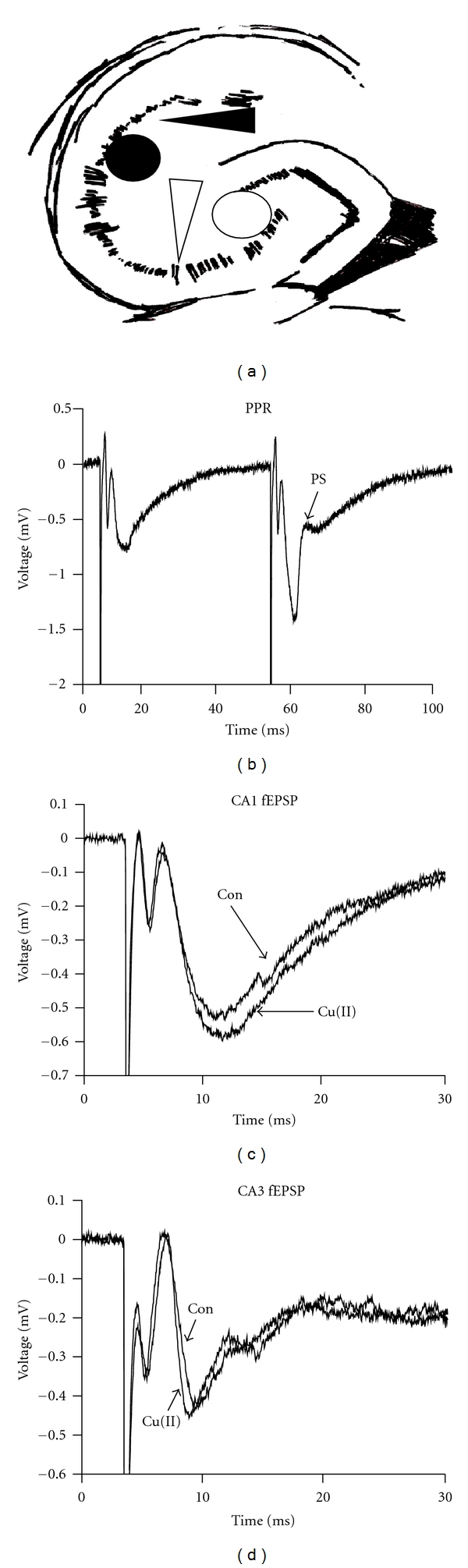
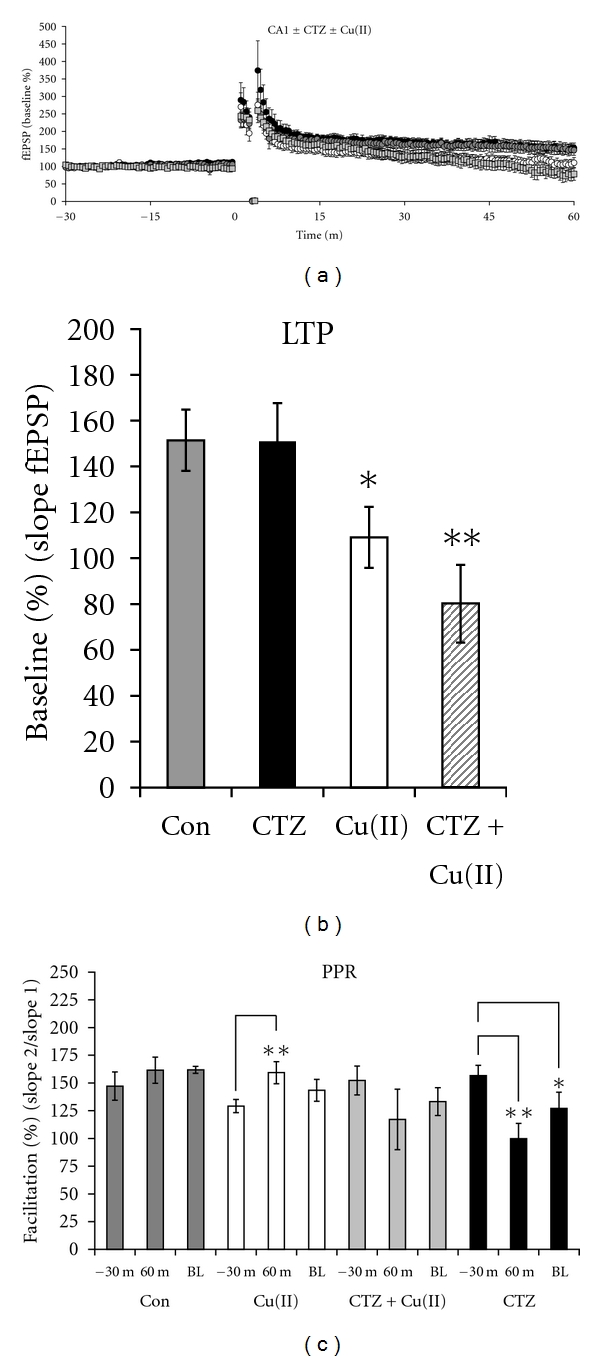
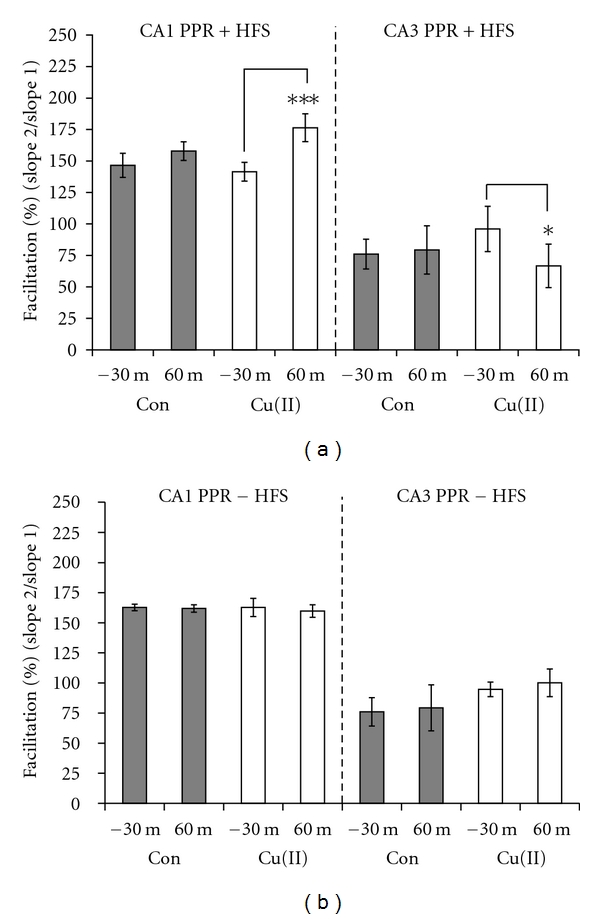
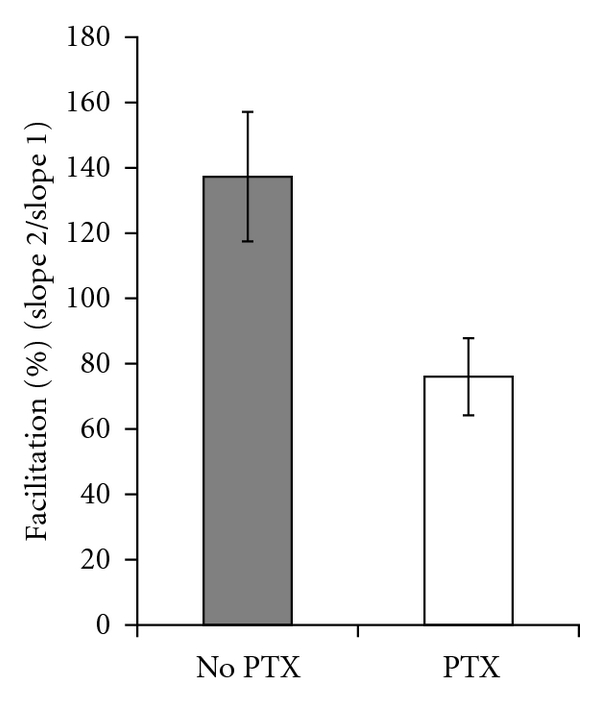
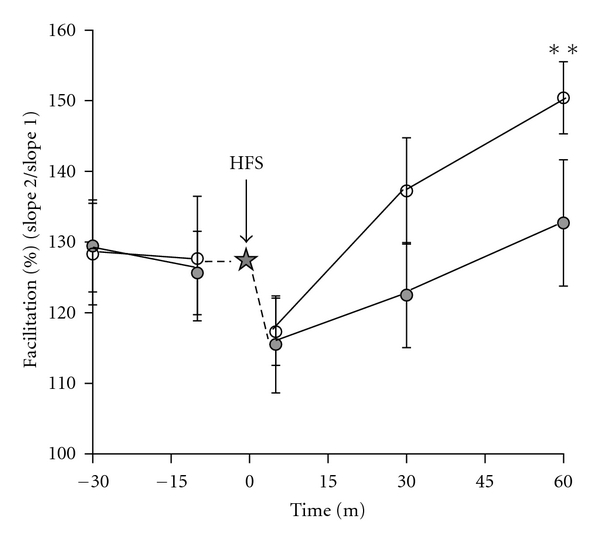
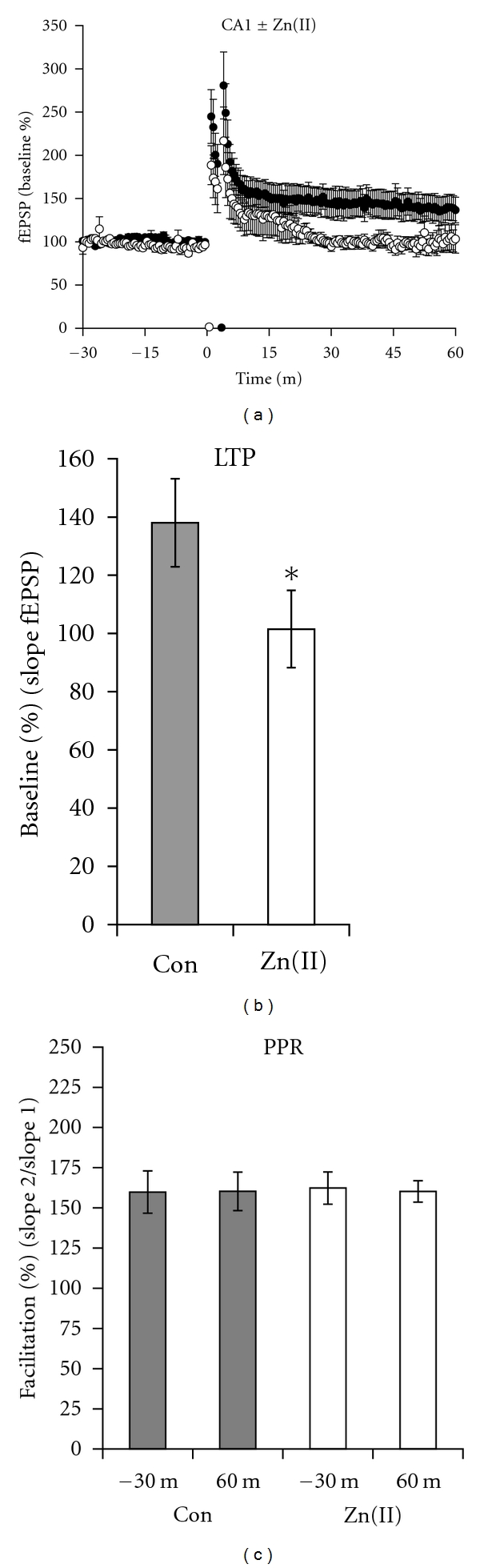
Copper misregulation has been implicated in the pathological processes underlying deterioration of learning and memory in Alzheimer's disease and other neurodegenerative disorders. Supporting this, inhibition of long-term potentiation (LTP) by copper (II) has been well established, but the exact mechanism is poorly characterized. It is thought that an interaction between copper and postsynaptic NMDA receptors is a major part of the mechanism; however, in this study, we found that copper (II) inhibited NMDA receptor-independent LTP in the CA3 region of hippocampal slices. In addition, in the CA3 and CA1 regions, copper modulated the paired-pulse ratio (PPR) in an LTP-dependent manner. Combined, this suggests the involvement of a presynaptic mechanism in the modulation of synaptic plasticity by copper. Inhibition of the copper-dependent changes in the PPR with cyclothiazide suggested that this may involve an interaction with the presynaptic AMPA receptors that regulate neurotransmitter release.
铜代谢失调与阿尔茨海默病及其他神经退行性疾病中学习和记忆衰退的病理过程有关。与此相符的是,铜(II)对长时程增强(LTP)的抑制作用已得到充分证实,但其确切机制尚不清楚。人们认为铜与突触后NMDA受体之间的相互作用是该机制的主要部分;然而,在本研究中,我们发现铜(II)抑制海马切片CA3区中不依赖NMDA受体的LTP。此外,在CA3区和CA1区,铜以LTP依赖的方式调节配对脉冲比率(PPR)。综合来看,这表明铜在调节突触可塑性过程中涉及一种突触前机制。用环噻嗪抑制PPR中依赖铜的变化表明,这可能涉及与调节神经递质释放的突触前AMPA受体的相互作用。