Oncology Department, Guang An Men Hospital, China Academy of Chinese Medical Sciences, Xicheng District, Beijing, China.
J Exp Clin Cancer Res. 2011 Oct 28;30(1):103. doi: 10.1186/1756-9966-30-103.
Cancer stem cells (CSCs) play an important role in cancer initiation, relapse and metastasis. To date, no specific medicine has been found to target CSCs as they are resistant to most conventional therapies and proliferate indefinitely. Compound Kushen Injection (CKI) has been widely used for cancer patients with remarkable therapeutic effects in Chinese clinical settings for many years. This study focused on whether CKI could inhibit MCF-7 SP cells in vitro and in vivo.
The analysis of CKI on SP population and the main genes of Wnt signaling pathway were studied first. Then we studied the tumorigenicity of SP cells and the effects of CKI on SP cells in vivo. The mice inoculated with 10,000 SP cells were randomly divided into three groups (6 in each group) and treated with CKI, cisplatin and saline (as a control) respectively for 7 weeks. The tumor formation rates of each group were compared. The main genes and proteins of the Wnt signaling pathway were analyzed by RT-PCR and western blot.
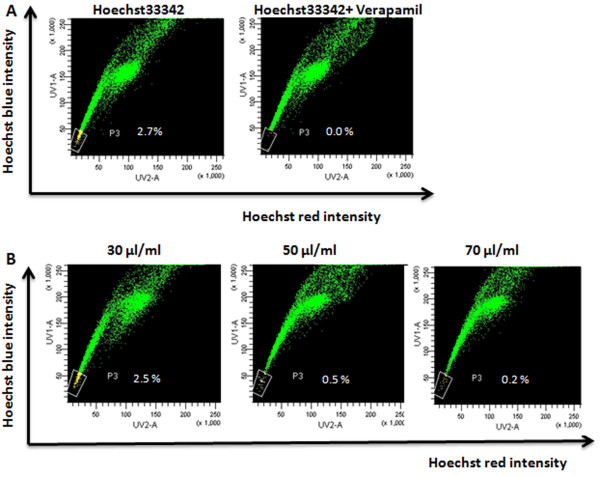
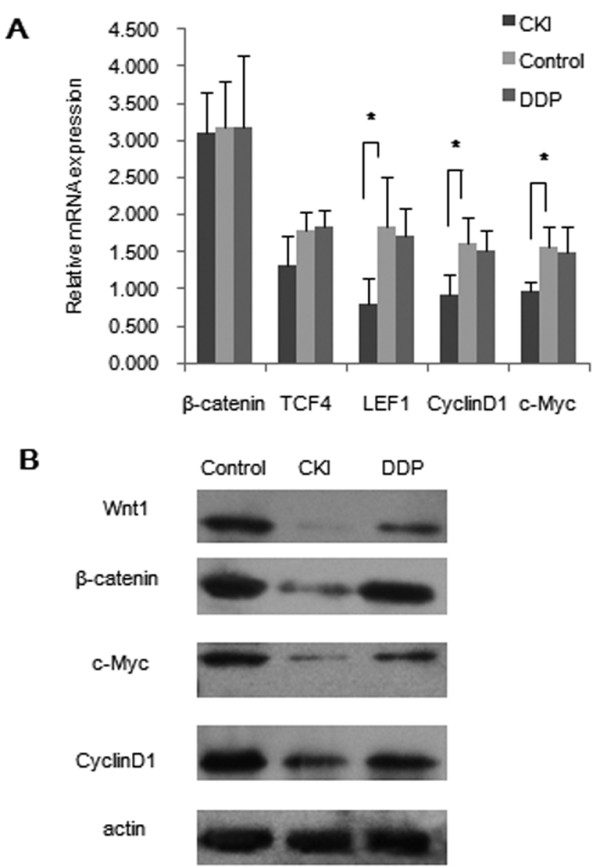
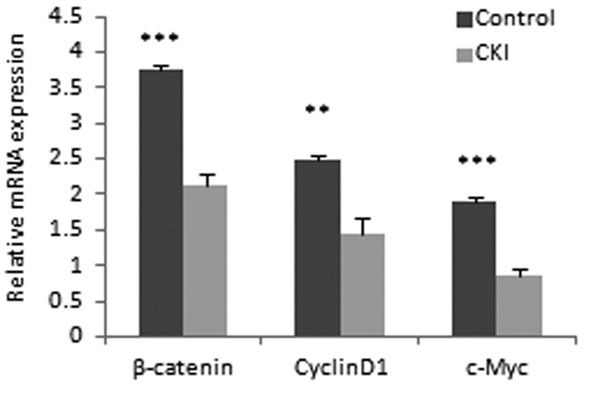
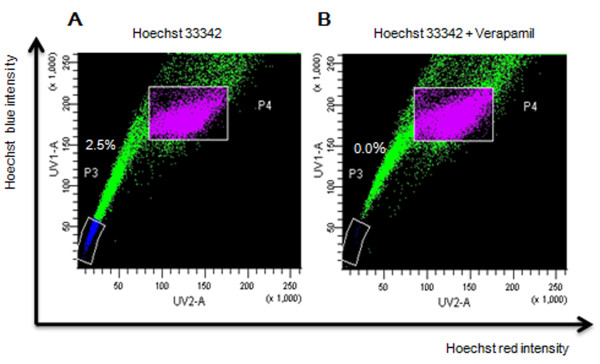
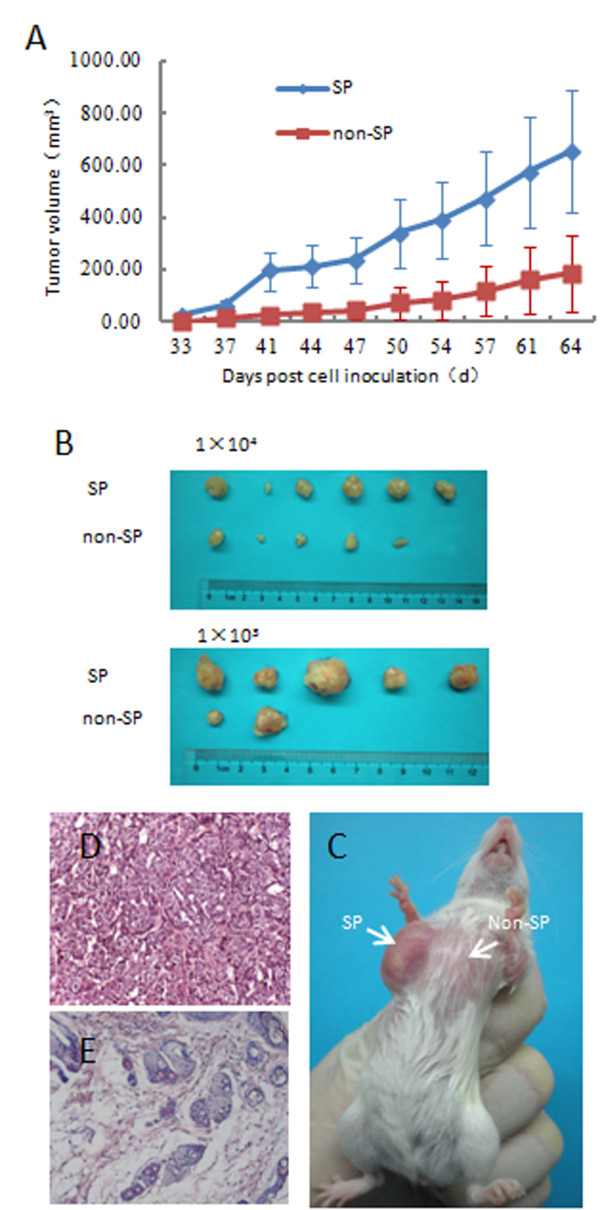
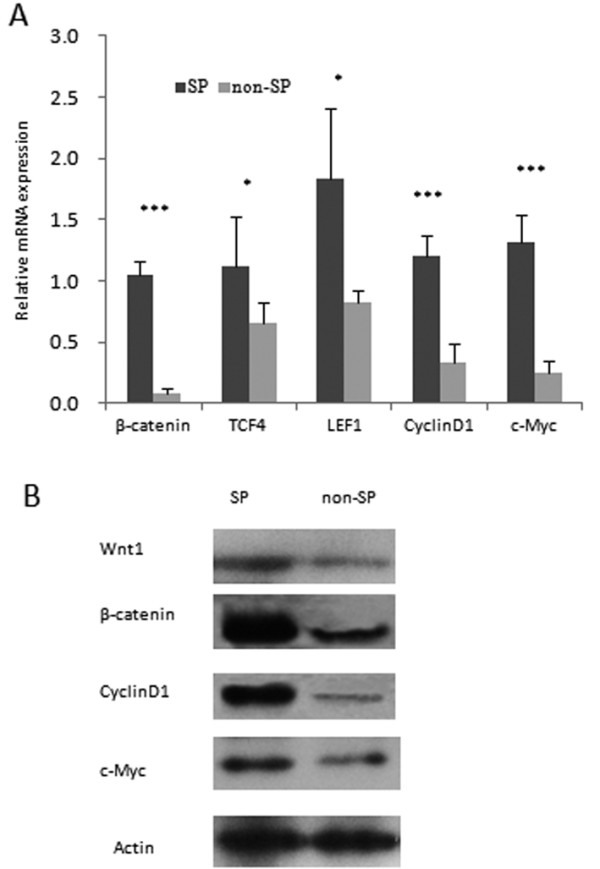
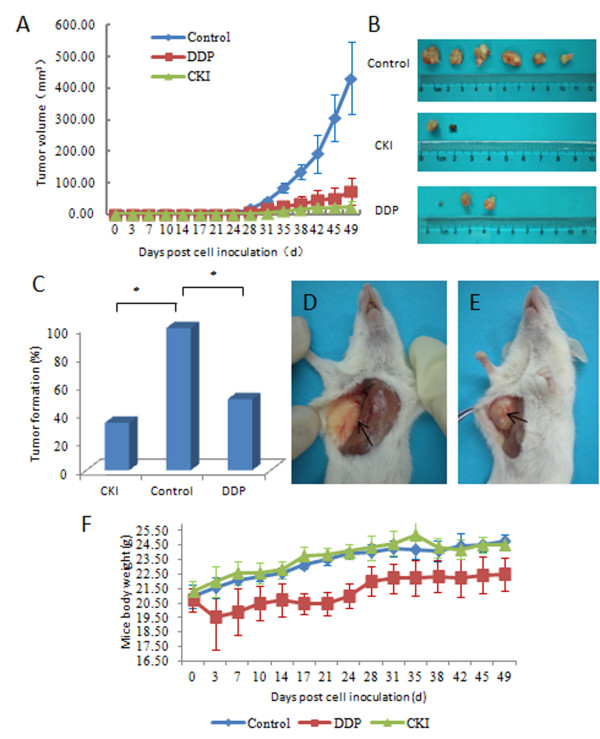
CKI suppressed the size of SP population (approximately 90%), and down-regulated the main genes of Wnt signaling pathway. We also determined that MCF-7 SP cells were more tumorigenic than non-SP and unsorted cells. The Wnt signaling pathway was up-regulated in tumors derived from SP cells compared with that in tumors from non-SP cells. The tumor formation rate of the CKI Group was 33% (2/6, P < 0.05), and that of Cisplatin Group was 50%(3/6, P < 0.05), whereas that of the Control Group was 100% (6/6).The RT-PCR and western blot results indicated that CKI suppressed tumor growth by down-regulating the Wnt/β-catenin pathway, while cisplatin activated the Wnt/β-catenin pathway and might spare SP cells.
It suggested that CKI may serve as a novel drug targeting cancer stem-like cells, though further studies are recommended.
癌症干细胞(CSC)在癌症的发生、复发和转移中起着重要作用。迄今为止,尚未发现针对 CSC 的特定药物,因为它们对大多数常规疗法具有抗性并且无限增殖。苦参注射液(CKI)已在临床中广泛用于癌症患者多年,具有显著的治疗效果。本研究旨在探讨 CKI 是否能在体外和体内抑制 MCF-7 SP 细胞。
首先分析 CKI 对 SP 群体及 Wnt 信号通路的主要基因的影响。然后研究 SP 细胞的致瘤性以及 CKI 对体内 SP 细胞的作用。将接种了 10000 个 SP 细胞的小鼠随机分为 3 组(每组 6 只),分别用 CKI、顺铂和生理盐水(作为对照)处理 7 周。比较各组的肿瘤形成率。通过 RT-PCR 和 Western blot 分析 Wnt 信号通路的主要基因和蛋白。
CKI 抑制 SP 群体的大小(约 90%),并下调 Wnt 信号通路的主要基因。我们还确定 MCF-7 SP 细胞比非 SP 和未分选细胞更具致瘤性。与非 SP 细胞来源的肿瘤相比,源自 SP 细胞的肿瘤中 Wnt 信号通路上调。CKI 组的肿瘤形成率为 33%(2/6,P<0.05),顺铂组为 50%(3/6,P<0.05),而对照组为 100%(6/6)。RT-PCR 和 Western blot 结果表明,CKI 通过下调 Wnt/β-catenin 通路抑制肿瘤生长,而顺铂激活 Wnt/β-catenin 通路并可能使 SP 细胞免受影响。
提示 CKI 可能作为一种针对癌症干细胞样细胞的新型药物,尽管需要进一步研究。