State Key Laboratory of Microbial Technology, Shandong University, Jinan, PR China.
Microb Cell Fact. 2011 Oct 28;10:86. doi: 10.1186/1475-2859-10-86.
Previous studies have revealed that the C-terminal region of the S-layer protein from Lactobacillus is responsible for the cell wall anchoring, which provide an approach for targeting heterologous proteins to the cell wall of lactic acid bacteria (LAB). In this study, we developed a new surface display system in lactic acid bacteria with the C-terminal region of S-layer protein SlpB of Lactobacillus crispatus K2-4-3 isolated from chicken intestine.
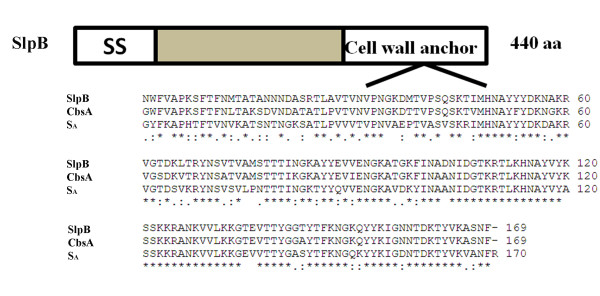
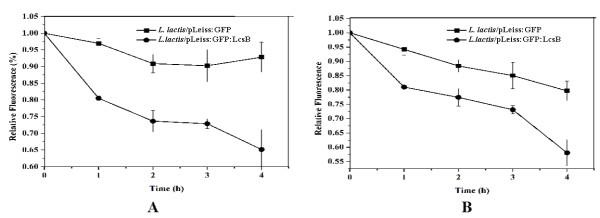
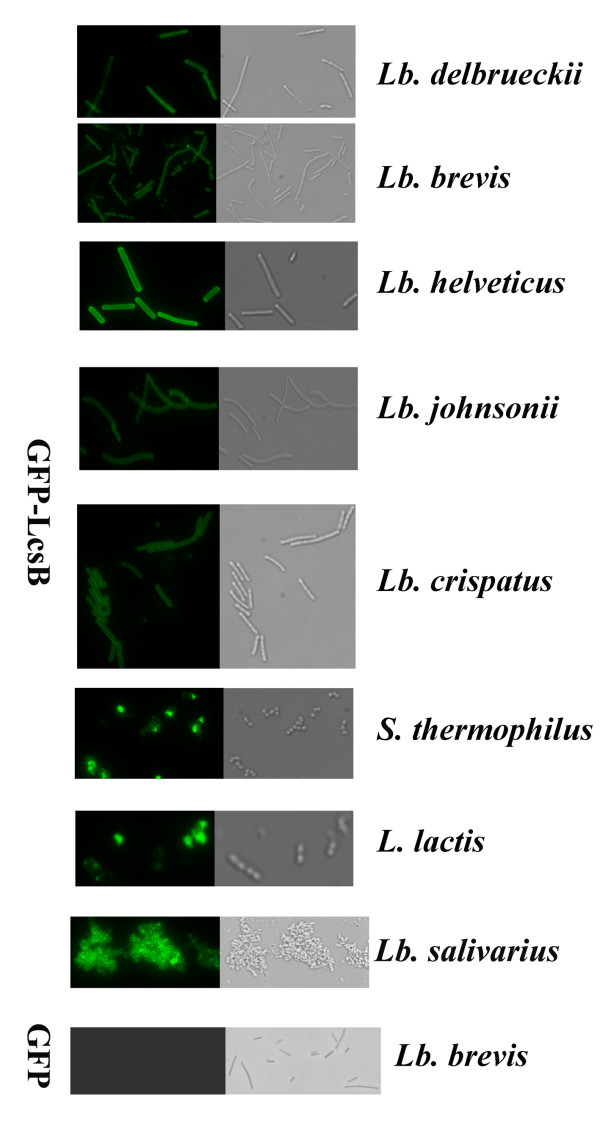
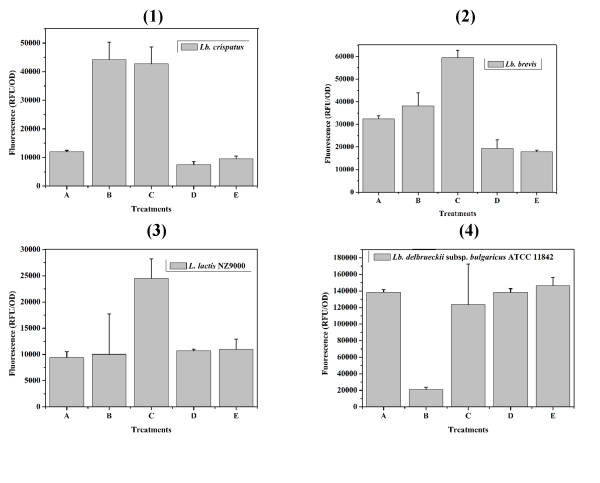
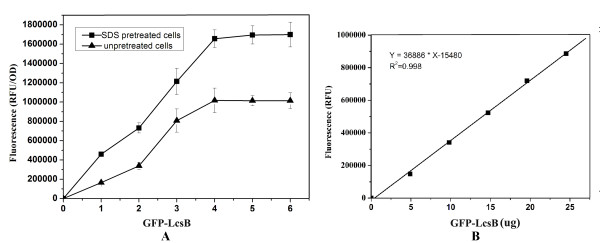
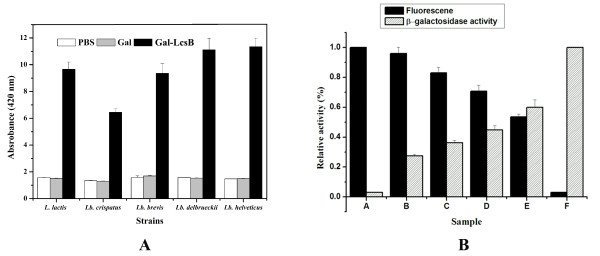
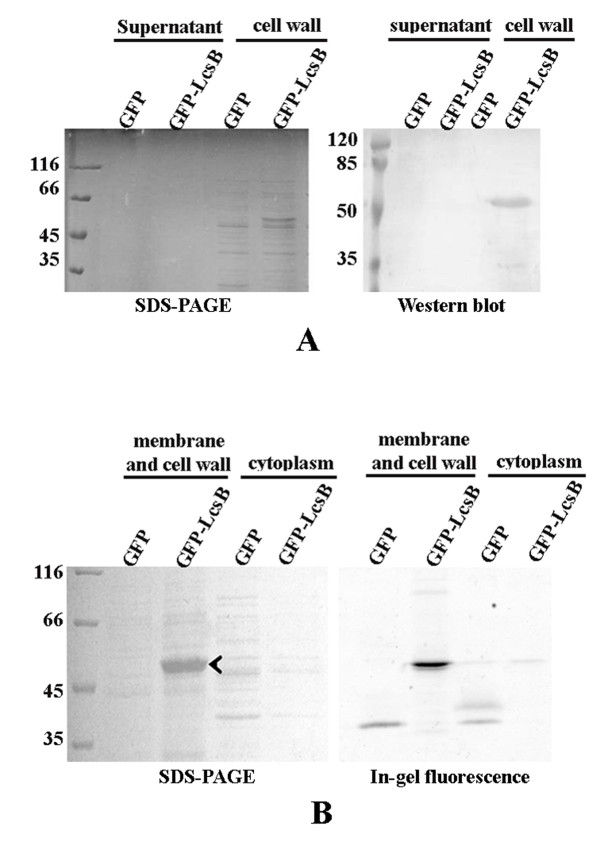
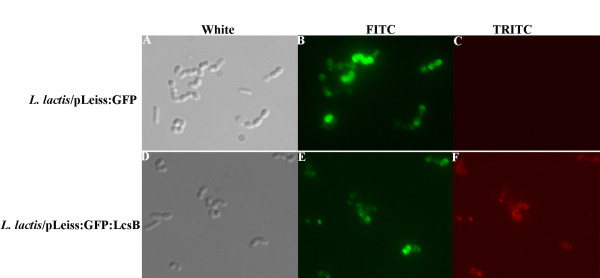
Multiple sequence alignment revealed that the C-terminal region (LcsB) of Lb. crispatus K2-4-3 SlpB had a high similarity with the cell wall binding domains SA and CbsA of Lactobacillus acidophilus and Lb. crispatus. To evaluate the potential application as an anchoring protein, the green fluorescent protein (GFP) or beta-galactosidase (Gal) was fused to the N-terminus of the LcsB region, and the fused proteins were successfully produced in Escherichia coli, respectively. After mixing them with the non-genetically modified lactic acid bacteria cells, the fused GFP-LcsB and Gal-LcsB were functionally associated with the cell surface of various lactic acid bacteria tested. In addition, the binding capacity could be improved by SDS pretreatment. Moreover, both of the fused proteins could simultaneously bind to the surface of a single cell. Furthermore, when the fused DNA fragment of gfp:lcsB was inserted into the Lactococcus lactis expression vector pSec:Leiss:Nuc, the GFP could not be secreted into the medium under the control of the nisA promoter. Western blot, in-gel fluorescence assay, immunofluorescence microscopy and SDS sensitivity analysis confirmed that the GFP was successfully expressed onto the cell surface of L. lactis with the aid of the LcsB anchor.
The LcsB region can be used as a functional scaffold to target the heterologous proteins to the cell surfaces of lactic acid bacteria in vitro and in vivo, and has also the potential for biotechnological application.
先前的研究表明,来自乳杆菌的 S-层蛋白的 C 末端区域负责细胞壁锚定,这为将异源蛋白靶向到乳酸菌(LAB)的细胞壁提供了一种方法。在本研究中,我们使用从鸡肠道中分离的乳杆菌脆壁克鲁维酵母 K2-4-3 的 S 层蛋白 SlpB 的 C 末端区域,在乳酸菌中开发了一种新的表面展示系统。
多重序列比对显示,Lb. crispatus K2-4-3 SlpB 的 C 末端区域(LcsB)与嗜酸乳杆菌和 Lb. crispatus 的细胞壁结合结构域 SA 和 CbsA 具有高度相似性。为了评估作为锚定蛋白的潜在应用,将绿色荧光蛋白(GFP)或β-半乳糖苷酶(Gal)融合到 LcsB 区域的 N 末端,并且分别在大肠杆菌中成功地产生了融合蛋白。将它们与非遗传修饰的乳酸菌细胞混合后,融合的 GFP-LcsB 和 Gal-LcsB 与测试的各种乳酸菌的细胞表面功能相关联。此外,SDS 预处理可以提高结合能力。此外,两种融合蛋白都可以同时结合到单个细胞的表面。此外,当 gfp:lcsB 的融合 DNA 片段插入乳球菌 lactis 表达载体 pSec:Leiss:Nuc 时,在 nisA 启动子的控制下,GFP 不能分泌到培养基中。Western blot、凝胶荧光分析、免疫荧光显微镜和 SDS 敏感性分析证实,在 LcsB 锚的帮助下,GFP 成功地表达到乳球菌的细胞表面。
LcsB 区域可作为一种功能支架,将异源蛋白靶向到体外和体内乳酸菌的细胞表面,并且具有生物技术应用的潜力。