Lin Yu, Xiang Zuoshuang, He Yongqun
Unit for Laboratory Animal Medicine, University of Michigan Medical School, Ann Arbor, MI 48109, USA.
J Biomed Semantics. 2011 Oct 31;2(1):9. doi: 10.1186/2041-1480-2-9.
Caused by intracellular Gram-negative bacteria Brucella spp., brucellosis is the most common bacterial zoonotic disease. Extensive studies in brucellosis have yielded a large number of publications and data covering various topics ranging from basic Brucella genetic study to vaccine clinical trials. To support data interoperability and reasoning, a community-based brucellosis-specific biomedical ontology is needed.
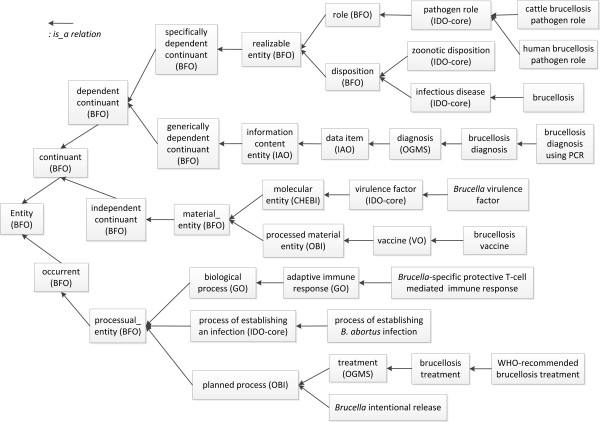
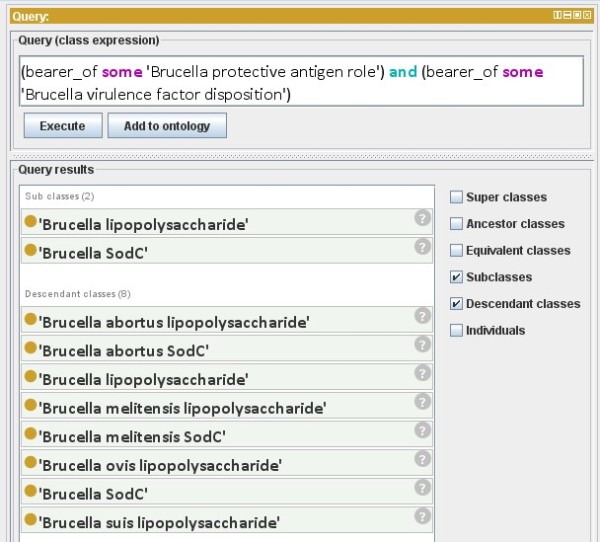
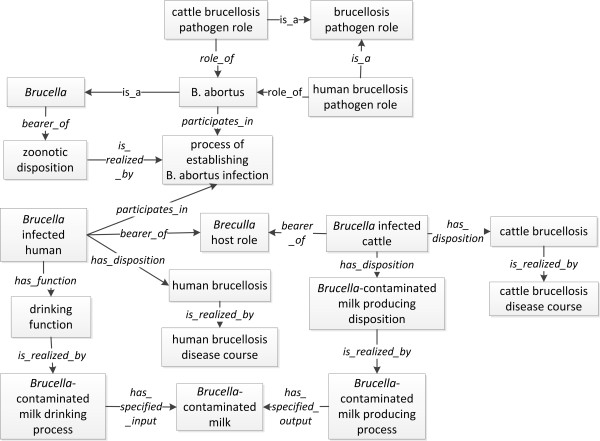
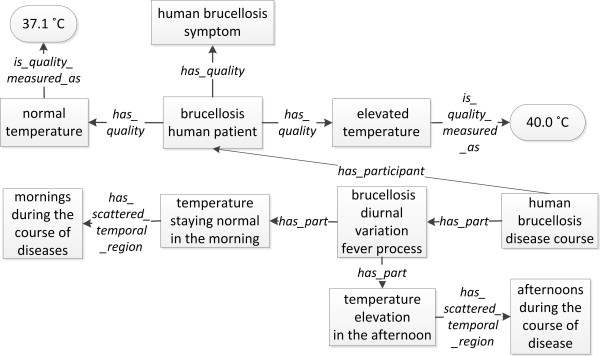
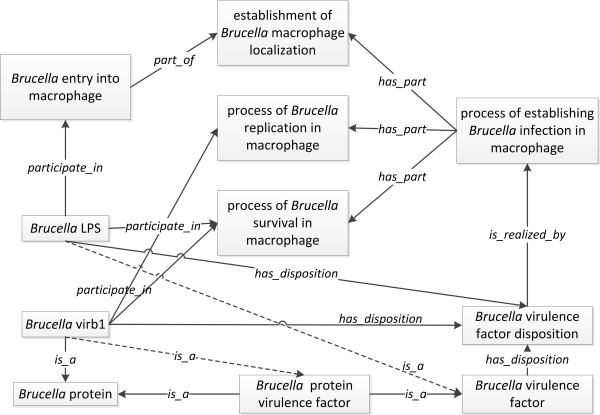
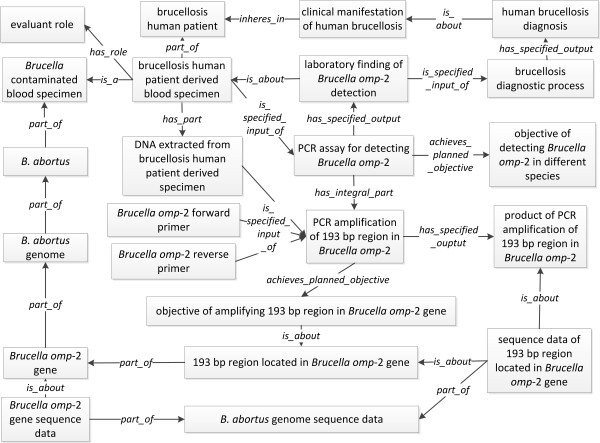
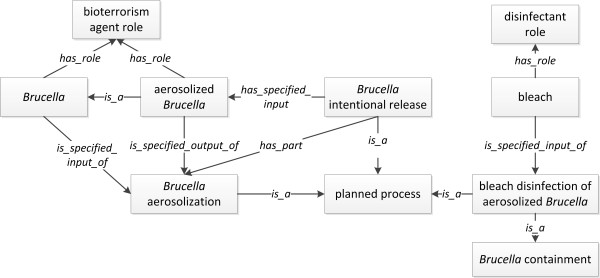
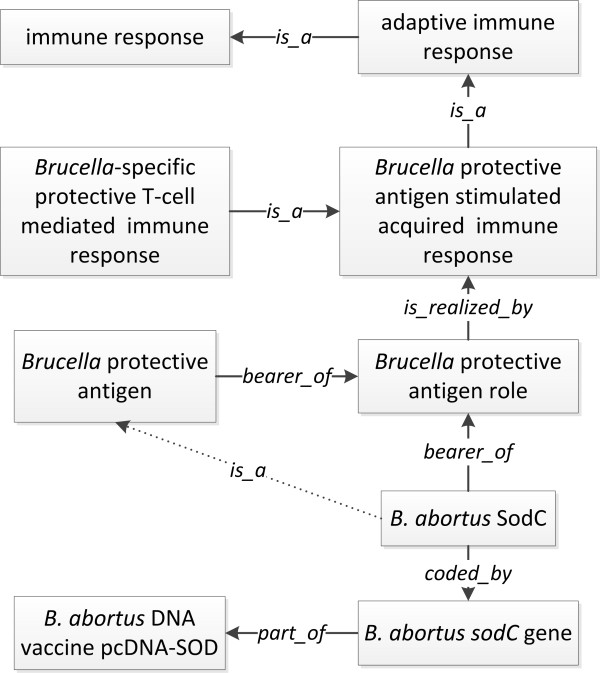
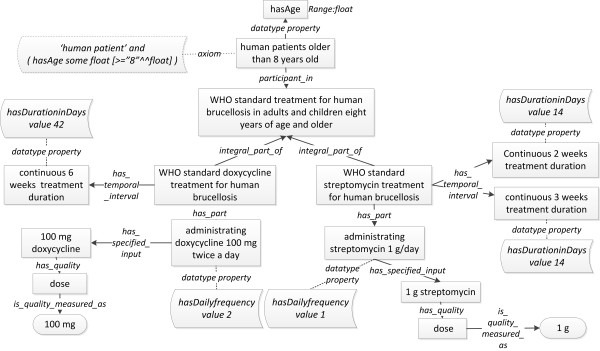
The Brucellosis Ontology (IDOBRU: http://sourceforge.net/projects/idobru), a biomedical ontology in the brucellosis domain, is an extension ontology of the core Infectious Disease Ontology (IDO-core) and follows OBO Foundry principles. Currently IDOBRU contains 1503 ontology terms, which includes 739 Brucella-specific terms, 414 IDO-core terms, and 350 terms imported from 10 existing ontologies. IDOBRU has been used to model different aspects of brucellosis, including host infection, zoonotic disease transmission, symptoms, virulence factors and pathogenesis, diagnosis, intentional release, vaccine prevention, and treatment. Case studies are typically used in our IDOBRU modeling. For example, diurnal temperature variation in Brucella patients, a Brucella-specific PCR method, and a WHO-recommended brucellosis treatment were selected as use cases to model brucellosis symptom, diagnosis, and treatment, respectively. Developed using OWL, IDOBRU supports OWL-based ontological reasoning. For example, by performing a Description Logic (DL) query in the OWL editor Protégé 4 or a SPARQL query in an IDOBRU SPARQL server, a check of Brucella virulence factors showed that eight of them are known protective antigens based on the biological knowledge captured within the ontology.
IDOBRU is the first reported bacterial infectious disease ontology developed to represent different disease aspects in a formal logical format. It serves as a brucellosis knowledgebase and supports brucellosis data integration and automated reasoning.
布鲁氏菌病是由细胞内革兰氏阴性菌布鲁氏菌属引起的,是最常见的细菌性人畜共患病。对布鲁氏菌病的广泛研究产生了大量的出版物和数据,涵盖了从布鲁氏菌基础遗传学研究到疫苗临床试验等各个主题。为了支持数据的互操作性和推理,需要一个基于社区的布鲁氏菌病特异性生物医学本体。
布鲁氏菌病本体(IDOBRU:http://sourceforge.net/projects/idobru)是布鲁氏菌病领域的生物医学本体,是核心传染病本体(IDO-core)的扩展本体,遵循OBO铸造厂原则。目前,IDOBRU包含1503个本体术语,其中包括739个布鲁氏菌特异性术语、414个IDO-core术语以及从10个现有本体中导入的350个术语。IDOBRU已被用于对布鲁氏菌病的不同方面进行建模,包括宿主感染、人畜共患病传播、症状、毒力因子和发病机制、诊断、故意释放、疫苗预防和治疗。案例研究通常用于我们的IDOBRU建模。例如,选择布鲁氏菌病患者的昼夜体温变化、一种布鲁氏菌特异性PCR方法以及世界卫生组织推荐的布鲁氏菌病治疗方法作为用例,分别对布鲁氏菌病的症状、诊断和治疗进行建模。IDOBRU使用OWL开发,支持基于OWL的本体推理。例如,通过在OWL编辑器Protégé 4中执行描述逻辑(DL)查询或在IDOBRU SPARQL服务器中执行SPARQL查询,对布鲁氏菌毒力因子的检查表明,根据本体中捕获的生物学知识,其中有八个是已知的保护性抗原。
IDOBRU是首个报道的以形式逻辑格式表示不同疾病方面的细菌性传染病本体。它作为一个布鲁氏菌病知识库,支持布鲁氏菌病数据集成和自动推理。