Department of Computer and Systems Sciences, Stockholm University, Kista, Sweden.
JMIR Form Res. 2024 Sep 26;8:e53711. doi: 10.2196/53711.
Novel surveillance approaches using digital technologies, including the Internet of Things (IoT), have evolved, enhancing traditional infectious disease surveillance systems by enabling real-time detection of outbreaks and reaching a wider population. However, disparate, heterogenous infectious disease surveillance systems often operate in silos due to a lack of interoperability. As a life-changing clinical use case, the COVID-19 pandemic has manifested that a lack of interoperability can severely inhibit public health responses to emerging infectious diseases. Interoperability is thus critical for building a robust ecosystem of infectious disease surveillance and enhancing preparedness for future outbreaks. The primary enabler for semantic interoperability is ontology.
This study aims to design the IoT-based management of infectious disease ontology (IoT-MIDO) to enhance data sharing and integration of data collected from IoT-driven patient health monitoring, clinical management of individual patients, and disparate heterogeneous infectious disease surveillance.
The ontology modeling approach was chosen for its semantic richness in knowledge representation, flexibility, ease of extensibility, and capability for knowledge inference and reasoning. The IoT-MIDO was developed using the basic formal ontology (BFO) as the top-level ontology. We reused the classes from existing BFO-based ontologies as much as possible to maximize the interoperability with other BFO-based ontologies and databases that rely on them. We formulated the competency questions as requirements for the ontology to achieve the intended goals.
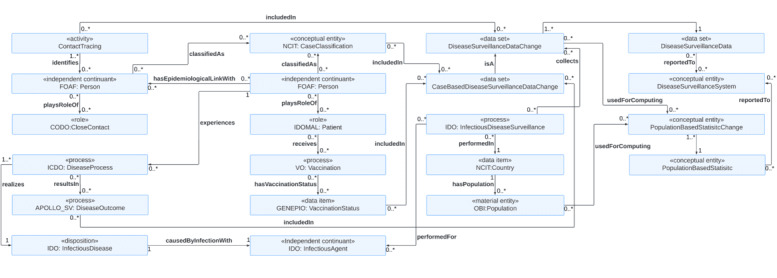
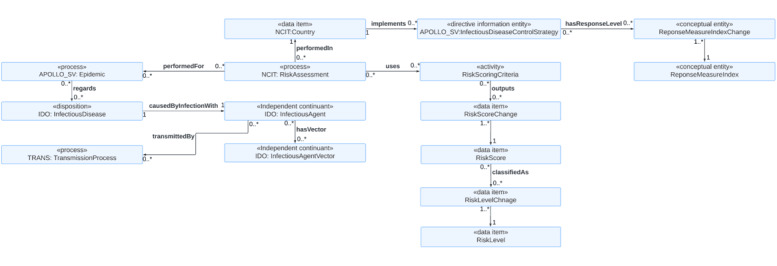
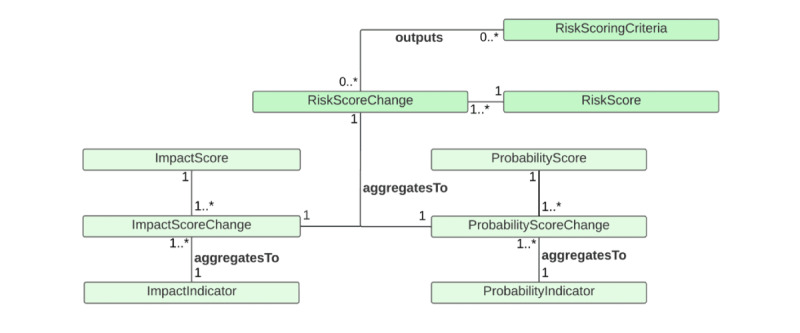
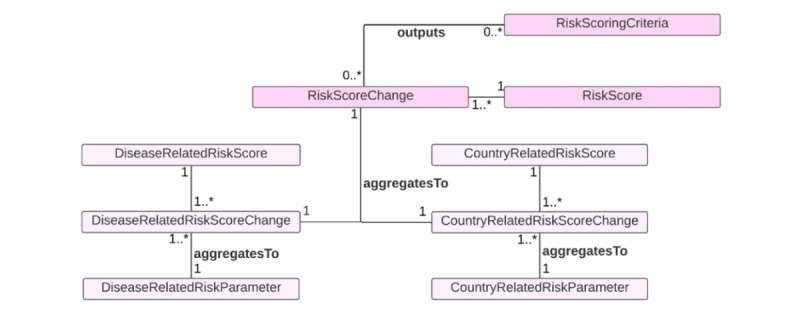
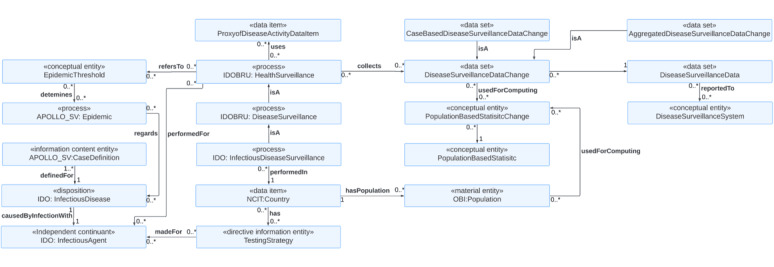
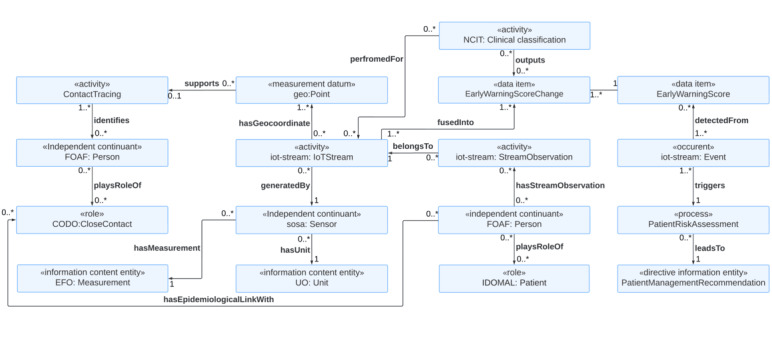
We designed an ontology to integrate data from heterogeneous sources, including IoT-driven patient monitoring, clinical management of individual patients, and infectious disease surveillance systems. This integration aims to facilitate the collaboration between clinical care and public health domains. We also demonstrate five use cases using the simplified ontological models to show the potential applications of IoT-MIDO: (1) IoT-driven patient monitoring, risk assessment, early warning, and risk management; (2) clinical management of patients with infectious diseases; (3) epidemic risk analysis for timely response at the public health level; (4) infectious disease surveillance; and (5) transforming patient information into surveillance information.
The development of the IoT-MIDO was driven by competency questions. Being able to answer all the formulated competency questions, we successfully demonstrated that our ontology has the potential to facilitate data sharing and integration for orchestrating IoT-driven patient health monitoring in the context of an infectious disease epidemic, clinical patient management, infectious disease surveillance, and epidemic risk analysis. The novelty and uniqueness of the ontology lie in building a bridge to link IoT-based individual patient monitoring and early warning based on patient risk assessment to infectious disease epidemic surveillance at the public health level. The ontology can also serve as a starting point to enable potential decision support systems, providing actionable insights to support public health organizations and practitioners in making informed decisions in a timely manner.
利用数字技术(包括物联网)的新型监测方法不断发展,通过实时检测疫情爆发并覆盖更广泛的人群,增强了传统传染病监测系统。然而,由于缺乏互操作性,不同的、异构的传染病监测系统往往各自为政。作为一个改变生活的临床应用案例,新冠肺炎疫情表明,缺乏互操作性会严重阻碍公共卫生部门对新发传染病的应对。因此,互操作性对于建立一个强大的传染病监测生态系统和增强对未来疫情的准备至关重要。语义互操作性的主要推动者是本体。
本研究旨在设计基于物联网的传染病管理本体(IoT-MIDO),以增强从物联网驱动的患者健康监测、个体患者临床管理和不同的异构传染病监测中收集的数据的共享和集成。
本体建模方法因其在知识表示方面的语义丰富性、灵活性、易于扩展性以及知识推理和推理的能力而被选择。使用基本形式本体(BFO)作为顶级本体来开发 IoT-MIDO。我们尽可能地重用来自现有基于 BFO 的本体的类,以最大限度地提高与其他依赖于它们的基于 BFO 的本体和数据库的互操作性。我们将能力问题制定为实现目标的本体要求。
我们设计了一个本体,用于整合来自不同来源的数据,包括物联网驱动的患者监测、个体患者的临床管理和传染病监测系统。这种整合旨在促进临床护理和公共卫生领域之间的合作。我们还展示了五个使用简化本体模型的用例,以展示 IoT-MIDO 的潜在应用:(1)物联网驱动的患者监测、风险评估、预警和风险管理;(2)传染病患者的临床管理;(3)及时应对公共卫生层面的疫情风险分析;(4)传染病监测;(5)将患者信息转化为监测信息。
物联网-MIDO 的开发是由能力问题驱动的。通过回答所有制定的能力问题,我们成功地证明了我们的本体具有促进在传染病流行、临床患者管理、传染病监测和疫情风险分析背景下协调物联网驱动的患者健康监测的数据共享和集成的潜力。本体的新颖性和独特性在于构建了一座桥梁,将基于物联网的个体患者监测和基于患者风险评估的早期预警与公共卫生层面的传染病疫情监测联系起来。该本体还可以作为一个起点,使潜在的决策支持系统能够提供可行的见解,以支持公共卫生组织和从业人员及时做出明智的决策。