Department of Surgery, Otto-von-Guericke University, Magdeburg, Germany.
Surg Endosc. 2012 Mar;26(3):847-52. doi: 10.1007/s00464-011-1964-y. Epub 2011 Nov 1.
Peritoneal carcinomatosis is an unmet medical need. Laparoscopy offers a unique opportunity to control and to steer the operating environment during surgery by loading carbon dioxide with a therapeutic substance and creating the so-called therapeutic capnoperitoneum. We have treated a human sample of peritoneal carcinomatosis from an endometrial adenocarcinoma ex vivo just after surgery.
A nontoxic therapeutic agent (Dbait) was aerosolized into a box containing diseased human peritoneum under a pressure of 12 mmHg CO(2). Dbait (noncoding DNA fragments) acts through jamming DNA damage sensing and signaling, ultimately inhibiting DNA repair system of cancer cells. Dbait were coupled to cholesterol molecules to facilitate intracellular uptake, and to Cyanine (Cy5) to allow detection by fluorescence. In a control experiment, the same solution was applied to the other half of the sample using conventional lavage.
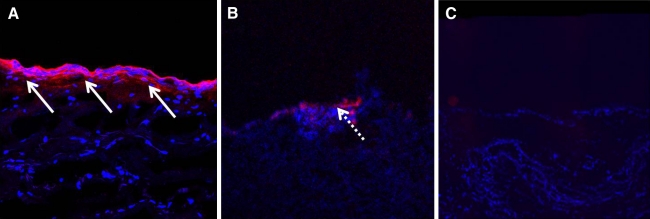
Physical results revealed fluorescence within the tumor up to 1 mm depth in the therapeutic capnoperitoneum sample and no uptake in the lavage sample. Biological results showed intranuclear phosphorylation of H2AX in the nebulized sample and no activity in the lavage sample. Importantly, tumor nodules showed more activity than the neighbor, normal peritoneum. Detection of histone gamma-H2AX (phosphorylated H2AX) reveals activation of DNA-dependent protein kinase (DNA-PK) by Dbait, which has been shown to be the key step for sensitization to genotoxic therapy.
Dbait are taken up by cancer cells and have a biological activity up to 1 mm depth. Nebulization of the molecule is significantly more effective than conventional lavage. This proof of principle supports the need for clinical studies applying therapeutic capnoperitoneum together with Dbait for treating peritoneal carcinomatosis.
腹膜癌转移是一种未满足的医疗需求。腹腔镜提供了一个独特的机会,可以通过向二氧化碳中加载治疗物质并创建所谓的治疗性碳酸气腹来控制和引导手术中的操作环境。我们已经在手术后立即对来自子宫内膜腺癌的人类腹膜癌转移样本进行了离体治疗。
将一种无毒的治疗剂(Dbait)雾化到一个盒子中,该盒子中装有患病的人类腹膜,压力为 12mmHg 的 CO2。Dbait(非编码 DNA 片段)通过干扰 DNA 损伤感应和信号传导起作用,最终抑制癌细胞的 DNA 修复系统。Dbait 与胆固醇分子结合以促进细胞内摄取,并与 Cy5 结合以通过荧光检测。在对照实验中,将相同的溶液用常规灌洗应用于样本的另一半。
物理结果显示,在治疗性碳酸气腹样本中,肿瘤内有荧光,深度可达 1mm,而在灌洗样本中没有摄取。生物学结果显示,雾化样本中的核内 H2AX 磷酸化,而灌洗样本中没有活性。重要的是,肿瘤结节的活性高于相邻的正常腹膜。检测组蛋白γ-H2AX(磷酸化 H2AX)显示 Dbait 激活 DNA 依赖性蛋白激酶(DNA-PK),这已被证明是对遗传毒性治疗敏感的关键步骤。
Dbait 被癌细胞摄取,并具有 1mm 深度的生物学活性。雾化分子比传统灌洗更有效。这一原理证明支持了将治疗性碳酸气腹与 Dbait 联合应用于治疗腹膜癌转移的临床研究的必要性。