Department of Physiology, Biophysics and Neurosciences, Center for Research and Advanced Studies, CINVESTAV, Mexico City, Mexico.
PLoS One. 2011;6(10):e26449. doi: 10.1371/journal.pone.0026449. Epub 2011 Oct 27.
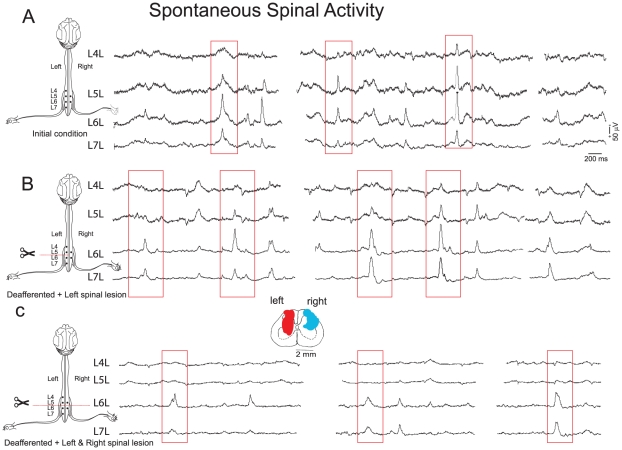
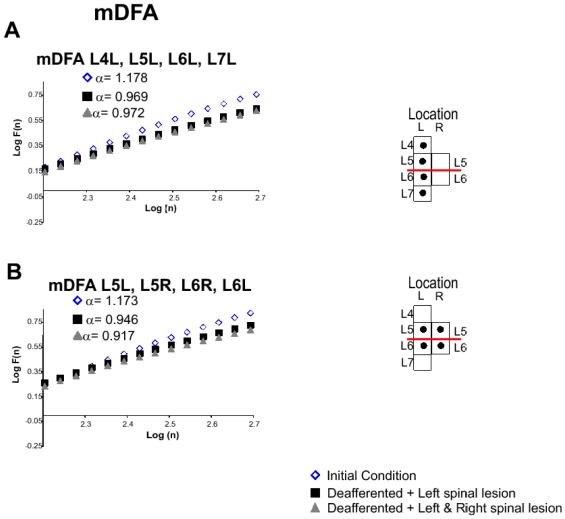
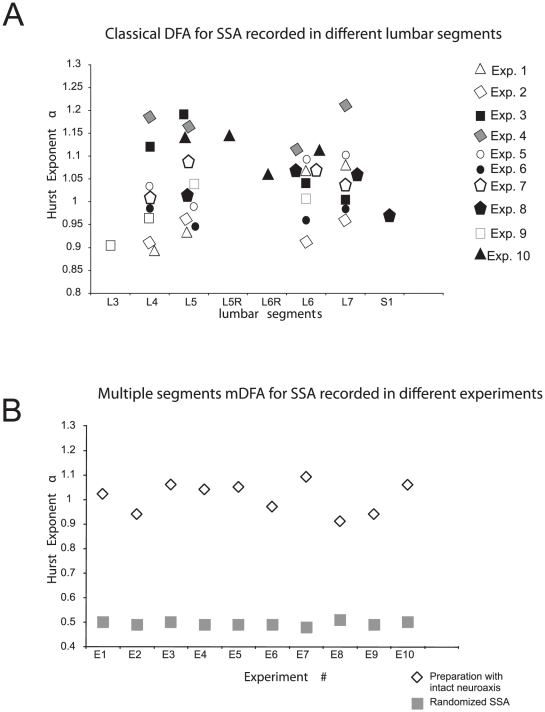
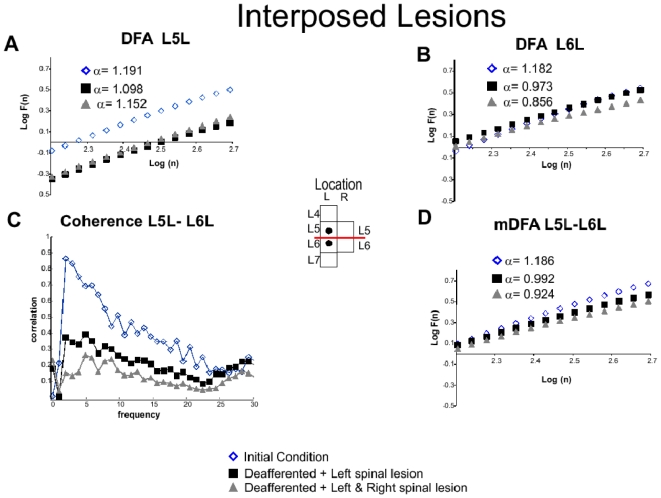
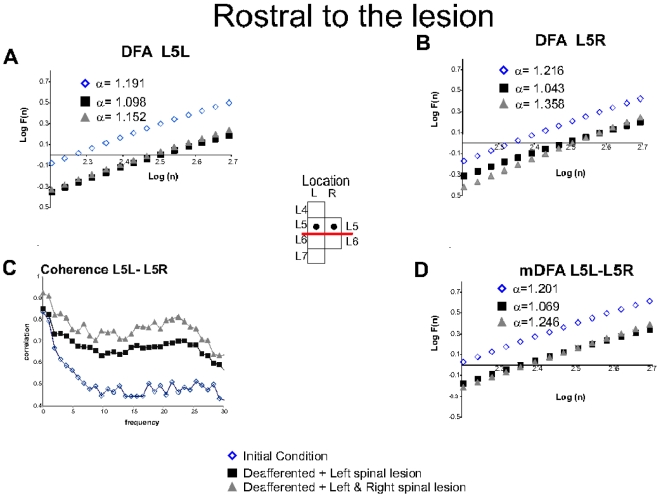
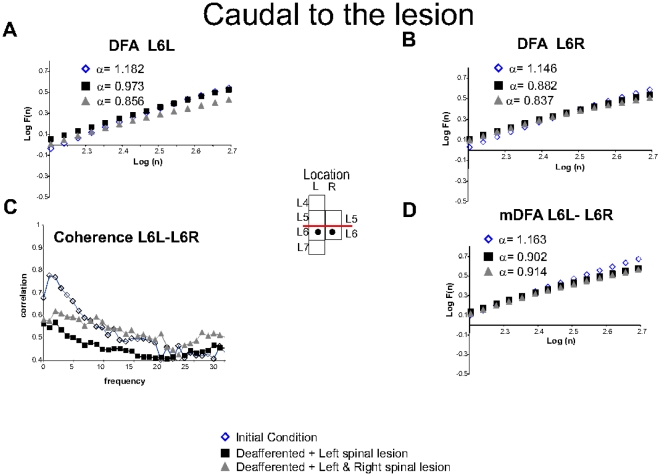
The analysis of the interaction and synchronization of relatively large ensembles of neurons is fundamental for the understanding of complex functions of the nervous system. It is known that the temporal synchronization of neural ensembles is involved in the generation of specific motor, sensory or cognitive processes. Also, the intersegmental coherence of spinal spontaneous activity may indicate the existence of synaptic neural pathways between different pairs of lumbar segments. In this study we present a multichannel version of the detrended fluctuation analysis method (mDFA) to analyze the correlation dynamics of spontaneous spinal activity (SSA) from time series analysis. This method together with the classical detrended fluctuation analysis (DFA) were used to find out whether the SSA recorded in one or several segments in the spinal cord of the anesthetized cat occurs either in a random or in an organized manner. Our results are consistent with a non-random organization of the sets of neurons involved in the generation of spontaneous cord dorsum potentials (CDPs) recorded either from one lumbar segment (DFA-α mean = 1.04[Formula: see text]0.09) or simultaneously from several lumbar segments (mDFA-α mean = 1.01[Formula: see text]0.06), where α = 0.5 indicates randomness while α = 0.5 indicates long-term correlations. To test the sensitivity of the mDFA method we also examined the effects of small spinal lesions aimed to partially interrupt connectivity between neighboring lumbosacral segments. We found that the synchronization and correlation between the CDPs recorded from the L5 and L6 segments in both sides of the spinal cord were reduced when a lesion comprising the left dorsal quadrant was performed between the segments L5 and L6 (mDFA-[Formula: see text] = 0.992 as compared to initial conditions mDFA-α = 1.186). The synchronization and correlation were reduced even further after a similar additional right spinal lesion (mDFA-α = 0.924). In contrast to the classical methods, such as correlation and coherence quantification that define a relation between two sets of data, the mDFA method properly reveals the synchronization of multiple groups of neurons in several segments of the spinal cord. This method is envisaged as a useful tool to characterize the structure of higher order ensembles of cord dorsum spontaneous potentials after spinal cord or peripheral nerve lesions.
分析相对较大神经元集合的相互作用和同步对于理解神经系统的复杂功能至关重要。已知神经集合的时间同步参与特定运动、感觉或认知过程的产生。此外,脊髓自发性活动的节段间相干性可能表明不同腰椎段之间存在突触神经通路。在这项研究中,我们提出了一种多通道去趋势波动分析方法(mDFA)来分析脊髓自发性活动(SSA)的时间序列分析中的相关动力学。该方法与经典去趋势波动分析(DFA)一起用于确定在麻醉猫脊髓的一个或多个节段中记录的 SSA 是随机发生还是有组织地发生。我们的结果与参与自发脊髓背侧电位(CDP)产生的神经元集合的非随机组织一致,这些 CDP 记录于一个腰椎节段(DFA-α平均值=1.04[公式:见文本]0.09)或同时记录于几个腰椎节段(mDFA-α平均值=1.01[公式:见文本]0.06),其中α=0.5 表示随机性,而α=0.5 表示长期相关性。为了测试 mDFA 方法的灵敏度,我们还检查了旨在部分中断相邻腰骶段之间连接的小脊髓损伤的影响。我们发现,当在 L5 和 L6 节段之间进行包含左侧背侧象限的损伤时,记录于脊髓两侧的 L5 和 L6 节段之间的 CDP 之间的同步和相关性降低(mDFA-[公式:见文本]与初始条件 mDFA-α=1.186 相比,为 0.992)。在进行类似的右侧脊髓损伤后,同步性和相关性进一步降低(mDFA-α=0.924)。与经典方法(如相关性和相干性量化,定义两组数据之间的关系)相比,mDFA 方法恰当地揭示了几个脊髓节段中多个神经元组的同步性。该方法被设想为一种有用的工具,用于在脊髓或周围神经损伤后表征脊髓背侧自发性电位的高阶集合的结构。