Arango-de-Montis Iván, Reyes-Soto Adriana, Rosales-Lagarde Alejandra, Eraña-Díaz Marta-Lilia, Vázquez-Mendoza Enrique, Rodríguez-Delgado Andrés, Muñoz-Delgado Jairo, Vázquez-Mendoza Isaac, Rodriguez-Torres Erika Elizabeth
Dirección de Servicios Clínicos, Instituto Nacional de Psiquiatría "Ramón de la Fuente Muñiz", Mexico City, Mexico.
Dirección Adjunta de Investigación Humanística y Científica, Consejo Nacional de Humanidades, Ciencias y Tecnologías (CONAHCYT), Mexico City, Mexico.
Front Psychiatry. 2024 May 28;15:1354762. doi: 10.3389/fpsyt.2024.1354762. eCollection 2024.
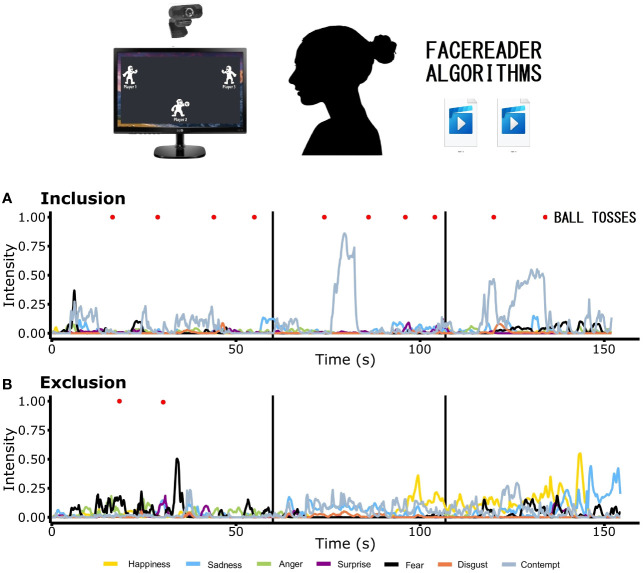
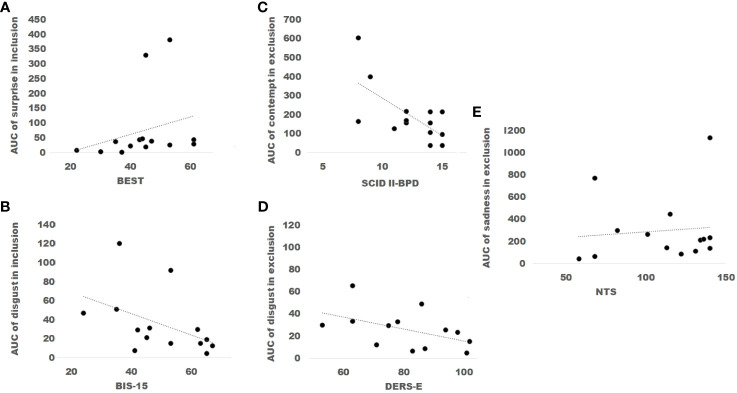
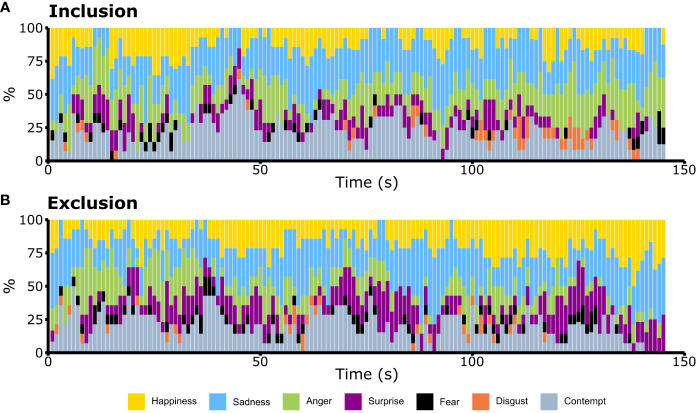
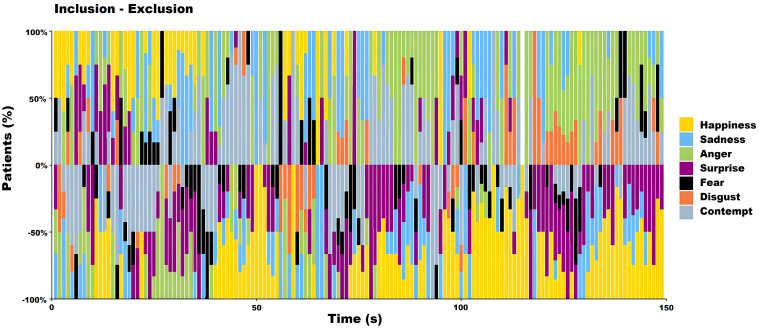
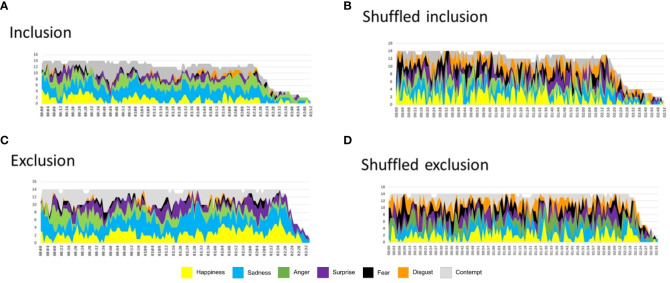
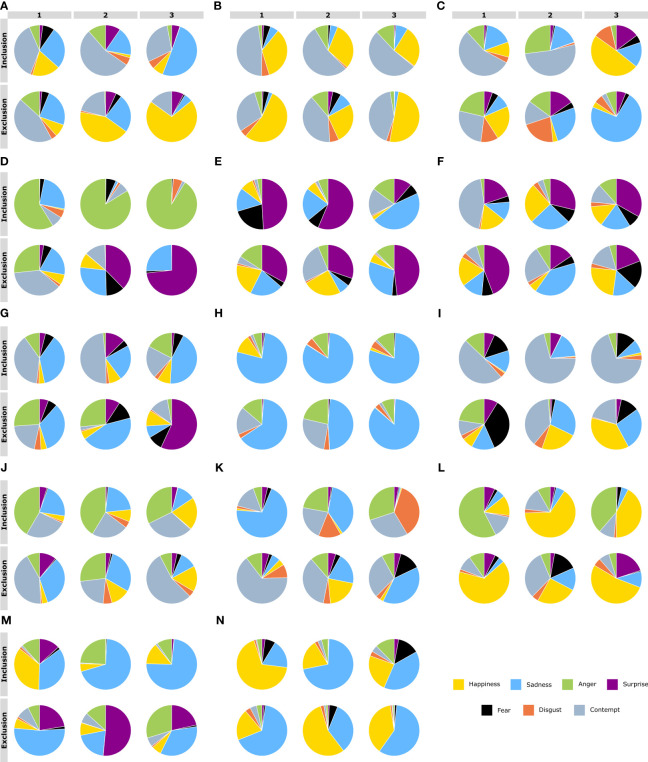
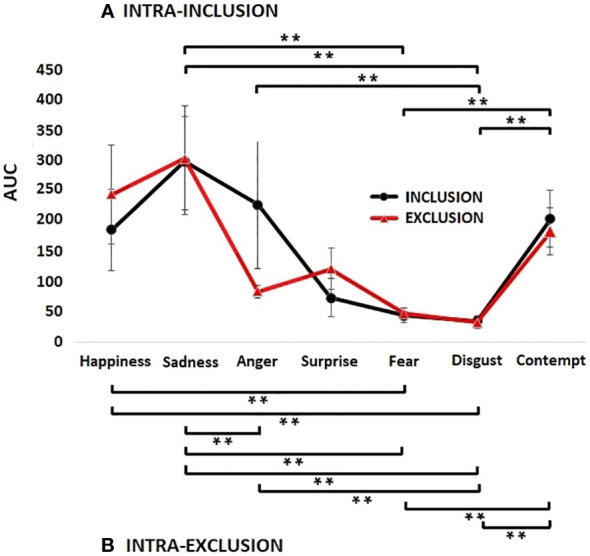
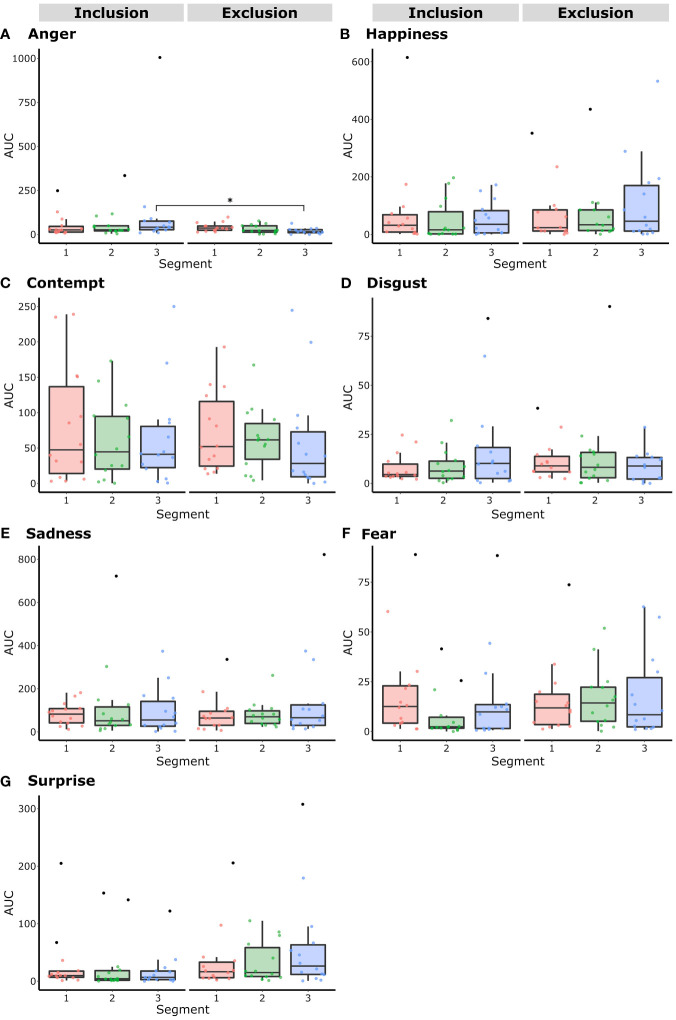
Borderline Personality Disorder (BPD) symptoms include inappropriate control of anger and severe emotional dysregulation after rejection in daily life. Nevertheless, when using the Cyberball paradigm, a tossing game to simulate social exclusion, the seven basic emotions (happiness, sadness, anger, surprise, fear, disgust, and contempt) have not been exhaustively tracked out. It was hypothesized that these patients would show anger, contempt, and disgust during the condition of exclusion versus the condition of inclusion. When facial emotions are automatically detected by Artificial Intelligence, "blending", -or a mixture of at least two emotions- and "masking", -or showing happiness while expressing negative emotions- may be most easily traced expecting higher percentages during exclusion rather than inclusion. Therefore, face videos of fourteen patients diagnosed with BPD (26 ± 6 years old), recorded while playing the tossing game, were analyzed by the FaceReader software. The comparison of conditions highlighted an interaction for anger: it increased during inclusion and decreased during exclusion. During exclusion, the masking of surprise; i.e., displaying happiness while feeling surprised, was significantly more expressed. Furthermore, disgust and contempt were inversely correlated with greater difficulties in emotion regulation and symptomatology, respectively. Therefore, the automatic detection of emotional expressions during both conditions could be useful in rendering diagnostic guidelines in clinical scenarios.
边缘型人格障碍(BPD)的症状包括在日常生活中被拒绝后愤怒控制不当和严重的情绪失调。然而,在使用Cyberball范式(一种模拟社会排斥的抛球游戏)时,七种基本情绪(快乐、悲伤、愤怒、惊讶、恐惧、厌恶和轻蔑)尚未被详尽地追踪到。研究假设,与被接纳状态相比,这些患者在被排斥状态下会表现出愤怒、轻蔑和厌恶。当人工智能自动检测面部情绪时,“融合”(即至少两种情绪的混合)和“掩饰”(即在表达负面情绪时表现出快乐)可能最容易被追踪到,预计在被排斥状态下的比例会高于被接纳状态。因此,使用FaceReader软件分析了14名被诊断为BPD的患者(26±6岁)在玩抛球游戏时录制的面部视频。不同状态的比较突出了愤怒的一种交互作用:在被接纳状态下增加,在被排斥状态下减少。在被排斥状态下,惊讶的掩饰,即在感到惊讶时表现出快乐,表现得更为明显。此外,厌恶和轻蔑分别与情绪调节方面的更大困难和症状呈负相关。因此,在这两种状态下自动检测情绪表达可能有助于在临床场景中制定诊断指南。