Key Laboratory for Biomechanics and Mechanobiology of Ministry of Education, School of Biological Science and Medical Engineering, Beihang University, Beijing, People's Republic of China.
PLoS One. 2011;6(10):e26490. doi: 10.1371/journal.pone.0026490. Epub 2011 Oct 26.
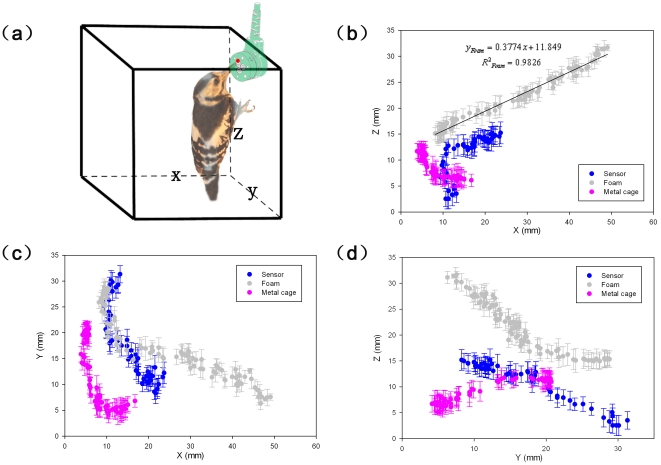
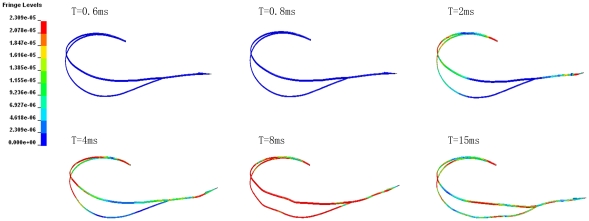
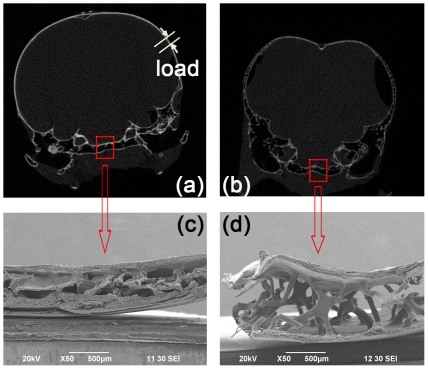
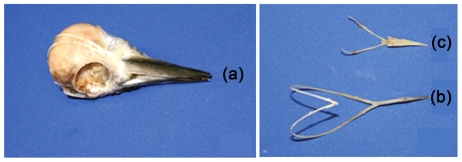
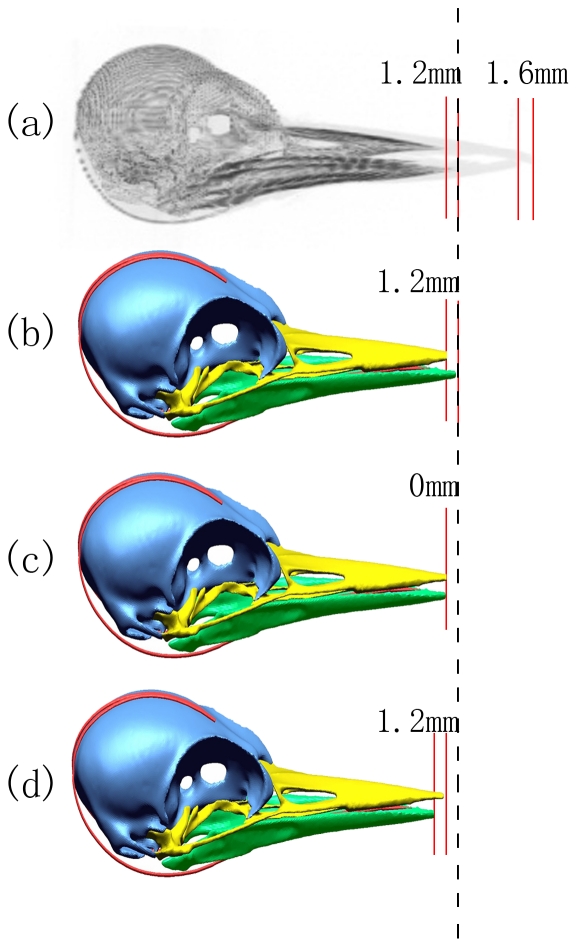
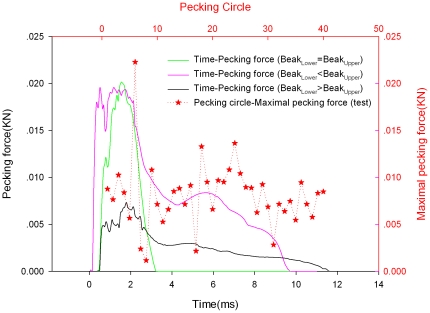
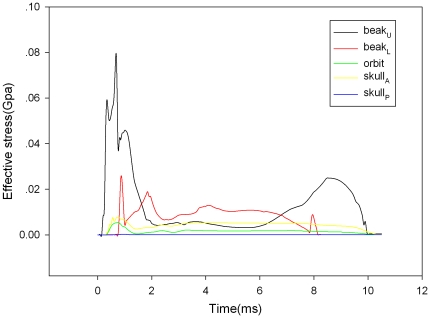
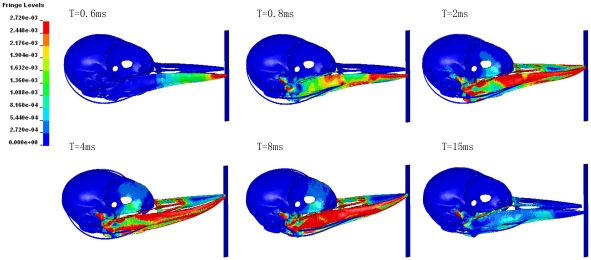
Head injury is a leading cause of morbidity and death in both industrialized and developing countries. It is estimated that brain injuries account for 15% of the burden of fatalities and disabilities, and represent the leading cause of death in young adults. Brain injury may be caused by an impact or a sudden change in the linear and/or angular velocity of the head. However, the woodpecker does not experience any head injury at the high speed of 6-7 m/s with a deceleration of 1000 g when it drums a tree trunk. It is still not known how woodpeckers protect their brain from impact injury. In order to investigate this, two synchronous high-speed video systems were used to observe the pecking process, and the force sensor was used to measure the peck force. The mechanical properties and macro/micro morphological structure in woodpecker's head were investigated using a mechanical testing system and micro-CT scanning. Finite element (FE) models of the woodpecker's head were established to study the dynamic intracranial responses. The result showed that macro/micro morphology of cranial bone and beak can be recognized as a major contributor to non-impact-injuries. This biomechanical analysis makes it possible to visualize events during woodpecker pecking and may inspire new approaches to prevention and treatment of human head injury.
头部损伤是工业化国家和发展中国家发病率和死亡率的主要原因。据估计,脑损伤占死亡和残疾负担的 15%,是年轻人死亡的主要原因。脑损伤可能是由于头部的线性和/或角加速度的突然变化或冲击引起的。然而,啄木鸟在以 6-7 m/s 的高速撞击树干时,其头部会承受 1000g 的减速度,但不会遭受任何头部损伤。目前还不知道啄木鸟是如何保护大脑免受冲击损伤的。为了研究这个问题,我们使用了两个同步的高速视频系统来观察啄木过程,并使用力传感器来测量啄力。使用机械测试系统和微 CT 扫描来研究啄木鸟头部的机械性能和宏观/微观形态结构。建立啄木鸟头部的有限元(FE)模型来研究颅内动态响应。结果表明,颅骨和喙的宏观/微观形态可以被认为是造成非冲击性损伤的主要原因。这项生物力学分析使得在啄木鸟啄食过程中发生的事件可视化成为可能,并且可能为预防和治疗人类头部损伤提供新的方法。