Shukla Upadhyay Kamayani, Karunagoda Kaumadi, Sata Nita, Dei L P
Ayurvedic Gynaecologist & obstetrician, Pratapgarh, Uttar Pradesh, India.
Ayu. 2010 Oct;31(4):424-9. doi: 10.4103/0974-8520.82031.
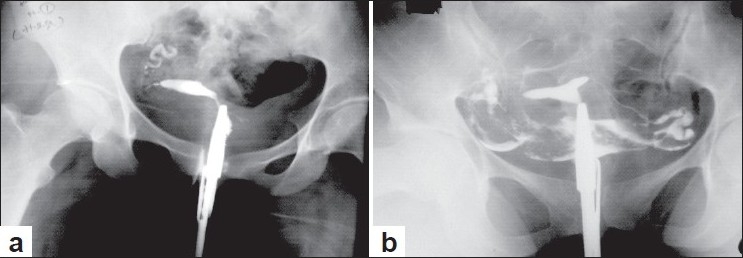
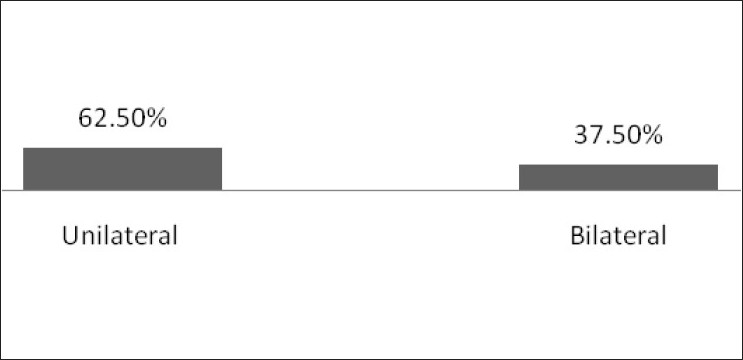
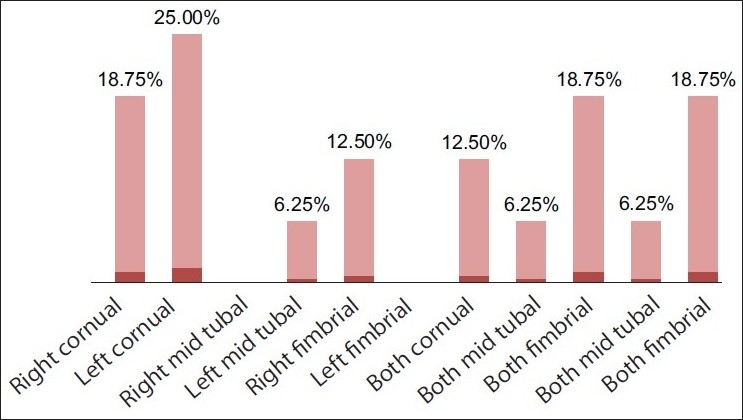
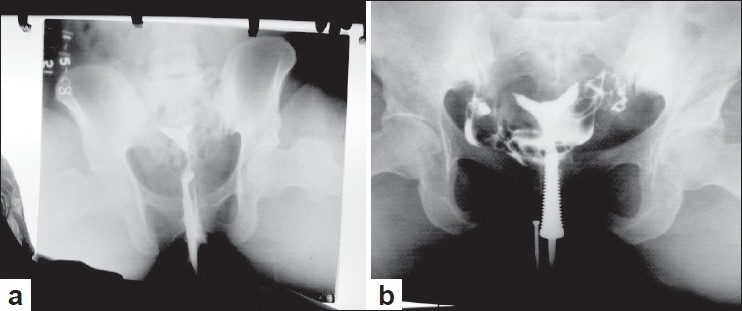
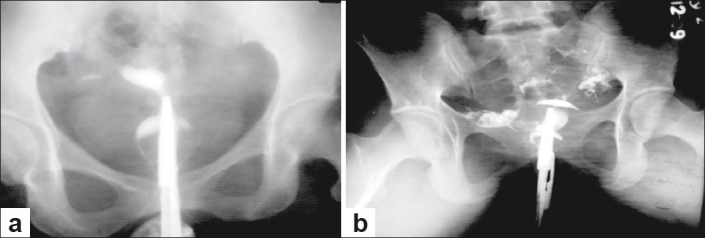
The present study was carried out to evaluate the role of Uttar Basti in tubal blockage, in order to establish it as a safer and cost-effective Ayurvedic treatment modality. The criteria for selection of patients and assessment of results were unilateral or bilateral tubal blockage diagnosed in hysterosalpingography (HSG). A total of 16 patients in the reproductive age group were registered for the study, with 62.50% unilateral and 37.50% bilateral tubal blockage. Fifteen patients completed the course of treatment. The patients with an evidence of active infection or chronic diseases were excluded. Kumari Taila was selected for its Vata Kapha Shamaka and Lekhana properties. The dose of Uttar Basti was 5 ml with duration of two consecutive cycles (six days of Uttar Basti in each cycle with an interval of three days in between). Uttar Basti was administered, after cessation of menstruation, to the screened patients, through hematological, urinary, and serological (HIV, VDRL, HBsAg) investigations. The tubal blockage was removed in 80% of the patients, and 40% of the patients had conceived within the follow-up period of two months. The results suggest that Uttar Basti is a highly significant treatment modality for tubal blockage, with no apparent complications.
本研究旨在评估乌塔灌肠疗法在输卵管堵塞中的作用,以便将其确立为一种更安全且具成本效益的阿育吠陀治疗方式。患者选择标准及结果评估依据为子宫输卵管造影(HSG)诊断出的单侧或双侧输卵管堵塞。共有16名育龄期患者登记参与本研究,其中单侧输卵管堵塞占62.50%,双侧输卵管堵塞占37.50%。15名患者完成了治疗疗程。有活动性感染或慢性病证据的患者被排除。选择库玛丽油是因其具有平息风痰和轻泻的特性。乌塔灌肠疗法的剂量为5毫升,持续两个连续周期(每个周期进行六天乌塔灌肠疗法,中间间隔三天)。在月经结束后,对经过筛选的患者进行乌塔灌肠疗法,并进行血液学、尿液学及血清学(艾滋病毒、梅毒血清试验、乙肝表面抗原)检查。80%的患者输卵管堵塞得以消除,40%的患者在两个月的随访期内受孕。结果表明,乌塔灌肠疗法是治疗输卵管堵塞的一种非常有效的治疗方式,且无明显并发症。