Basseville Agnès, Bates Susan E
Molecular therapeutics section, Medical Oncology Branch, National Cancer Institute, Building 10 - Room 13N248, National Institutes of Health 9000 Rockville Pike, Bethesda, MD 20892 USA.
F1000 Biol Rep. 2011;3:23. doi: 10.3410/B3-23. Epub 2011 Nov 1.
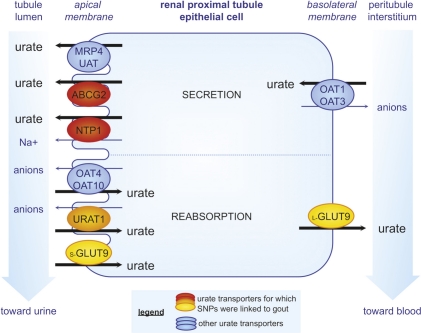
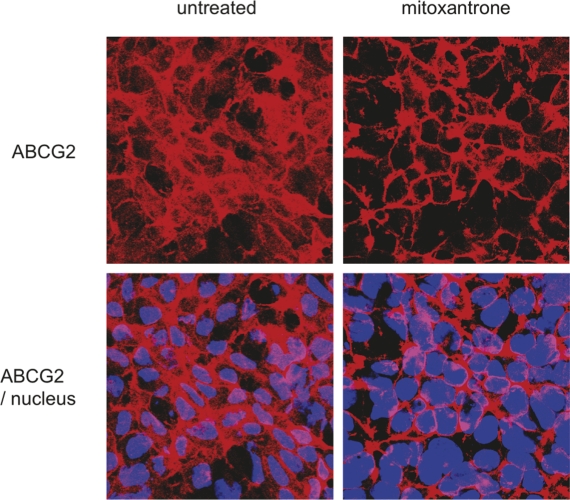
Gout is a chronic arthritic disease associated with high levels of urate in blood. Recent advances in research have permitted the identification of several new and common genetic factors underlying the disease. Among them, a polymorphism in the ABC transporter gene ATP-binding cassette transporter isoform G2 has been highlighted. ATP-binding cassette transporter isoform G2 was found to be involved in renal urate elimination, and the presence of the Q141K polymorphism to induce a 2-fold decrease in urate efflux. The Q141K variant has been shown to have impaired trafficking, leading to its intracellular retention, whereas the wild type protein is expressed on the cell surface. Several agents are being studied for the purpose of improving folding, trafficking and function of various ABC transporters, including ATP-binding cassette transporter isoform G2. If successful, this strategy opens doors to potential new therapies for gout.
痛风是一种与血液中尿酸水平升高相关的慢性关节炎疾病。最近的研究进展使得能够识别出该疾病背后的几种新的常见遗传因素。其中,ABC转运蛋白基因ATP结合盒转运体异构体G2中的一种多态性受到了关注。发现ATP结合盒转运体异构体G2参与肾脏尿酸排泄,并且Q141K多态性的存在导致尿酸外排减少两倍。已表明Q141K变体的转运受损,导致其在细胞内滞留,而野生型蛋白则在细胞表面表达。目前正在研究几种药物,目的是改善各种ABC转运蛋白(包括ATP结合盒转运体异构体G2)的折叠、转运和功能。如果成功,这一策略为痛风潜在的新疗法打开了大门。