Cork Cancer Research Centre, Mercy University Hospital and Leslie C. Quick Jnr. Laboratory, University College Cork, Cork, Ireland.
Cancer Res. 2011 Nov 15;71(22):6915-20. doi: 10.1158/0008-5472.CAN-11-1156. Epub 2011 Nov 8.
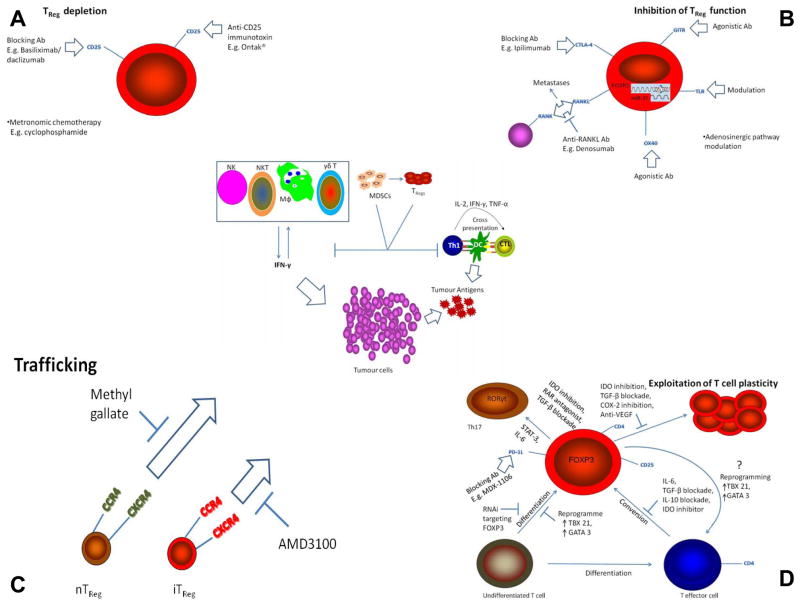
Infiltration of tumors by regulatory T cells confers growth and metastatic advantages by inhibiting antitumor immunity and by production of receptor activator of NF-κB (RANK) ligand, which may directly stimulate metastatic propagation of RANK-expressing cancer cells. Modulation of regulatory T cells can enhance the efficacy of cancer immunotherapy. Strategies include depletion, interference with function, inhibition of tumoral migration, and exploitation of T-cell plasticity. Problems with these strategies include a lack of specificity, resulting in depletion of antitumor effector T cells or global interruption of regulatory T cells, which may predispose to autoimmune diseases. Emerging technologies, such as RNA interference and tetramer-based targeting, may have the potential to improve selectivity and efficacy.
肿瘤内浸润的调节性 T 细胞通过抑制抗肿瘤免疫和产生核因子-κB 受体激活剂(RANK)配体,从而赋予肿瘤生长和转移优势,后者可能直接刺激表达 RANK 的癌细胞的转移传播。调节性 T 细胞的调节可以增强癌症免疫治疗的效果。策略包括耗竭、干扰功能、抑制肿瘤迁移和利用 T 细胞可塑性。这些策略存在的问题包括缺乏特异性,导致抗肿瘤效应 T 细胞耗竭或调节性 T 细胞的全面中断,这可能导致自身免疫性疾病。新兴技术,如 RNA 干扰和四聚体靶向,可能具有提高选择性和疗效的潜力。