Department of Microbiology and Immunology, Burns Institute, First Hospital Affiliated to the Chinese PLA General Hospital, Beijing, People's Republic of China.
PLoS One. 2011;6(11):e25748. doi: 10.1371/journal.pone.0025748. Epub 2011 Nov 1.
Depletion of the circulating actin-binding protein, plasma gelsolin (pGSN) has been described in critically ill surgical patients. We hypothesized that the extent of pGSN reduction might correlate with different outcome of burn patients. The study was performed to evaluate the prognostic implications of pGSN levels on the development of multiple organ dysfunction syndrome (MODS) and fatal outcome in a group of severely burn patients.
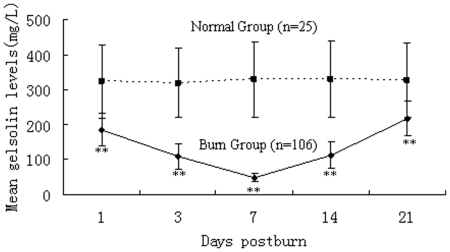
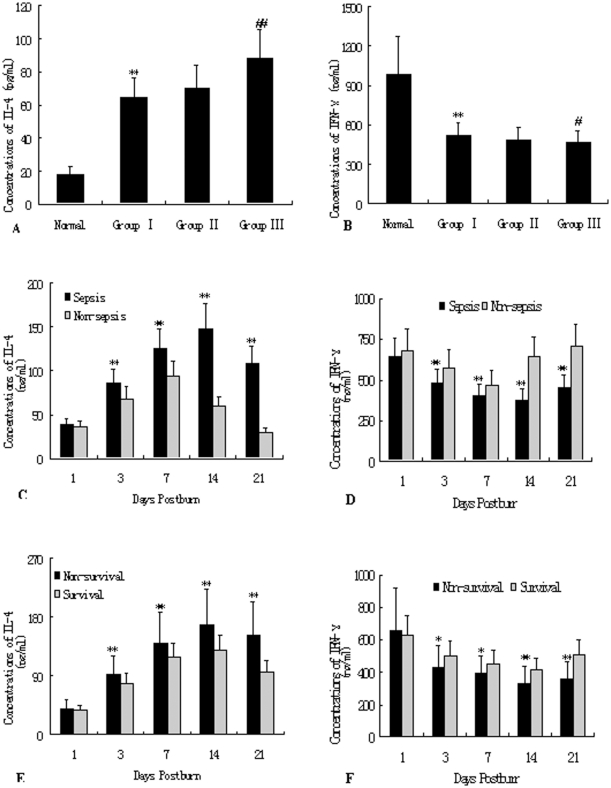
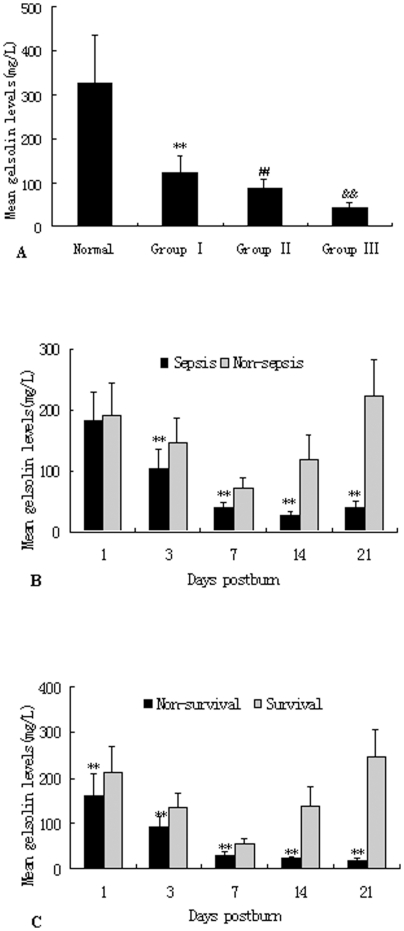
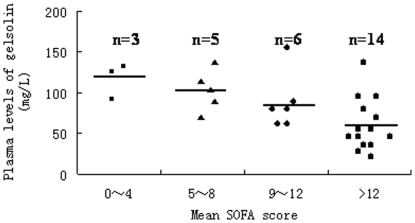
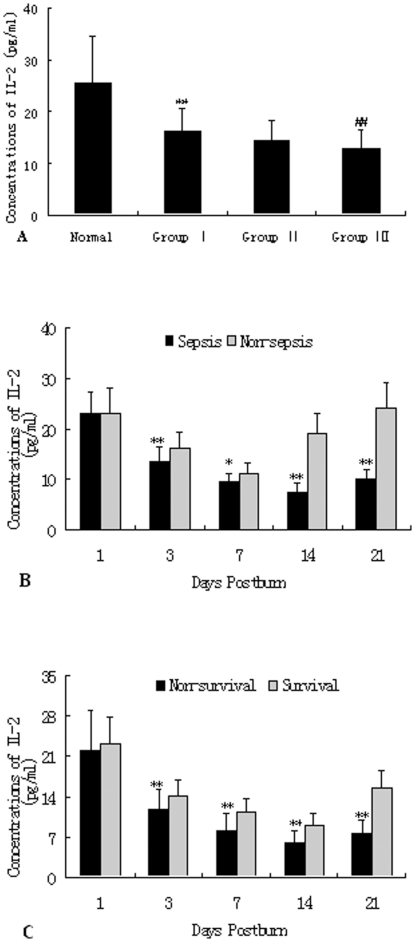
95 patients were included, and they were divided into three groups with different burn area: group I (n = 33), group II (n = 32) and group III (n = 30). According to whether there was development of MODS or not, patients were divided into MODS group (n = 28) and none-MODS group (n = 67); then the patients with MODS were further divided into non-survivor group (n = 17) and survivor group (n = 11). The peripheral blood samples were collected on postburn days (PBD) 1, 3, 7, 14, and 21. The levels of pGSN were determined and T cells were procured from the blood. The contents of cytokines (IL-2, IL-4 and IFN-γ) released by T cells were also measured. The related factors of prognosis were analyzed by using multivariate logistic regression analysis. The results showed that pGSN concentrations, as well as the levels of IL-2 and IFN-γ, decreased markedly on PBD 1-21, whereas, the levels of IL-4 increased markedly in all burn groups as compared with normal controls (P<0.05 or P<0.01), and there were obviously differences between group I and group III (P<0.05 or P<0.01). The similar results were found in MODS patients and the non-survivor group as compared with those without MODS and the survival group on days 3-21 postburn (P<0.05 or P<0.01). Moreover, as the pGSN levels decreased, the incidence of septic complication as well as MODS remarkably increased.
pGSN levels appear to be an early prognostic marker in patients suffering from major burns.
在危重症外科患者中,已发现循环肌动蛋白结合蛋白血浆gelsolin(pGSN)耗竭。我们假设 pGSN 减少的程度可能与烧伤患者的不同结果相关。本研究旨在评估 pGSN 水平对一组严重烧伤患者发生多器官功能障碍综合征(MODS)和死亡结局的预后意义。
共纳入 95 例患者,并根据不同烧伤面积将其分为三组:I 组(n=33)、II 组(n=32)和 III 组(n=30)。根据是否发生 MODS,患者被分为 MODS 组(n=28)和非 MODS 组(n=67);然后,MODS 患者进一步分为非幸存者组(n=17)和幸存者组(n=11)。在烧伤后第 1、3、7、14 和 21 天采集外周血样本。测定 pGSN 水平,并从血液中分离 T 细胞。还测量 T 细胞释放的细胞因子(IL-2、IL-4 和 IFN-γ)的含量。使用多变量逻辑回归分析分析预后的相关因素。结果表明,与正常对照组相比,pGSN 浓度以及 IL-2 和 IFN-γ 水平在烧伤后第 1-21 天明显降低,而所有烧伤组的 IL-4 水平明显升高(P<0.05 或 P<0.01),I 组和 III 组之间存在明显差异(P<0.05 或 P<0.01)。在烧伤后第 3-21 天,MODS 患者和非幸存者组与无 MODS 和幸存者组相比,也有类似的结果(P<0.05 或 P<0.01)。随着 pGSN 水平的降低,感染并发症和 MODS 的发生率显著增加。
pGSN 水平似乎是严重烧伤患者的早期预后标志物。