Division of Gastroenterology, University of British Columbia, Vancouver, British Columbia, Canada.
PLoS One. 2011;6(11):e26390. doi: 10.1371/journal.pone.0026390. Epub 2011 Nov 1.
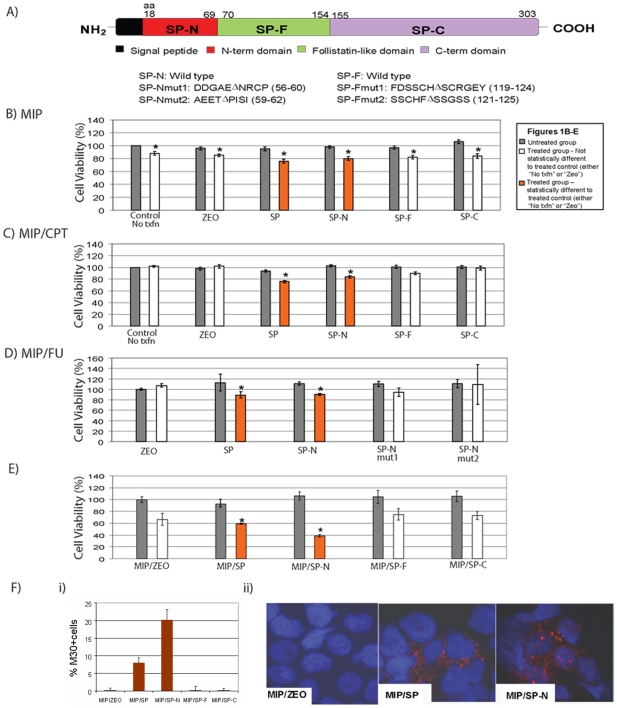
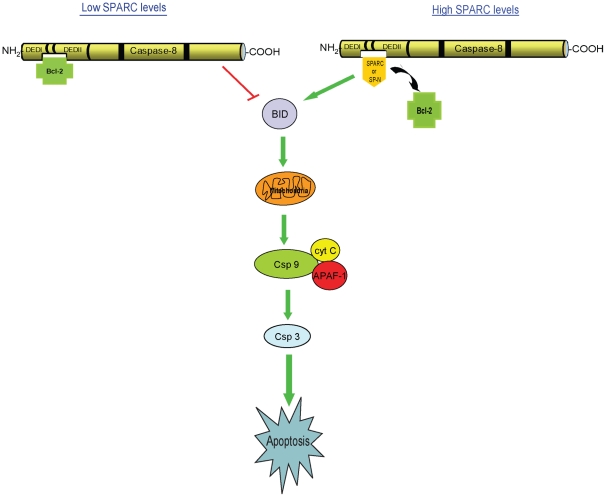
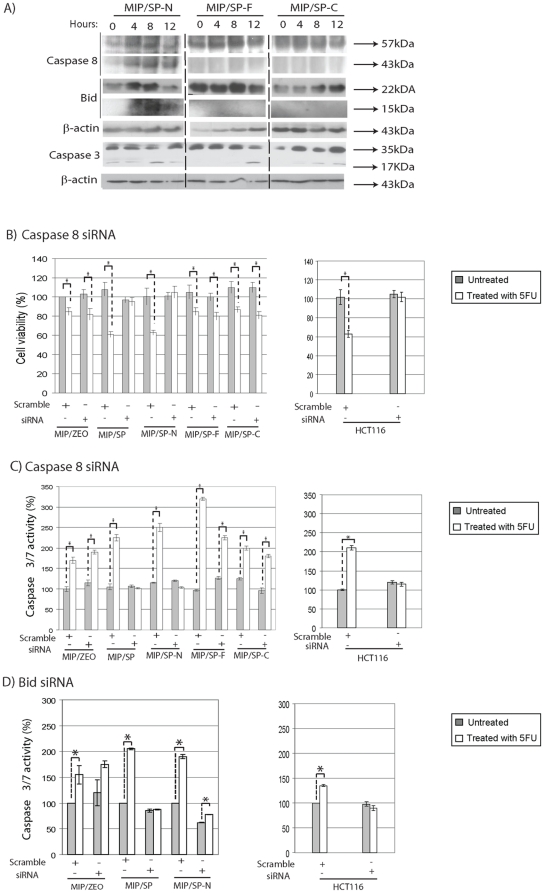
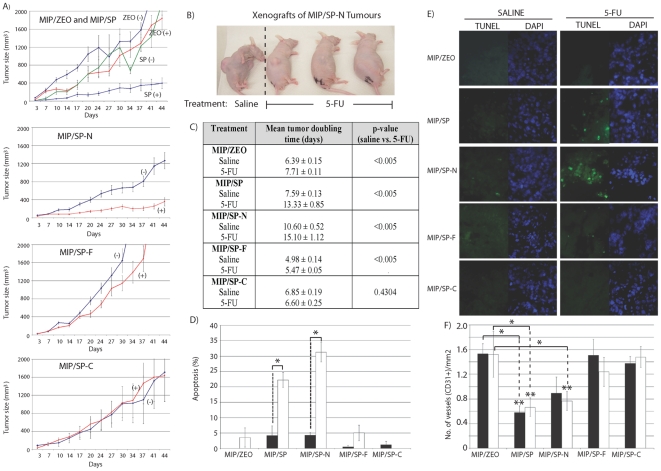
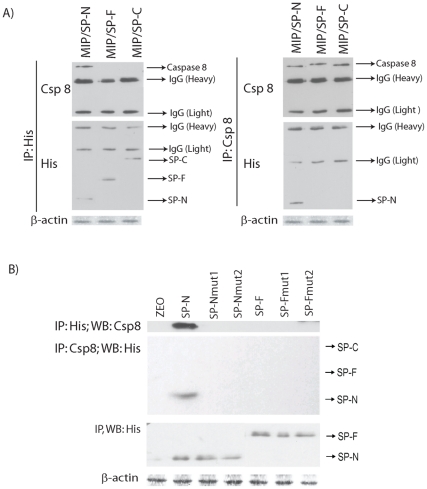
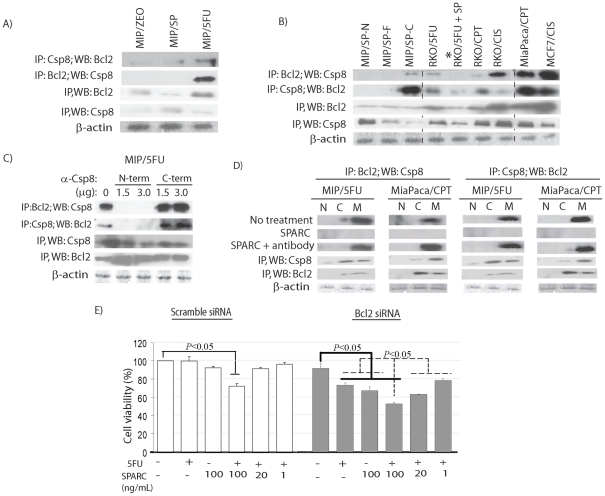
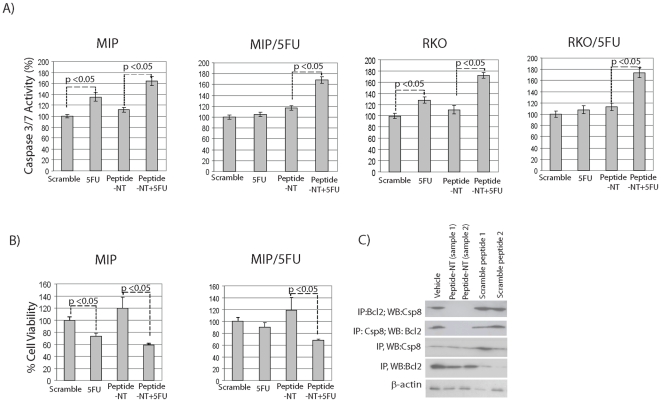
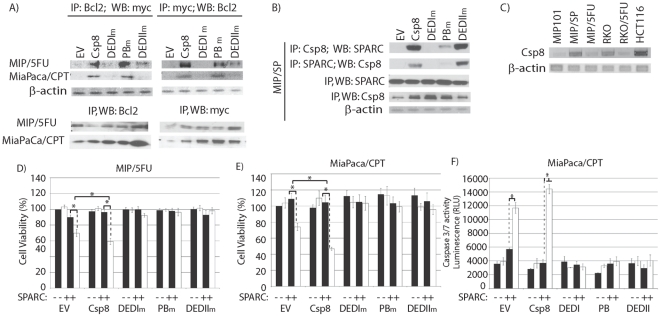
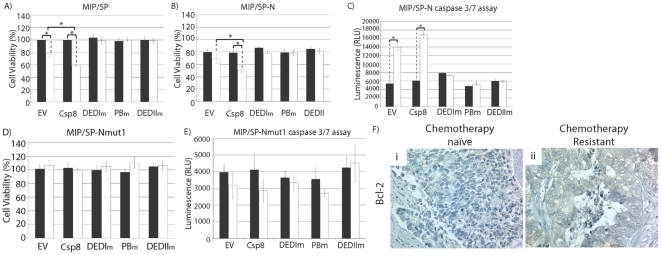
SPARC, a matricellular protein with tumor suppressor properties in certain human cancers, was initially identified in a genome-wide analysis of differentially expressed genes in chemotherapy resistance. Its exciting new role as a potential chemosensitizer arises from its ability to augment the apoptotic cascade, although the exact mechanisms are unclear. This study further examines the mechanism by which SPARC may be promoting apoptosis and identifies a smaller peptide analogue with greater chemosensitizing and tumor-regressing properties than the native protein. We examined the possibility that the apoptosis-enhancing activity of SPARC could reside within one of its three biological domains (N-terminus (NT), the follistatin-like (FS), or extracellular (EC) domains), and identified the N-terminus as the region with its chemosensitizing properties. These results were not only confirmed by studies utilizing stable cell lines overexpressing the different domains of SPARC, but as well, with a synthetic 51-aa peptide spanning the NT-domain. It revealed that the NT-domain induced a significantly greater reduction in cell viability than SPARC, and that it enhanced the apoptotic cascade via its activation of caspase 8. Moreover, in chemotherapy resistant human colon, breast and pancreatic cancer cells, its chemosensitizing properties also depended on its ability to dissociate Bcl2 from caspase 8. These observations translated to clinically significant findings in that, in-vivo, mouse tumor xenografts overexpressing the NT-domain of SPARC had significantly greater sensitivity to chemotherapy and tumor regression, even when compared to the highly-sensitive SPARC-overexpressing tumors. Our results identified an interplay between the NT-domain, Bcl2 and caspase 8 that helps augment apoptosis and as a consequence, a tumor's response to therapy. This NT-domain of SPARC and its 51-aa peptide are highly efficacious in modulating and enhancing apoptosis, thereby conferring greater chemosensitivity to resistant tumors. Our findings provide additional insight into mechanisms involved in chemotherapy resistance and a potential novel therapeutic that specifically targets this devastating phenomenon.
富含半胱氨酸的酸性分泌蛋白(SPARC)是一种基质细胞蛋白,具有某些人类癌症中的肿瘤抑制特性,最初是在化疗耐药的差异表达基因的全基因组分析中被鉴定出来的。它作为一种潜在的化疗增敏剂的令人兴奋的新作用源于其增强凋亡级联的能力,尽管确切的机制尚不清楚。本研究进一步研究了 SPARC 促进细胞凋亡的机制,并确定了一种比天然蛋白具有更大化疗增敏和肿瘤消退特性的较小肽类似物。我们研究了 SPARC 的促凋亡活性是否可能存在于其三个生物学结构域(N 端(NT)、卵泡抑素样(FS)或细胞外(EC)结构域)之一中,并确定了 N 端是具有其化疗增敏特性的区域。这些结果不仅通过利用过表达 SPARC 不同结构域的稳定细胞系进行的研究得到了证实,而且通过使用跨越 NT 结构域的 51 个氨基酸合成肽也得到了证实。结果表明,NT 结构域诱导的细胞活力降低幅度明显大于 SPARC,并且通过激活半胱天冬酶 8 增强了凋亡级联。此外,在化疗耐药的人结肠、乳腺和胰腺癌细胞中,其化疗增敏特性也依赖于其将 Bcl2 从半胱天冬酶 8 上解离的能力。这些观察结果转化为具有临床意义的发现,即在体内,过表达 SPARC 的 NT 结构域的小鼠肿瘤异种移植物对化疗的敏感性显著增加,并且与高度敏感的过表达 SPARC 的肿瘤相比,肿瘤消退也更为显著。我们的结果确定了 NT 结构域、Bcl2 和半胱天冬酶 8 之间的相互作用,有助于增强细胞凋亡,从而使肿瘤对治疗的反应增强。SPARC 的这个 NT 结构域及其 51 个氨基酸肽在调节和增强细胞凋亡方面非常有效,从而使耐药肿瘤具有更高的化疗敏感性。我们的发现为化疗耐药的机制以及专门针对这种破坏性现象的潜在新型治疗方法提供了更多的见解。