Department of Biology, The Catholic University of America, 620 Michigan Avenue N.E., Washington, DC, 20064, USA.
Toxins (Basel). 2010 Jun;2(6):1179-206. doi: 10.3390/toxins2061179. Epub 2010 May 28.
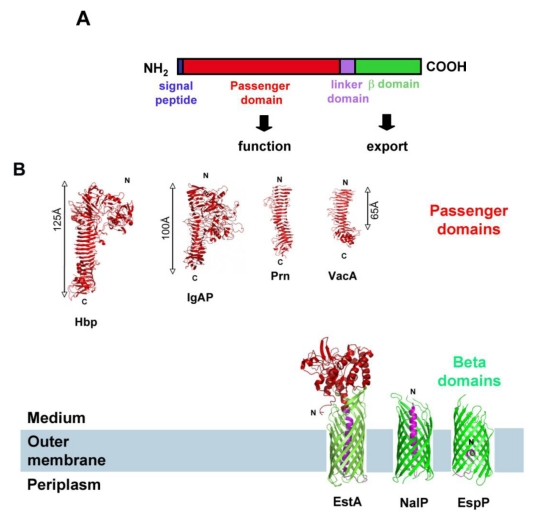
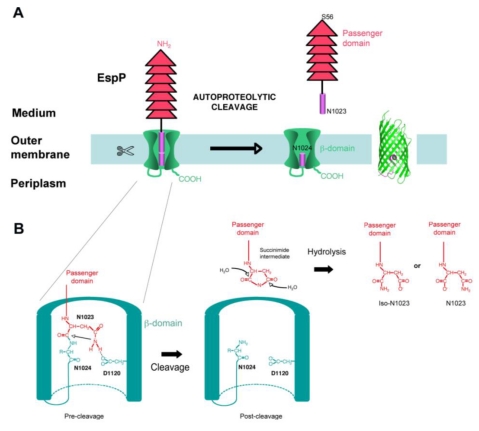
Serine Protease Autotransporters of Enterobacteriaceae (SPATEs) constitute a large family of proteases secreted by Escherichia coli and Shigella. SPATEs exhibit two distinct proteolytic activities. First, a C-terminal catalytic site triggers an intra-molecular cleavage that releases the N-terminal portion of these proteins in the extracellular medium. Second, the secreted N-terminal domains of SPATEs are themselves proteases; each contains a canonical serine-protease catalytic site. Some of these secreted proteases are toxins, eliciting various effects on mammalian cells. Here, we discuss the biogenesis of SPATEs and their function as toxins.
肠杆菌科丝氨酸蛋白酶自转运体(SPATEs)构成了由大肠杆菌和志贺氏菌分泌的一大类蛋白酶。SPATEs 表现出两种截然不同的蛋白水解活性。首先,C 端催化位点触发分子内裂解,将这些蛋白的 N 端部分在细胞外介质中释放。其次,SPATEs 的分泌 N 端结构域本身就是蛋白酶;每个都包含一个典型的丝氨酸蛋白酶催化位点。其中一些分泌的蛋白酶是毒素,对哺乳动物细胞产生各种影响。在这里,我们讨论 SPATEs 的生物发生及其作为毒素的功能。