Freesmeyer Wolfgang B, Fussnegger M R, Ahlers M O
Charité - Universitätsmedizin Berlin, Campus Benjamin Franklin University, School of Dental Medicine, Division of Restorative Dentistry, Berlin.
GMS Curr Top Otorhinolaryngol Head Neck Surg. 2005;4:Doc19. Epub 2005 Sep 28.
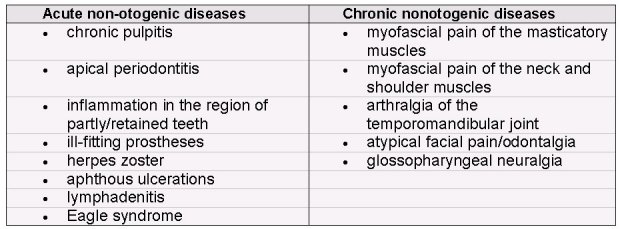
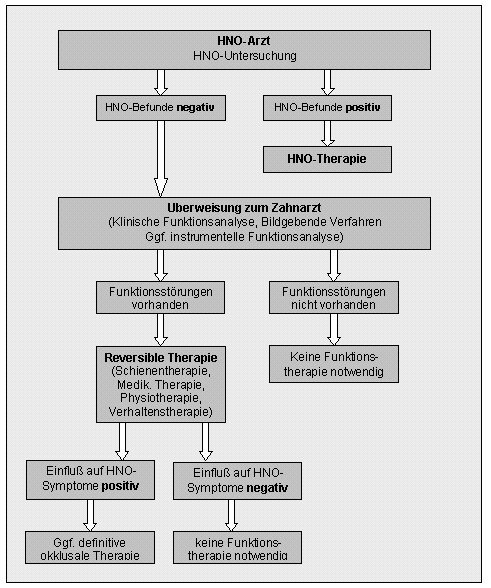
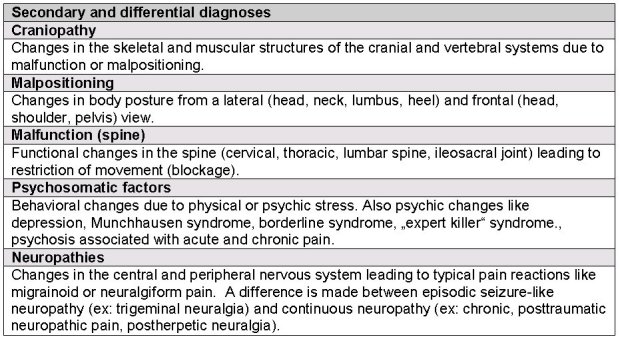
Temporomandibular disorders (TMD) or craniomandibular disorders, respectively, involve diseases of the teeth and periodontia as well as the masticatory muscles, temporomandibular joints and associated structures. It has been shown in recent years that psychological, social and general medical influences are of enormous importance in the etiology of TMD in addition to anatomical, physiological, parafunctional and other biological causes. This signifies that therapists confronted with TMD should already include at an early stage other specialists such as pain therapists, neurologists, ENT physicians, psychotherapists and physiotherapists. Patients need to be referred to dentists specializing in TMD when ENT examinations yield no pathological findings. The treatment of TMD is subdivided into the following steps that are always related to underlying diagnoses: informing patients, self-observation, relaxation therapy, behavioral therapy, physiotherapy, drug therapy, therapeutic local anesthesia, splint therapy, and, if necessary, prosthetic and/or orthodontic therapy to restore a stable occlusion.
颞下颌关节紊乱病(TMD)或颅下颌疾病分别涉及牙齿、牙周组织以及咀嚼肌、颞下颌关节和相关结构的疾病。近年来研究表明,除了解剖学、生理学、副功能及其他生物学原因外,心理、社会和一般医学因素在TMD的病因中也极为重要。这意味着面对TMD的治疗师应在早期就纳入其他专科医生,如疼痛治疗师、神经科医生、耳鼻喉科医生、心理治疗师和物理治疗师。当耳鼻喉科检查未发现病理结果时,患者需要转诊至专门治疗TMD的牙医处。TMD的治疗分为以下几个步骤,这些步骤始终与潜在诊断相关:告知患者、自我观察、放松治疗、行为治疗、物理治疗、药物治疗、治疗性局部麻醉、咬合板治疗,以及必要时进行修复和/或正畸治疗以恢复稳定的咬合关系。