Rettinger Gerhard
ENT-Department, University Ulm, Germany.
GMS Curr Top Otorhinolaryngol Head Neck Surg. 2007;6:Doc08. Epub 2008 Mar 14.
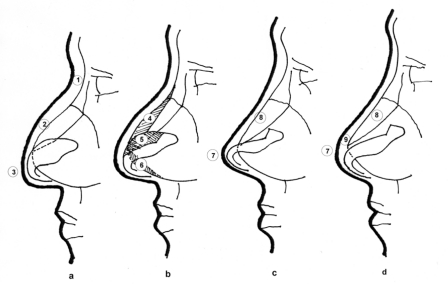
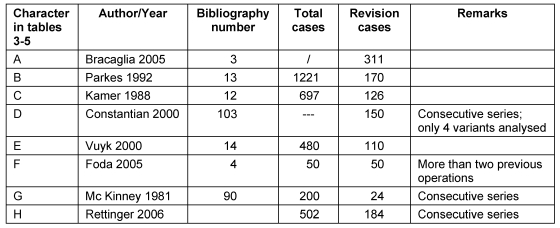
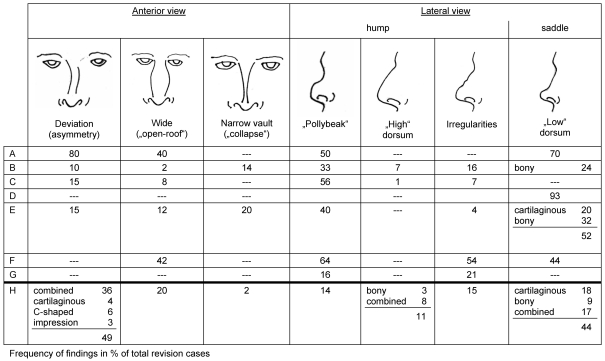
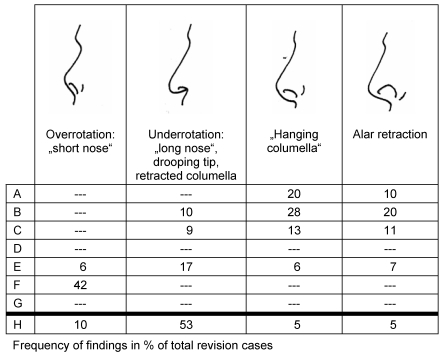
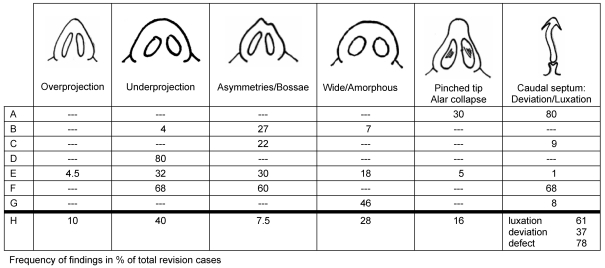
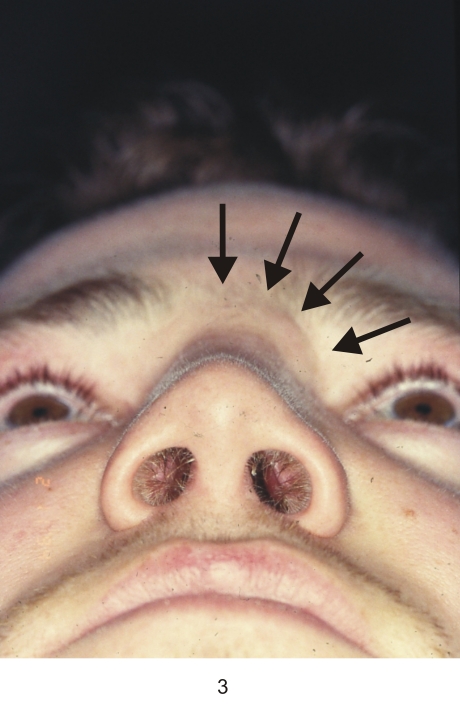
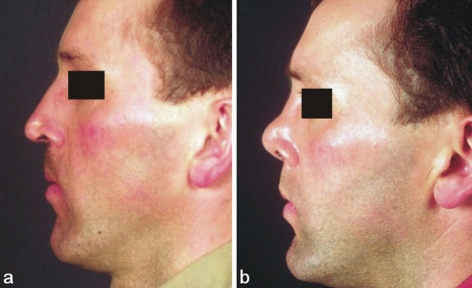
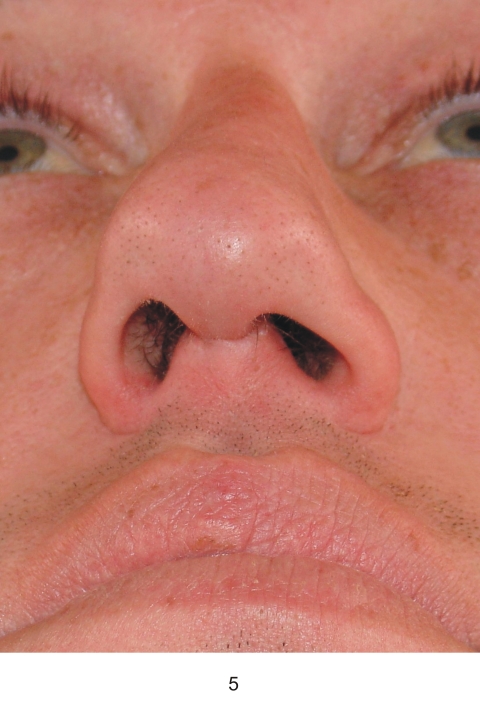
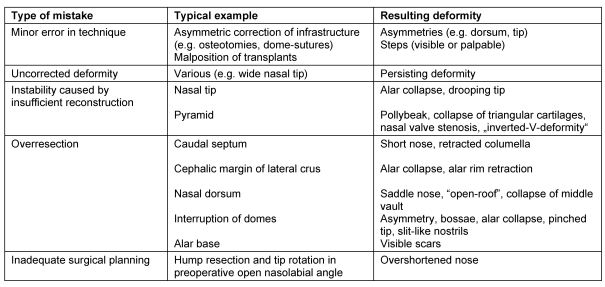
Rhinoplasty is regarded to be associated with many risks as the expectations of patient and physician are not always corresponding. Besides of postoperative deformities many other risks and complications have to be considered. Reduction-rhinoplasty e.g. can cause breathing disturbances which are reported in 70% of all revision-rhinoplasty-patients. One has to be aware however that scars and loss of mucosal-sensation can also give the feeling of a "blocked nose". The main risks of autogenous transplants are dislocation and resorption, while alloplasts can cause infection and extrusion. In this respect silicone implants can have a complication rate between 5-20%. Less complications are reported with other materials like Gore-Tex. Complications of skin and soft tissues can be atrophy, fibrosis, numbness, cysts originating from displaced mucosa or subcutaneous granulomas caused by ointment material. Postoperative swelling depends mainly on the osteotomy technique. Percutaneous osteotomies cause less trauma, but may result in visible scars. Infections are rare but sometimes life-threatening (toxic-shock-syndrome). The risk is higher, when sinus surgery and rhinoplasty are combined. Osteotomies can also cause injuries of the orbital region. Necrosis of eye-lids by infections and blindness by central artery occlusion are known. There are reports on various other risks like rhinoliquorrhea, brain damage, fistulas between sinus-cavernosus and carotid artery, aneurysms and thrombosis of the cavernous sinus. Discoloration of incisors are possible by damage of vessels and nerves. Rhinoplasty can also become a court-case in dissatisfied patients, a situation that may be called a "typical complication of rhinoplasty". It can be avoided by proper patient selection and consideration of psychological disturbances. Postoperative deformities are considered as main risks of rhinoplasty, causing revision surgery in 5% to 15% of the cases. The analysis of postoperative deformities allowes the identification of specific risks. The most frequent postoperative deformity is the "pollybeak" when a deep naso-frontal angle, cartilaginous hump and reduced tip projection are present preoperatively. The pollybeak is the indication in about 50% of all revision rhinoplasties. Other frequent postoperative deformities are a pendant and wide nasal tip, retractions of the columella base or irregularities of the nasal dorsum. These deformities are very often combined and caused by a loss of septal support. This is why the stability of the caudal septum in septorhinoplasty is the key for a predictable result. Maintaining the position of the tip and the columella is one of the main issues to avoid typical postoperative deformities. The risks for rhinoplasty-complications can be reduced with increasing experience. A prerequisite is continuing education and an earnest distinction between complication and mistake.
隆鼻手术被认为存在许多风险,因为患者和医生的期望并不总是一致。除了术后畸形外,还必须考虑许多其他风险和并发症。例如,缩鼻手术可能会导致呼吸障碍,在所有二次隆鼻手术患者中,有70%的人报告有此问题。然而,必须意识到疤痕和黏膜感觉丧失也可能会让人感觉“鼻子堵塞”。自体移植的主要风险是移位和吸收,而异体植入物可能会导致感染和挤出。在这方面,硅胶植入物的并发症发生率在5%至20%之间。使用其他材料如戈尔泰克斯(Gore-Tex)报告的并发症较少。皮肤和软组织的并发症可能包括萎缩、纤维化、麻木、因移位黏膜引起的囊肿或由药膏材料引起的皮下肉芽肿。术后肿胀主要取决于截骨技术。经皮截骨造成的创伤较小,但可能会导致可见的疤痕。感染很少见,但有时会危及生命(中毒性休克综合征)。当鼻窦手术和隆鼻手术联合进行时,风险更高。截骨也可能导致眼眶区域受伤。已知感染会导致眼睑坏死,中央动脉阻塞会导致失明。还有关于各种其他风险的报告,如鼻漏、脑损伤、鼻窦海绵窦与颈动脉之间的瘘管、动脉瘤和海绵窦血栓形成。门牙变色可能是由于血管和神经受损。隆鼻手术在不满意的患者中也可能引发诉讼,这种情况可称为“隆鼻手术的典型并发症”。通过适当的患者选择和考虑心理障碍可以避免这种情况。术后畸形被认为是隆鼻手术的主要风险,在5%至15%的病例中需要进行修复手术。对术后畸形的分析有助于识别特定风险。最常见的术后畸形是“鹰钩鼻”,术前存在深鼻额角、软骨驼峰和鼻尖突出度降低的情况。鹰钩鼻在所有二次隆鼻手术中约占50%的指征。其他常见的术后畸形是下垂且宽大的鼻尖、鼻小柱基部退缩或鼻背不规则。这些畸形常常合并出现,并且是由于鼻中隔支撑丧失所致。这就是为什么在鼻中隔隆鼻手术中,鼻中隔尾端的稳定性是获得可预测结果的关键。保持鼻尖和鼻小柱的位置是避免典型术后畸形的主要问题之一。随着经验的增加,隆鼻手术并发症的风险可以降低。一个前提条件是持续教育以及认真区分并发症和失误。