Compound Safety Prediction Group, Pfizer Inc, Groton, Connecticut, United States of America.
PLoS One. 2011;6(11):e27009. doi: 10.1371/journal.pone.0027009. Epub 2011 Nov 4.
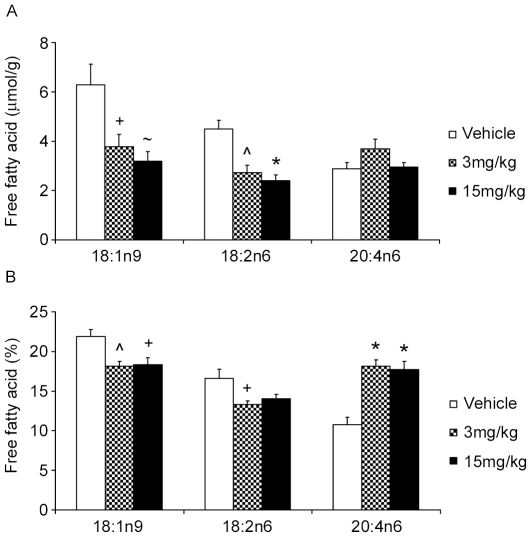
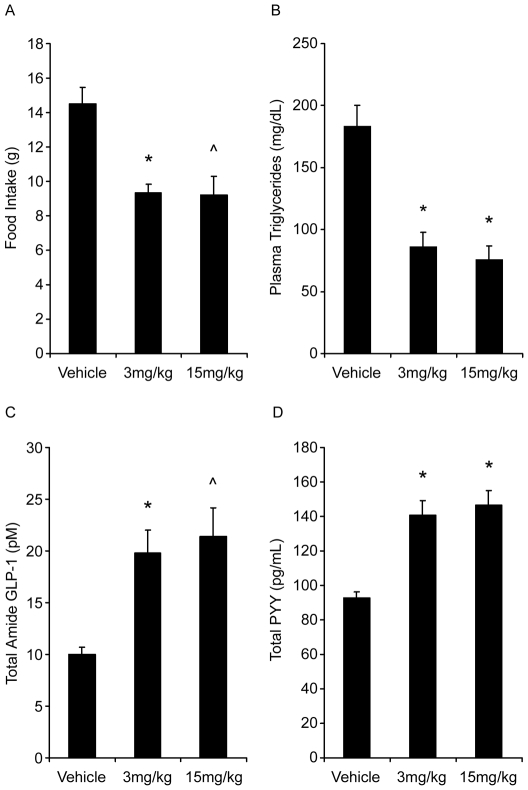
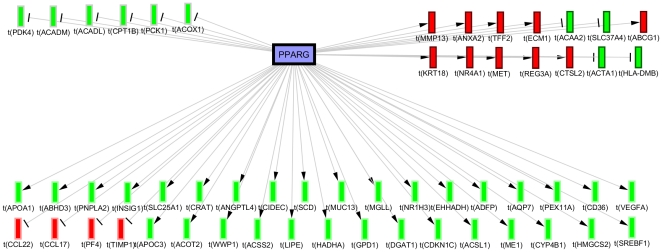
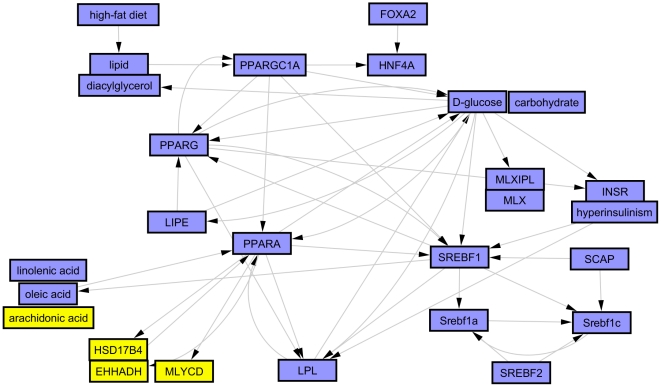
Triglyceride accumulation is associated with obesity and type 2 diabetes. Genetic disruption of diacylglycerol acyltransferase 1 (DGAT1), which catalyzes the final reaction of triglyceride synthesis, confers dramatic resistance to high-fat diet induced obesity. Hence, DGAT1 is considered a potential therapeutic target for treating obesity and related metabolic disorders. However, the molecular events shaping the mechanism of action of DGAT1 pharmacological inhibition have not been fully explored yet. Here, we investigate the metabolic molecular mechanisms induced in response to pharmacological inhibition of DGAT1 using a recently developed computational systems biology approach, the Causal Reasoning Engine (CRE). The CRE algorithm utilizes microarray transcriptomic data and causal statements derived from the biomedical literature to infer upstream molecular events driving these transcriptional changes. The inferred upstream events (also called hypotheses) are aggregated into biological models using a set of analytical tools that allow for evaluation and integration of the hypotheses in context of their supporting evidence. In comparison to gene ontology enrichment analysis which pointed to high-level changes in metabolic processes, the CRE results provide detailed molecular hypotheses to explain the measured transcriptional changes. CRE analysis of gene expression changes in high fat habituated rats treated with a potent and selective DGAT1 inhibitor demonstrate that the majority of transcriptomic changes support a metabolic network indicative of reversal of high fat diet effects that includes a number of molecular hypotheses such as PPARG, HNF4A and SREBPs. Finally, the CRE-generated molecular hypotheses from DGAT1 inhibitor treated rats were found to capture the major molecular characteristics of DGAT1 deficient mice, supporting a phenotype of decreased lipid and increased insulin sensitivity.
甘油三酯的积累与肥胖和 2 型糖尿病有关。二酰基甘油酰基转移酶 1(DGAT1)的基因破坏,催化甘油三酯合成的最后反应,赋予高脂肪饮食诱导肥胖的显著抗性。因此,DGAT1 被认为是治疗肥胖和相关代谢紊乱的潜在治疗靶点。然而,尚未充分探索塑造 DGAT1 药理学抑制作用机制的分子事件。在这里,我们使用最近开发的计算系统生物学方法因果推理引擎(CRE)研究了 DGAT1 药理学抑制引起的代谢分子机制。CRE 算法利用微阵列转录组数据和从生物医学文献中得出的因果陈述来推断驱动这些转录变化的上游分子事件。推断的上游事件(也称为假设)使用一组分析工具聚合到生物模型中,这些工具允许在其支持证据的上下文中评估和整合假设。与基因本体富集分析相比,该分析指出了代谢过程中的高级别变化,CRE 结果提供了详细的分子假设来解释所测量的转录变化。对高脂适应大鼠用有效且选择性的 DGAT1 抑制剂处理后的基因表达变化进行 CRE 分析表明,大多数转录组变化支持代谢网络的逆转,表明逆转高脂肪饮食的影响,其中包括一些分子假设,如 PPARG、HNF4A 和 SREBPs。最后,从 DGAT1 抑制剂处理的大鼠中生成的 CRE 分子假设发现可捕获 DGAT1 缺陷型小鼠的主要分子特征,支持降低脂质和增加胰岛素敏感性的表型。