Linderholm Klas, Powell Susan, Olsson Elin, Holtze Maria, Snodgrass Ralph, Erhardt Sophie
Dept. of Physiology and Pharmacology, Karolinska Institutet, Stockholm, Sweden.
Int J Tryptophan Res. 2010;3:1-12. doi: 10.4137/ijtr.s4260. Epub 2010 Feb 12.
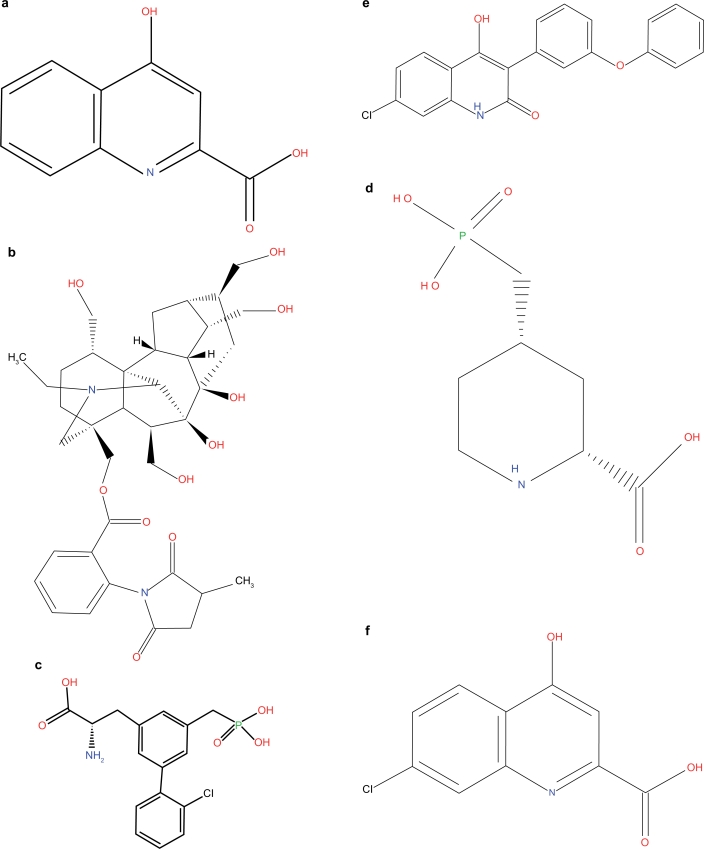
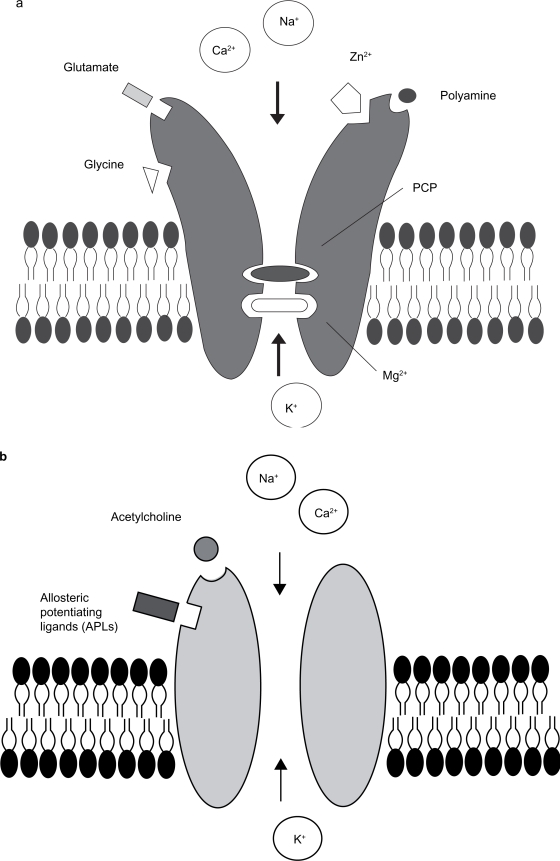
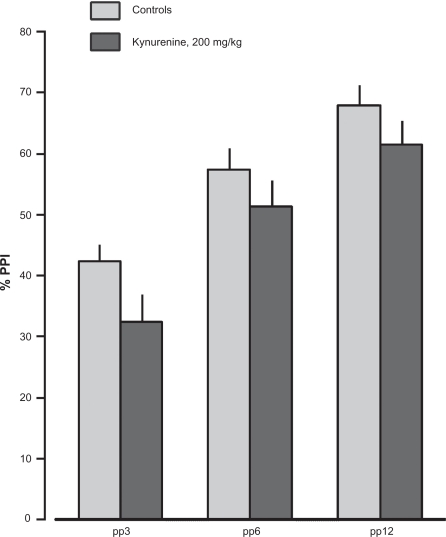
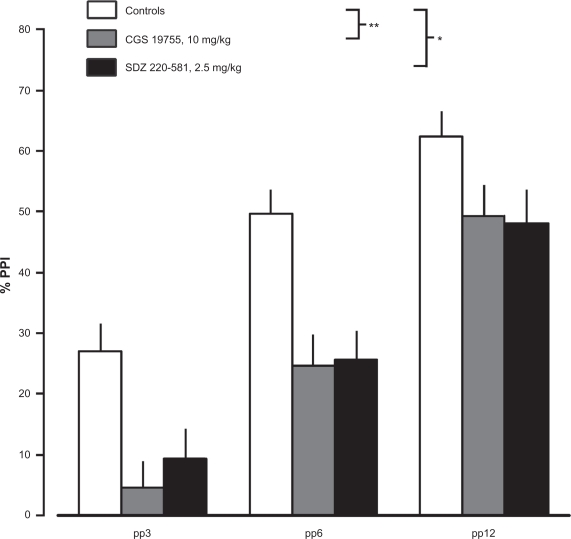
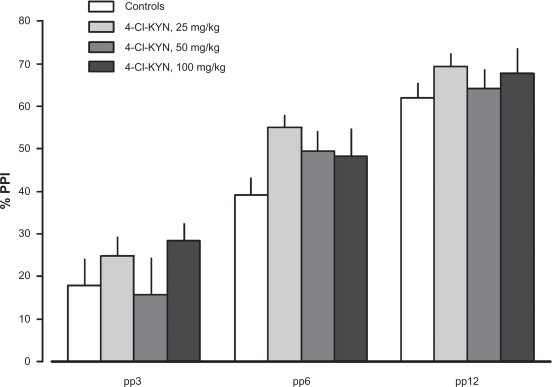
Kynurenic acid (KYNA) is an endogenous metabolite of tryptophan. Studies have revealed increased brain KYNA levels in patients with schizophrenia. Prepulse inhibition (PPI) is a behavioral model for sensorimotor gating and found to be reduced in schizophrenia. Previous studies have shown that pharmacologically elevated brain KYNA levels disrupt PPI in the rat. The aim of the present study was to investigate the receptor(s) involved in this effect. Rats were treated with different drugs selectively blocking each of the sites that KYNA antagonizes, namely the glutamate recognition site of the N-methyl-D-aspartate receptor (NMDAR), the α7* nicotinic acetylcholine receptor (α7nAChR) and the glycine site of the NMDAR. Kynurenine (200 mg/kg) was given to replicate the effects of increased levels of KYNA on PPI. In order to block the glutamate recognition site of the NMDAR, CGS 19755 (10 mg/kg) or SDZ 220-581 (2.5 mg/kg) were administered and to antagonize the α7nAChR methyllycaconitine (MLA; 6 mg/kg) was given. L-701,324 (1 and 4 mg/kg) or 4-Chloro-kynurenine (4-Cl-KYN; 25, 50 and 100 mg/kg), a drug in situ converted to 7-Chloro-kynurenic acid, were used to block the glycine-site of the NMDAR. Administration of SDZ 220-581 or CGS 19755 was associated with a robust reduction in PPI, whereas L-701,324, 4-Cl-KYN or MLA failed to alter PPI. Kynurenine increased brain KYNA levels 5-fold and tended to decrease PPI. The present study suggests that neither antagonism of the glycine-site of the NMDA receptor nor antagonism of the α7nAChR disrupts PPI, rather with regard to the effects of KYNA, blockade of the glutamate recognition-site is necessary to reduce PPI.
犬尿喹啉酸(KYNA)是色氨酸的内源性代谢产物。研究显示,精神分裂症患者脑内KYNA水平升高。前脉冲抑制(PPI)是一种用于感觉运动门控的行为模型,在精神分裂症患者中该模型显示为减弱。先前的研究表明,药理学方法提高大鼠脑内KYNA水平会破坏其PPI。本研究的目的是探究参与此效应的受体。给大鼠使用不同药物,分别选择性阻断KYNA拮抗的各个位点,即N-甲基-D-天冬氨酸受体(NMDAR)的谷氨酸识别位点、α7*烟碱型乙酰胆碱受体(α7nAChR)以及NMDAR的甘氨酸位点。给予犬尿氨酸(200 mg/kg)以复制KYNA水平升高对PPI的影响。为阻断NMDAR的谷氨酸识别位点,给予CGS 19755(10 mg/kg)或SDZ 220-581(2.5 mg/kg),为拮抗α7nAChR给予甲基lycaconitine(MLA;6 mg/kg)。使用L-701,324(1和4 mg/kg)或4-氯犬尿氨酸(4-Cl-KYN;25、50和100 mg/kg,一种原位转化为7-氯犬尿喹啉酸的药物)来阻断NMDAR的甘氨酸位点。给予SDZ 220-581或CGS 19755与PPI的显著降低相关,而L-701,324、4-Cl-KYN或MLA未能改变PPI。犬尿氨酸使脑内KYNA水平升高5倍,并倾向于降低PPI。本研究表明,无论是拮抗NMDA受体的甘氨酸位点还是拮抗α7nAChR均不会破坏PPI,就KYNA的效应而言,阻断谷氨酸识别位点对于降低PPI是必要的。