Center for Health Quality, Outcomes, and Economic Research, ENRM VA Hospital, Bedford, MA, USA.
BMC Health Serv Res. 2011 Nov 15;11:311. doi: 10.1186/1472-6963-11-311.
Limited evidence exists regarding the association of pre-existing mental health conditions in patients with stroke and stroke outcomes such as rehospitalization, mortality, and function. We examined the association between mental health conditions and rehospitalization, mortality, and functional outcomes in patients with stroke following inpatient rehabilitation.
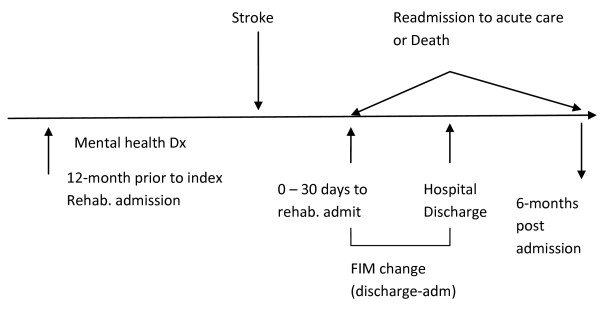
Our observational study used the 2001 VA Integrated Stroke Outcomes database of 2162 patients with stroke who underwent rehabilitation at a Veterans Affairs Medical Center. Separate models were fit to our outcome measures that included 6-month rehospitalization or death, 6-month mortality post-discharge, and functional outcomes post inpatient rehabilitation as a function of number and type of mental health conditions. The models controlled for patient socio-demographics, length of stay, functional status, and rehabilitation setting.
Patients had an average age of 68 years. Patients with stroke and two or more mental health conditions were more likely to be readmitted or die compared to patients with no conditions (OR: 1.44, p = 0.04). Depression and anxiety were associated with a greater likelihood of rehospitalization or death (OR: 1.33, p = 0.04; OR:1.47, p = 0.03). Patients with anxiety were more likely to die at six months (OR: 2.49, p = 0.001).
Patients with stroke with pre-existing mental health conditions may need additional psychotherapy interventions, which may potentially improve stroke outcomes post-hospitalization.
关于患有中风的患者的先前存在的心理健康状况与中风结果(如再住院、死亡率和功能)之间的关联,证据有限。我们研究了中风患者在住院康复后与心理健康状况与再住院、死亡率和功能结果之间的关联。
我们的观察性研究使用了 2001 年 VA 综合中风结果数据库中的 2162 名在退伍军人事务医疗中心接受康复治疗的中风患者。分别对我们的预后指标进行建模,这些指标包括 6 个月的再住院或死亡、出院后 6 个月的死亡率以及作为心理健康状况数量和类型的函数的住院康复后的功能结果。这些模型控制了患者的社会人口统计学、住院时间、功能状态和康复环境。
患者的平均年龄为 68 岁。与没有任何状况的患者相比,患有中风和两种或两种以上心理健康状况的患者更有可能再次住院或死亡(OR:1.44,p = 0.04)。抑郁和焦虑与再住院或死亡的可能性更大相关(OR:1.33,p = 0.04;OR:1.47,p = 0.03)。患有焦虑症的患者在六个月时更有可能死亡(OR:2.49,p = 0.001)。
患有先前存在的心理健康状况的中风患者可能需要额外的心理治疗干预,这可能会潜在地改善住院后的中风结果。