Barentsz M W, Vonken E P A, van Herwaarden J A, Leenen L P H, Mali W P Th M, van den Bosch M A A J
Department of Radiology, University Medical Center Utrecht, Room E.01.132, Heidelberglaan 100, 3584 CX Utrecht, The Netherlands.
Radiol Res Pract. 2011;2011:935484. doi: 10.1155/2011/935484. Epub 2011 Apr 19.
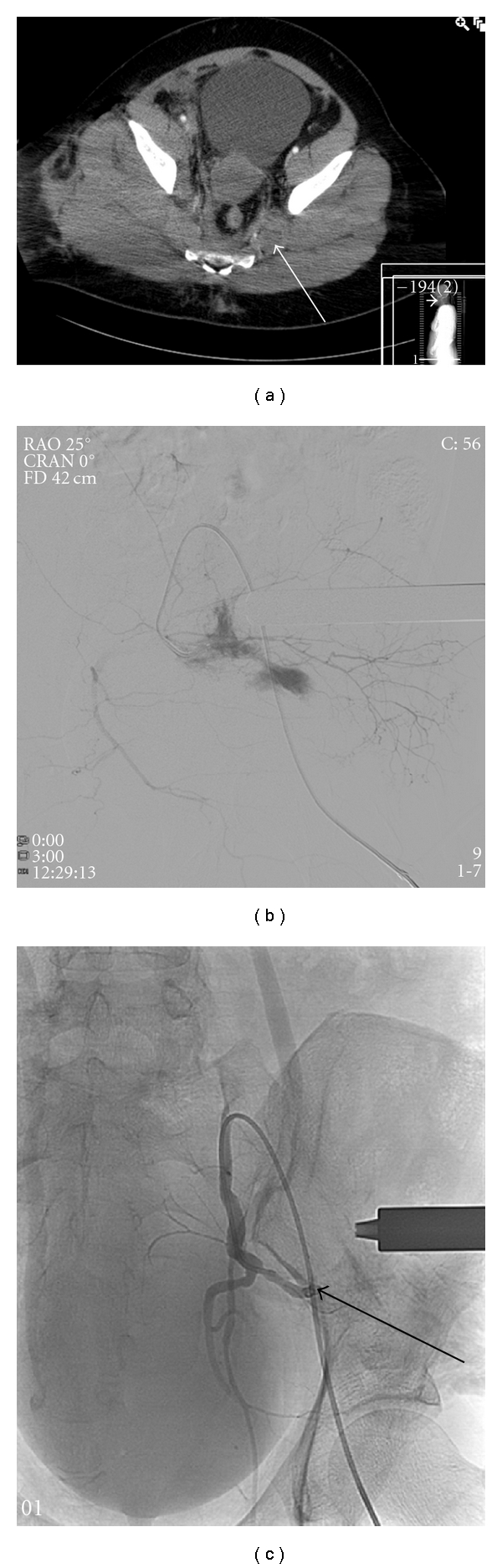
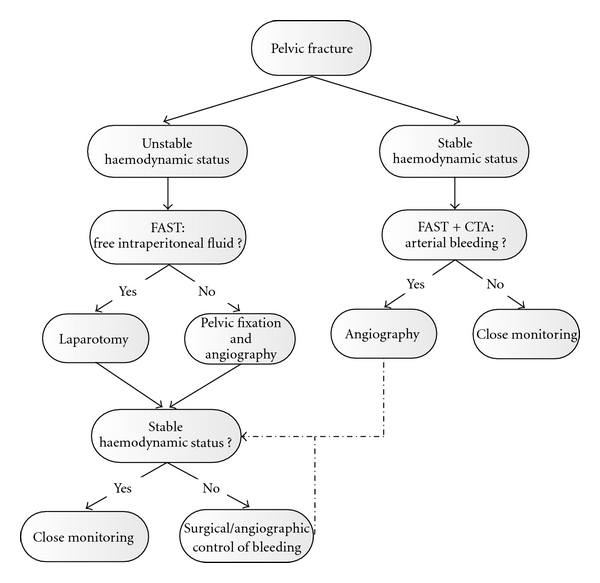
Purpose. To analyse the technical success of pelvic embolization in our institution and to assess periprocedural hemodynamic status and morbidity/mortality of all pelvic trauma patients who underwent pelvic embolization. Methods. A retrospective analysis of patients with a pelvic fracture due to trauma who underwent arterial embolization was performed. Clinical data, pelvic radiographs, contrast-enhanced CT-scans, and angiographic findings were reviewed. Subsequently, the technical success and peri-procedural hemodynamic status were evaluated and described. Results. 19 trauma patients with fractures of the pelvis underwent arterial embolization. Initially, 10/19 patients (53%) were hemodynamically unstable prior to embolization. Technical success of embolization was 100%. 14/19 patients (74%) were stable after embolization, and treatment success was high as 74%. Conclusion. Angiography with subsequent embolization should be performed in patients with a pelvic fracture due to trauma and hemodynamic instability, after surgical intervention or with a persistent arterial blush indicative of an active bleeding on CT.
目的。分析我院骨盆栓塞术的技术成功率,并评估所有接受骨盆栓塞术的骨盆创伤患者围手术期的血流动力学状态及发病率/死亡率。方法。对因创伤导致骨盆骨折并接受动脉栓塞术的患者进行回顾性分析。回顾临床资料、骨盆X线片、增强CT扫描及血管造影结果。随后,对技术成功率及围手术期血流动力学状态进行评估并描述。结果。19例骨盆骨折创伤患者接受了动脉栓塞术。最初,10/19例患者(53%)在栓塞术前血流动力学不稳定。栓塞术的技术成功率为100%。14/19例患者(74%)栓塞术后血流动力学稳定,治疗成功率高达74%。结论。对于因创伤导致骨盆骨折且血流动力学不稳定的患者,在手术干预后或CT显示有持续动脉造影剂外溢提示活动性出血时,应进行血管造影及后续栓塞术。