Department of Surgery, Sunnybrook Health Sciences Centre, University of Toronto, Toronto, Canada.
PLoS One. 2011;6(11):e26396. doi: 10.1371/journal.pone.0026396. Epub 2011 Nov 9.
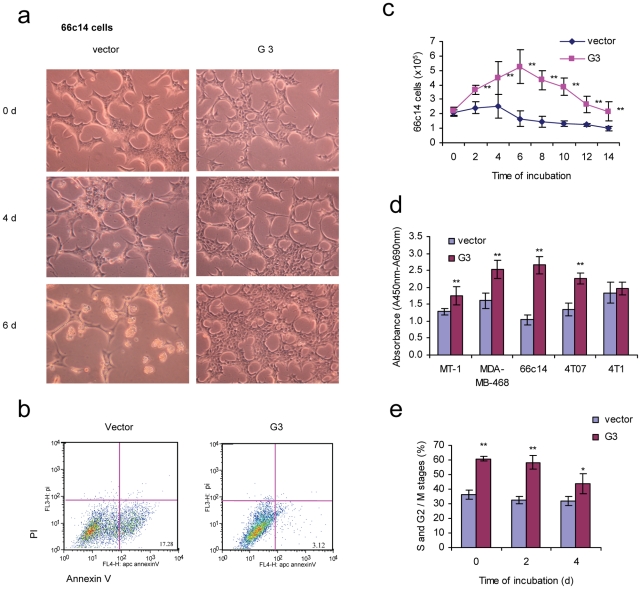
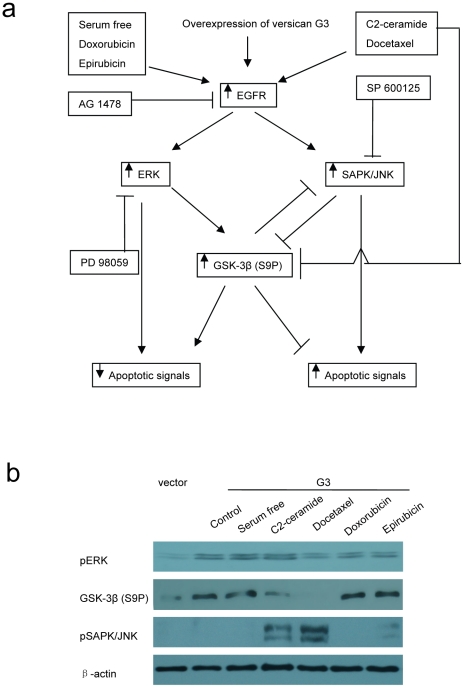
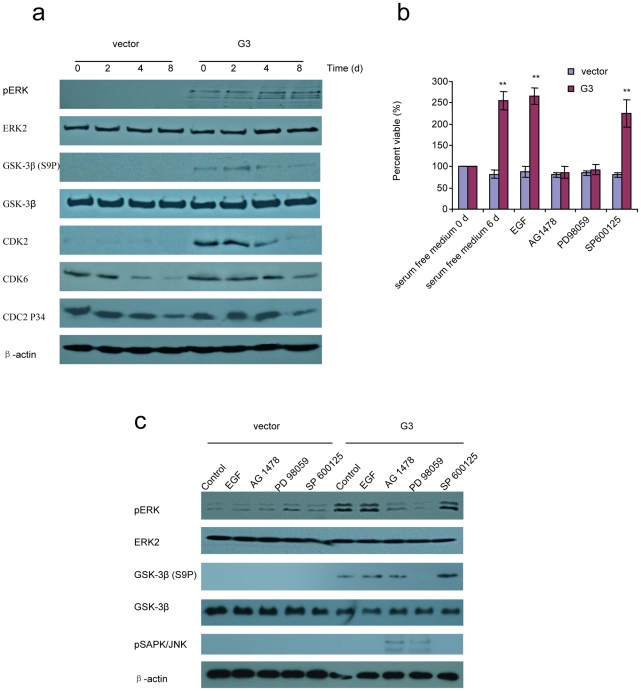
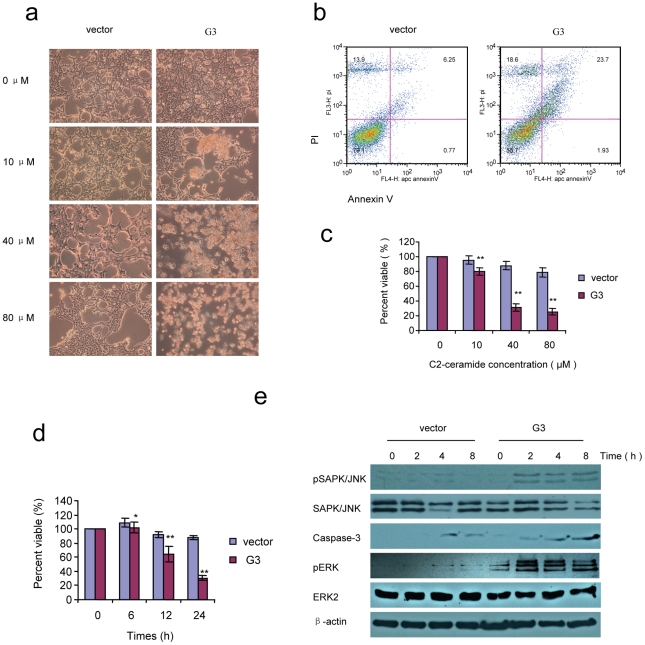
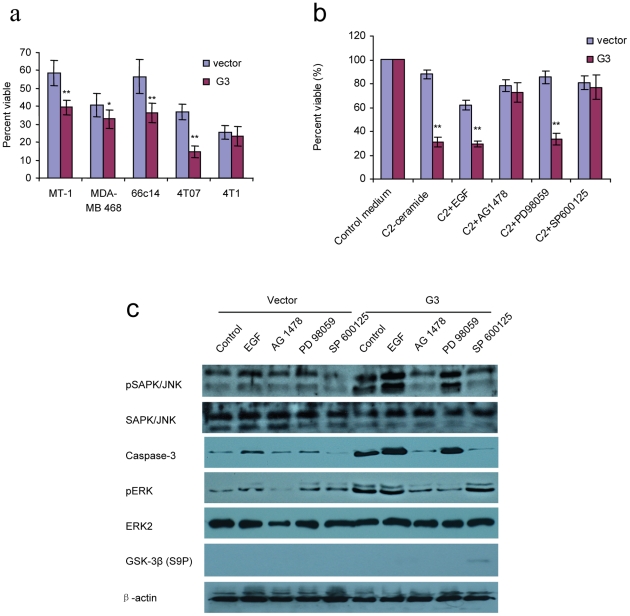
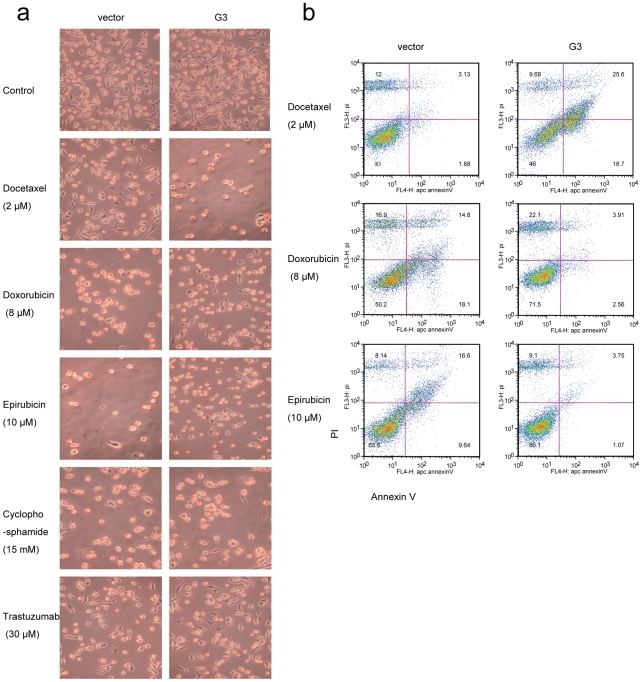
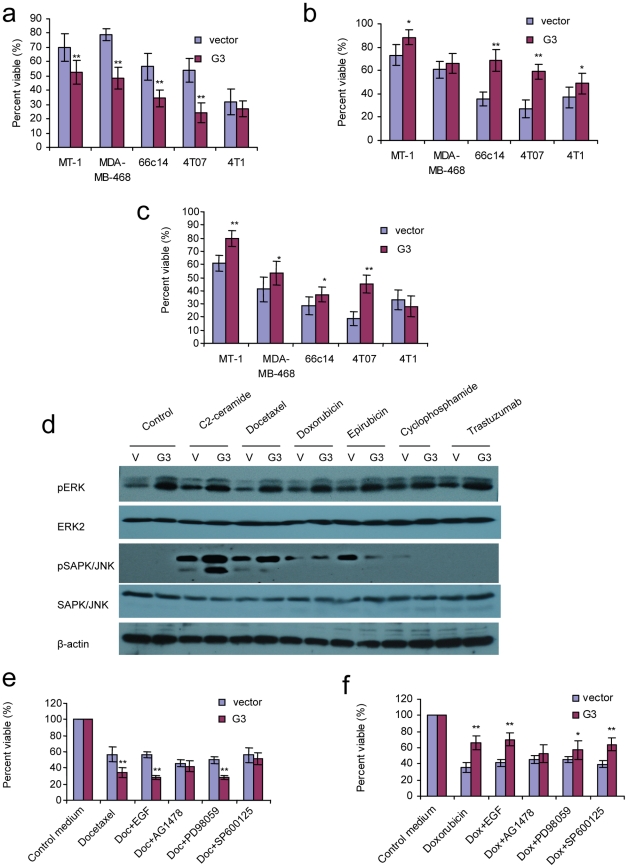
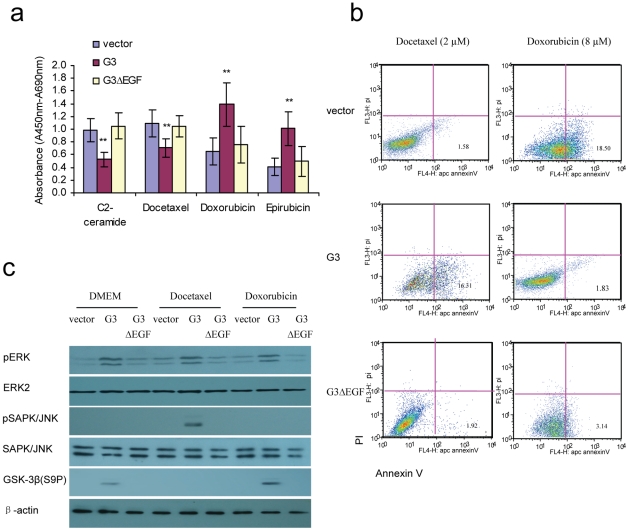
Overexpression of EGFR and versican has been reported in association with breast cancers. Considered oncogenic, these molecules may be attractive therapeutic targets. Possessing anti-apoptotic and drug resistant properties, overexpression of these molecules is accompanied by selective sensitization to the process of apoptosis. In this study, we exogenously expressed a versican G3 construct in breast cancer cell lines and analyzed the effects of G3 on cell viability in fetal bovine serum free conditioned media and evaluated the effects of apoptotic agent C2-ceramide, and chemotherapeutic agents including Docetaxel, Doxorubicin, and Epirubicin. Versican G3 domain enhanced tumor cell resistance to apoptosis when cultured in serum free medium, Doxorubicin, or Epirubicin by up-regulating pERK and GSK-3β (S9P). However, it could be prevented by selective EGFR inhibitor AG 1478 and selective MEK inhibitor PD 98059. Both AG 1478 and PD 98059 enhanced expression of pSAPK/JNK, while selective JNK inhibitor SP 600125 enhanced expression of GSK-3β (S9P). Versican G3 promoted cell apoptosis induced by C2-ceramide or Docetaxel by enhancing expression of pSAPK/JNK and decreasing expression of GSK-3β (S9P), an observation blocked by AG 1478 or SP 6000125. Inhibition of endogenous versican expression by siRNA or reduction of versican G3's expression by linking G3 with 3'UTR prevented G3 modulated cell apoptosis. The dual roles of G3 in modulating breast cancer cell resistance to chemotherapeutic agents may in part explain a potential mechanism for breast cancer cell resistance to chemotherapy and EGFR therapy. The apoptotic effects of chemotherapeutics depend upon the activation and balance of down stream signals in the EGFR pathway. GSK-3β (S9P) appears to function as a key checkpoint in this balance of apoptosis and anti-apoptosis. Investigation and potential consideration of targeting GSK-3β (S9P) merits further study.
表皮生长因子受体(EGFR)和 versican 的过表达已被报道与乳腺癌相关。这些分子被认为具有致癌作用,可能是有吸引力的治疗靶点。这些分子具有抗凋亡和耐药性,过表达伴随着对细胞凋亡过程的选择性敏感化。在这项研究中,我们在乳腺癌细胞系中外源性表达了 versican G3 结构域,并分析了 G3 对无胎牛血清条件培养基中细胞活力的影响,并评估了凋亡剂 C2-神经酰胺以及包括多西紫杉醇、多柔比星和表柔比星在内的化疗药物的影响。当在无血清培养基、多柔比星或表柔比星中培养时,versican G3 结构域通过上调 pERK 和 GSK-3β(S9P)增强了肿瘤细胞对凋亡的抵抗力。然而,这可以通过选择性 EGFR 抑制剂 AG 1478 和选择性 MEK 抑制剂 PD 98059 来预防。AG 1478 和 PD 98059 均增强了 pSAPK/JNK 的表达,而选择性 JNK 抑制剂 SP 600125 增强了 GSK-3β(S9P)的表达。Versican G3 通过增强 pSAPK/JNK 的表达和降低 GSK-3β(S9P)的表达来促进 C2-神经酰胺或多西紫杉醇诱导的细胞凋亡,这一观察结果被 AG 1478 或 SP 6000125 阻断。通过 siRNA 抑制内源性 versican 表达或通过将 G3 与 3'UTR 连接来降低 versican G3 的表达,阻止了 G3 调节的细胞凋亡。G3 在调节乳腺癌细胞对化疗药物的耐药性中的双重作用部分解释了乳腺癌细胞对化疗和 EGFR 治疗耐药的潜在机制。化疗药物的凋亡作用取决于 EGFR 通路下游信号的激活和平衡。GSK-3β(S9P)似乎在凋亡和抗凋亡的这种平衡中作为一个关键检查点发挥作用。进一步研究靶向 GSK-3β(S9P)的效果值得考虑。