Ramaiah Ramesh, Lollo Loreto, Brannan Douglas, Bhananker Sanjay M
Department of Anesthesiology and Pain Medicine, Harborview Medical Center, University of Washington School of Medicine, Seattle, WA, USA.
Int J Crit Illn Inj Sci. 2011 Jan;1(1):84-6. doi: 10.4103/2229-5151.79290.
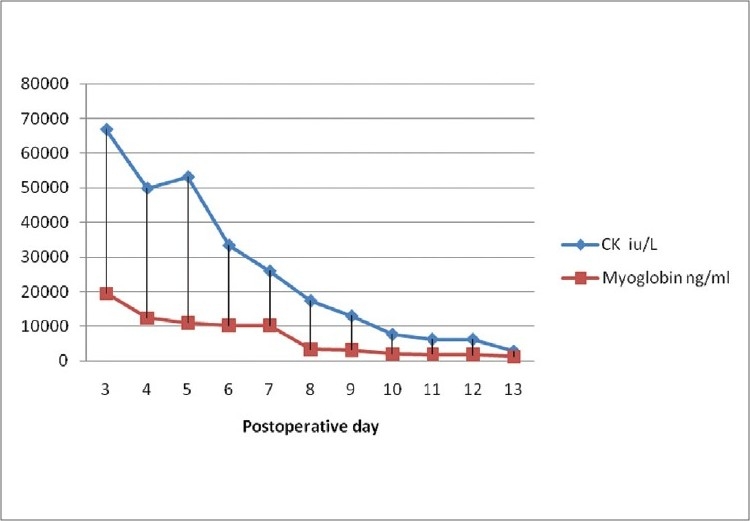
Propofol infusion syndrome (PRIS) is a rare but often fatal complication as a result of large doses of propofol infusion (4-5 mg/kg/hr) for a prolonged period (>48 h). It has been reported in both children and adults. Besides large doses of propofol infusion, the risk factors include young age, acute neurological injury, low carbohydrate and high fat intake, exogenous administration of corticosteroid and catecholamine, critical illness, and inborn errors of mitochondrial fatty acid oxidation. PRIS manifestation include presence of metabolic acidosis with a base deficit of more than 10 mmol/l at least on one occasion, rhabdomyolysis or myoglobinuria, acute renal failure, sudden onset of bradycardia resistant to treatment, myocardial failure, and lipemic plasma. The pathophysiology of PRIS may be either direct mitochondrial respiratory chain inhibition or impaired mitochondrial fatty acid metabolism mediated by propofol. We report a case of supermorbidly obese patient who received propofol infusion by total body weight instead of actual body weight and developed PRIS.
丙泊酚输注综合征(PRIS)是一种罕见但通常致命的并发症,由于长时间(>48小时)大剂量输注丙泊酚(4-5毫克/千克/小时)所致。儿童和成人中均有报道。除大剂量输注丙泊酚外,危险因素还包括年龄小、急性神经损伤、低碳水化合物和高脂肪摄入、外源性给予皮质类固醇和儿茶酚胺、危重病以及线粒体脂肪酸氧化的先天性缺陷。PRIS的表现包括至少一次基础 deficit超过10 mmol/l的代谢性酸中毒、横纹肌溶解或肌红蛋白尿、急性肾衰竭、突然出现对治疗有抵抗的心动过缓、心肌衰竭和血浆脂血。PRIS的病理生理学可能是丙泊酚直接抑制线粒体呼吸链或损害线粒体脂肪酸代谢。我们报告一例超病态肥胖患者,其按总体重而非实际体重接受丙泊酚输注并发生了PRIS。