Department of Physiology and Institute for Neuroscience, Northwestern University Feinberg School of Medicine, Chicago, IL, USA.
Eur J Neurosci. 2011 Dec;34(11):1756-65. doi: 10.1111/j.1460-9568.2011.07899.x. Epub 2011 Nov 20.
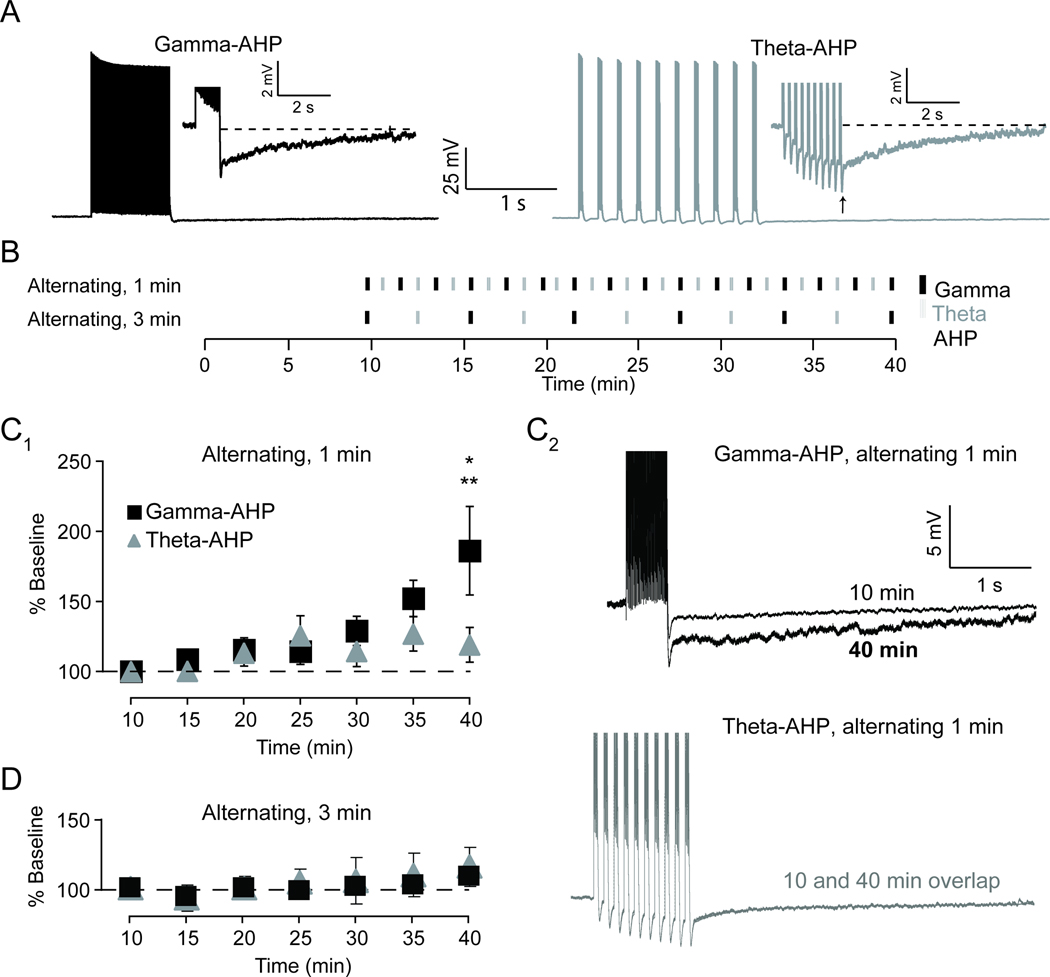
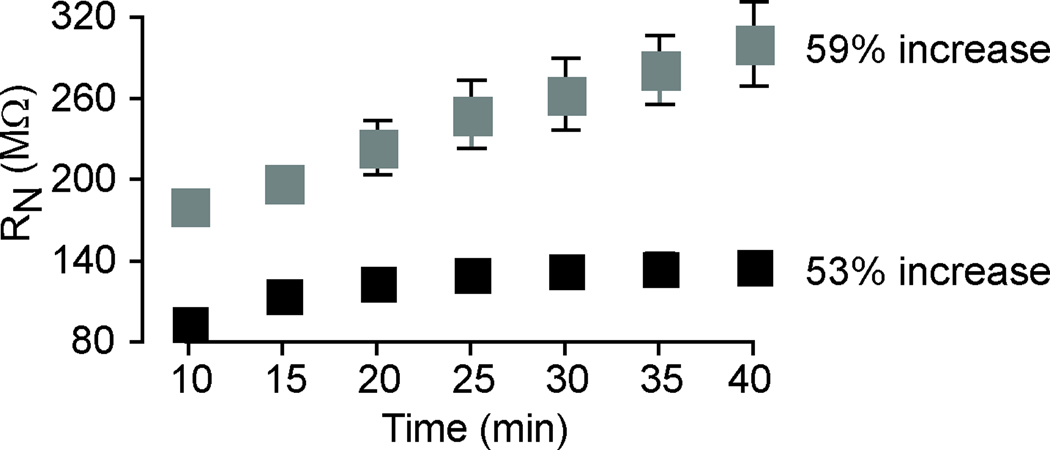
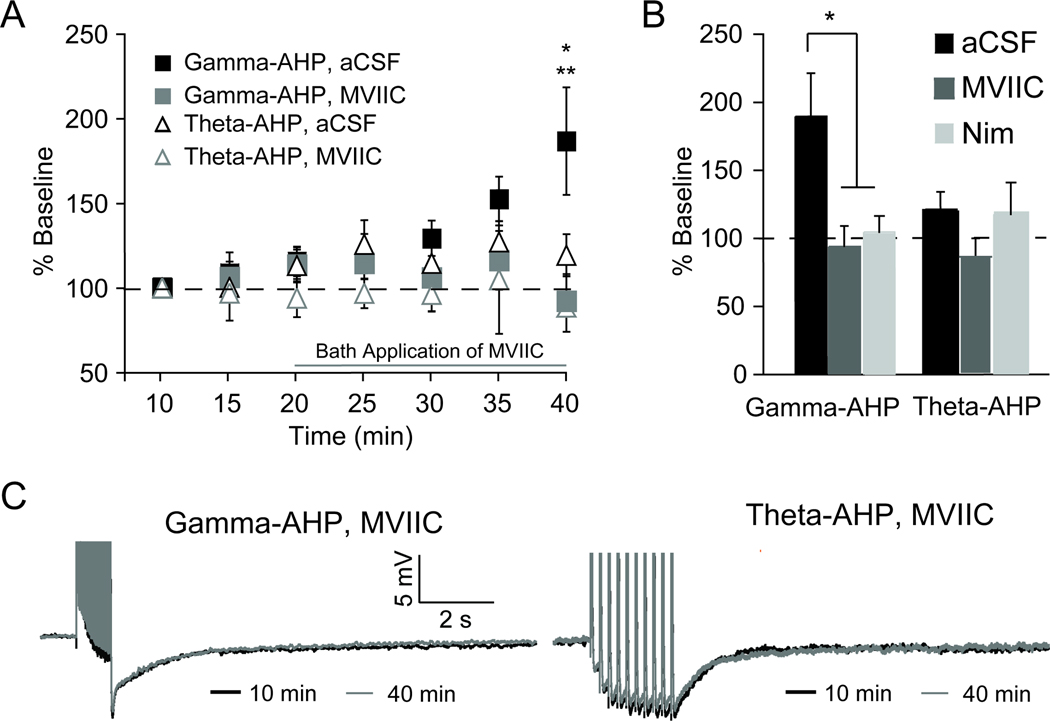
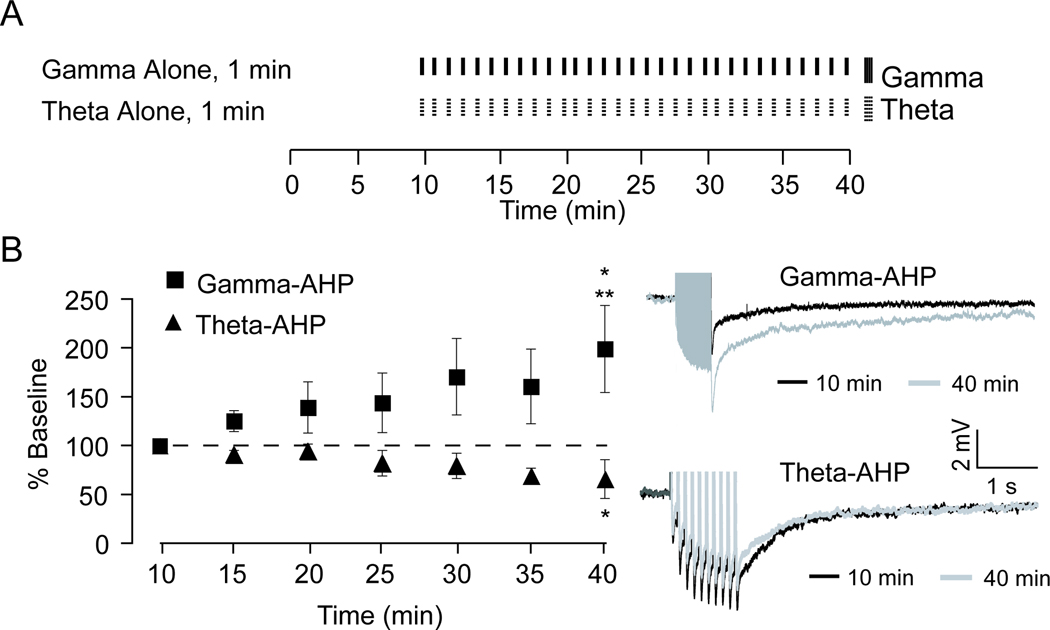
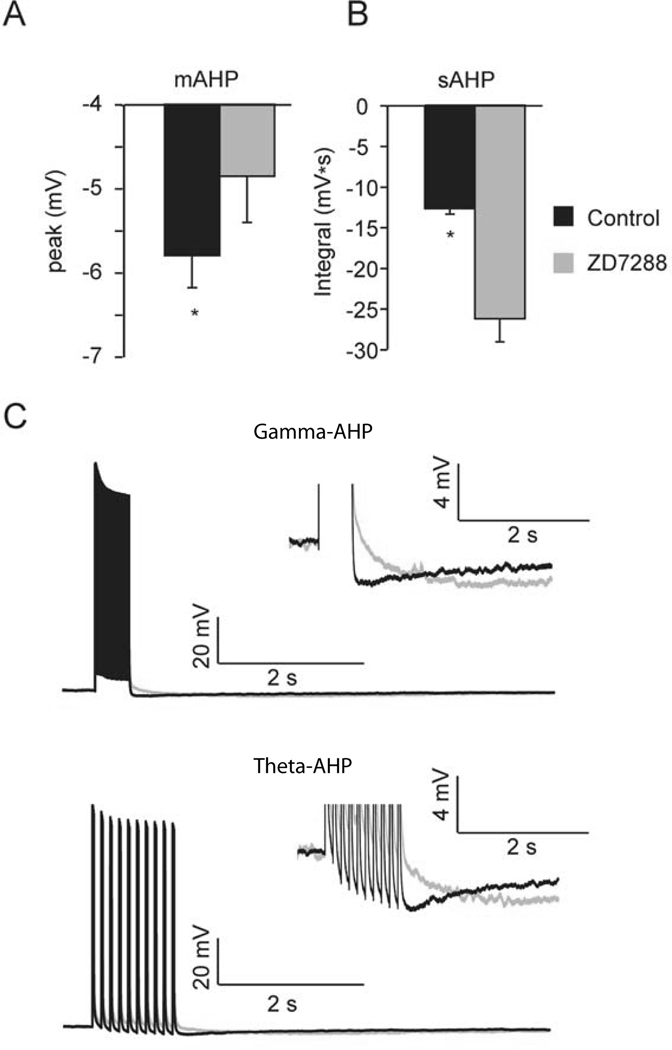
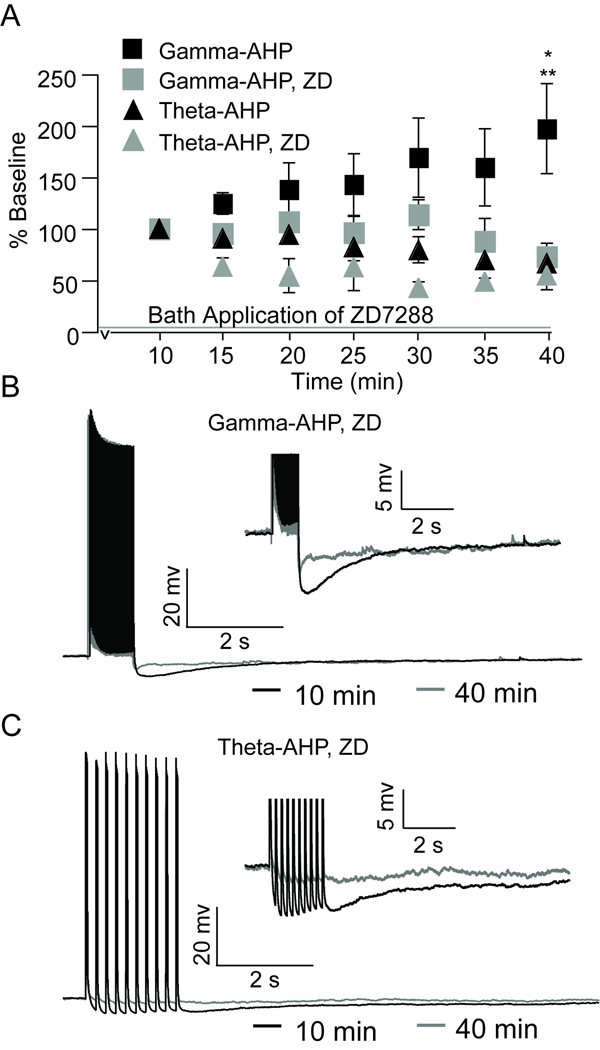
A burst of action potentials in hippocampal neurons is followed by a slow afterhyperpolarization (sAHP) that serves to limit subsequent firing. A reduction in the sAHP accompanies acquisition of several types of learning, whereas increases in the sAHP are correlated with cognitive impairment. The present study demonstrates in vitro that activity-dependent bidirectional plasticity of the sAHP does not require synaptic activation, and depends on the pattern of action potential firing. Whole-cell current-clamp recordings from CA1 pyramidal neurons in hippocampal slices from young rats (postnatal days 14-24) were performed in blockers of synaptic transmission. The sAHP was evoked by action potential firing at gamma-related (50 Hz, gamma-AHP) or theta frequencies (5 Hz, theta-AHP), two firing frequencies implicated in attention and memory. Interestingly, when the gamma-AHP and theta-AHP were evoked in the same cell, a gradual potentiation of the gamma-AHP (186 ± 31%) was observed that was blocked using Ca(2+) channel blockers nimodipine (10 μm) or ω-conotoxin MVIIC (1 μm). In experiments that exclusively evoked the sAHP with 50 Hz firing, the gamma-AHP was similarly potentiated (198 ± 44%). However, theta-burst firing pattern alone resulted in a decrease (65 ± 19%) of the sAHP. In these experiments, application of the h-channel blocker ZD7288 (25 μm) selectively prevented enhancement of the gamma-AHP. These data demonstrate that induction requirements for bidirectional AHP plasticity depend on the pattern of action potential firing, and result from distinct mechanisms. The identification of novel mechanisms underlying AHP plasticity in vitro provides additional insight into the dynamic processes that may regulate neuronal excitability during learning in vivo.
海马神经元的动作电位爆发后会出现缓慢的后超极化(sAHP),这有助于限制后续的放电。sAHP 的减少伴随着几种类型的学习的获得,而 sAHP 的增加与认知障碍有关。本研究在体外证明,sAHP 的活性依赖性双向可塑性不需要突触激活,而是依赖于动作电位放电的模式。通过在突触传递阻滞剂的作用下,从幼年大鼠(出生后第 14-24 天)的海马切片中 CA1 锥体神经元进行全细胞电流钳记录。通过以伽马相关(50 Hz,伽马-AHP)或 theta 频率(5 Hz,theta-AHP)的方式引发动作电位来引发 sAHP,这两种放电频率与注意力和记忆有关。有趣的是,当同一细胞中同时引发 gamma-AHP 和 theta-AHP 时,观察到 gamma-AHP 的逐渐增强(186±31%),使用 Ca(2+)通道阻滞剂尼莫地平(10 μM)或 ω-芋螺毒素 MVIIC(1 μM)可阻断这种增强。在仅以 50 Hz 放电引发 sAHP 的实验中,gamma-AHP 也得到了类似的增强(198±44%)。然而,单独的 theta 突发放电模式会导致 sAHP 的减少(65±19%)。在这些实验中,h 通道阻滞剂 ZD7288(25 μM)的应用选择性地阻止了 gamma-AHP 的增强。这些数据表明,双向 AHP 可塑性的诱导要求取决于动作电位放电的模式,并由不同的机制产生。体外 AHP 可塑性的新型机制的鉴定为了解在体内学习期间可能调节神经元兴奋性的动态过程提供了更多的见解。