Division of Gastroenterology, Hepatology and Nutrition, Cincinnati Children's Hospital Medical Center, Cincinnati, OH, USA.
BMC Gastroenterol. 2011 Nov 18;11:126. doi: 10.1186/1471-230X-11-126.
Previous attempts to measure symptoms in pediatric Eosinophilic Esophagitis (EoE) have not fully included patients and parents in the item development process. We sought to identify and validate key patient self-reported and parent proxy-reported outcomes (PROs) specific to EoE.
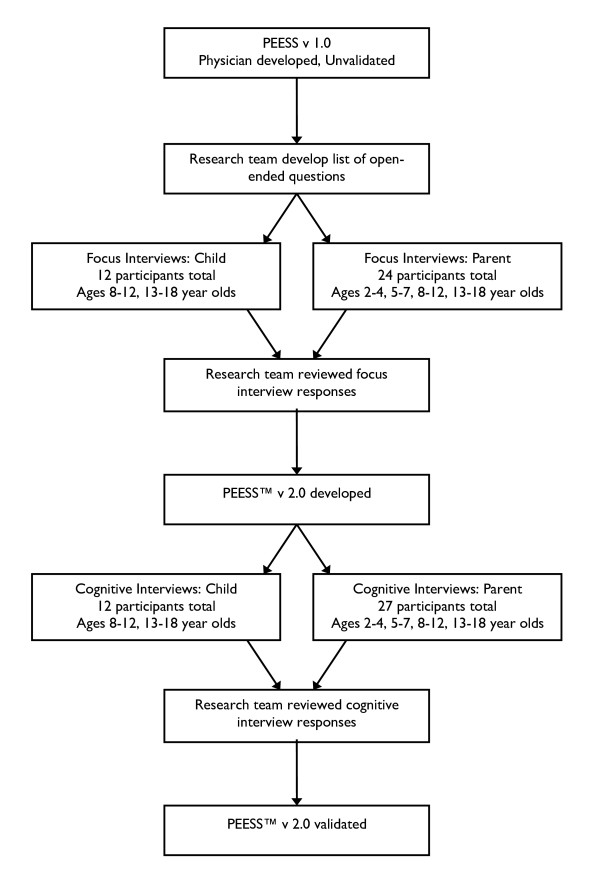
We developed methodology for focus and cognitive interviews based on the Food and Drug Administration (FDA) guidelines for PROs, the validated generic PedsQL™ guidelines, and the consolidated criteria for reporting qualitative research (COREQ). Both child (ages 8-12 and 13-18) and parent-proxy (ages 2-4, 5-7, 8-12, and 13-18) interviews were conducted.
We conducted 75 interviews to construct the new instrument. Items were identified and developed from individual focus interviews, followed by cognitive interviews for face and content validation. Initial domains of symptom frequency and severity were developed, and open-ended questions were used to generate specific items during the focus interviews. Once developed, the instrument construct, instructions, timeframe, scoring, and specific items were systematically reviewed with a separate group of patients and their parents during the cognitive interviews.
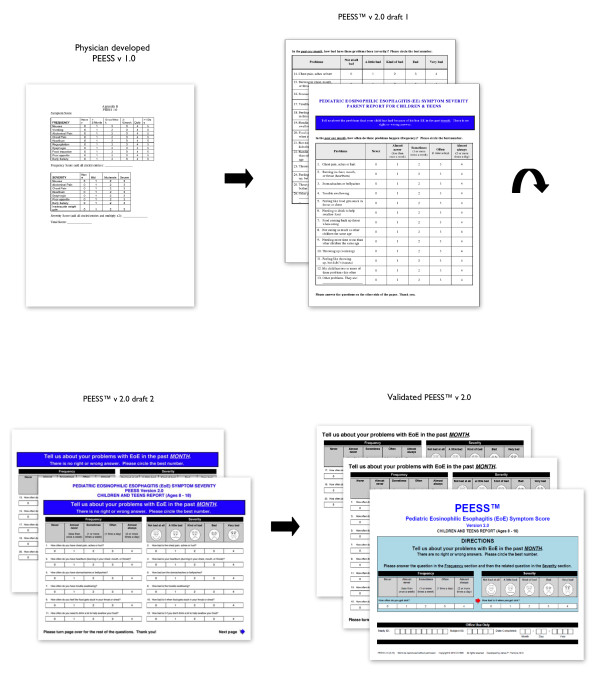
To capture the full impact of pediatric EoE, both histologic findings and PROs need to be included as equally important outcome measures. We have developed the face and content validated Pediatric Eosinophilic Esophagitis Symptom Score (PEESS™ v2.0). The PEESS™ v2.0 metric is now undergoing multisite national field testing as the next iterative instrument development phase.
之前尝试测量小儿嗜酸性食管炎(EoE)症状的研究并未充分让患者和家长参与条目开发过程。我们旨在确定并验证特定于 EoE 的关键患者自评和家长代理报告结局(PRO)。
我们根据食品和药物管理局(FDA)PRO 指南、经过验证的通用 PedsQL™ 指南和定性研究报告的统一标准(COREQ)制定了焦点和认知访谈方法。我们对儿童(8-12 岁和 13-18 岁)和家长代理(2-4 岁、5-7 岁、8-12 岁和 13-18 岁)进行了访谈。
我们进行了 75 次访谈以构建新工具。从个体焦点访谈中确定和开发了条目,随后进行了认知访谈以进行表面和内容验证。最初开发了症状频率和严重程度的领域,并在焦点访谈中使用开放式问题生成具体条目。一旦开发完成,在认知访谈中,我们与另一组患者及其家长一起系统地审查了工具结构、说明、时间范围、评分和具体条目。
为了全面评估小儿 EoE,组织学发现和 PRO 都需要作为同等重要的结局指标。我们已经开发了经过表面和内容验证的小儿嗜酸性食管炎症状评分(PEESS™ v2.0)。PEESS™ v2.0 指标目前正在进行多中心全国现场测试,作为下一迭代的仪器开发阶段。